CM Rekha Gupta hails Vikram-1 launch as space milestone

Synopsis
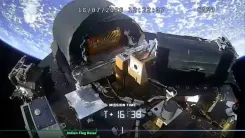
Delhi Chief Minister Rekha Gupta hailed the lift-off of Vikram-1 on 18 July 2026 as a landmark for India's private space economy, congratulating Skyroot Aerospace and crediting PM Modi's policy vision for enabling the country's first privately developed orbital launch vehicle.
Key Takeaways
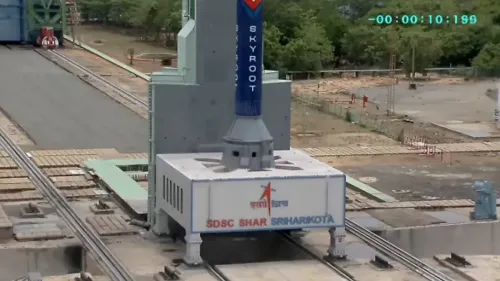
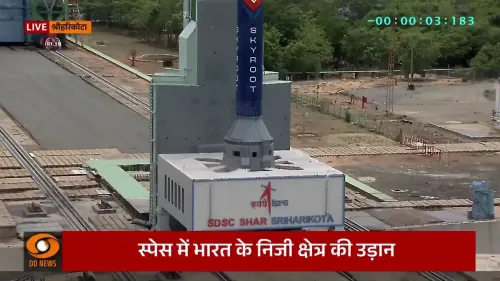
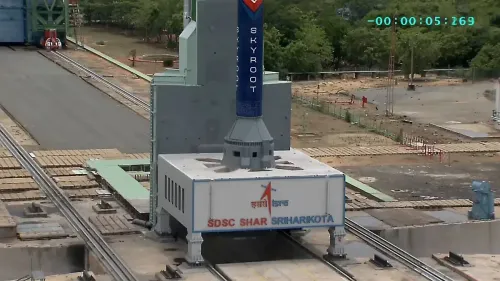
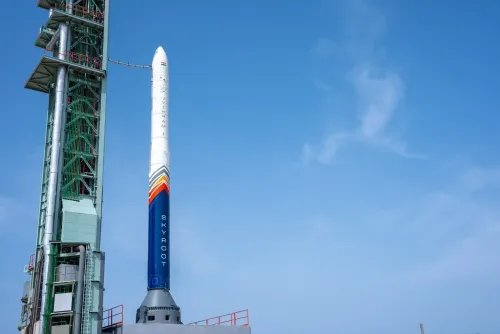
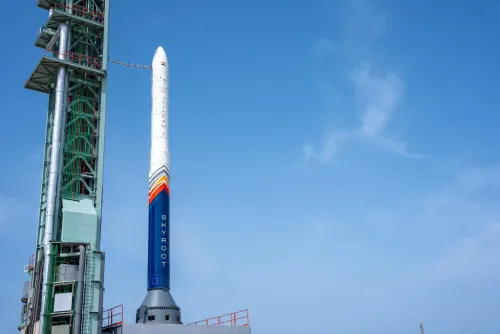
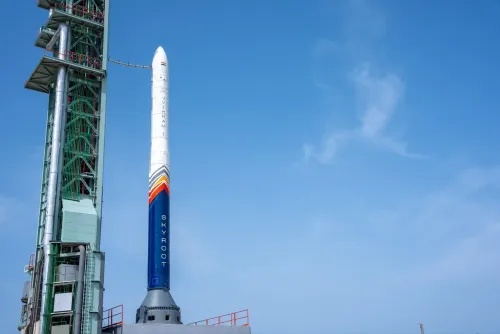
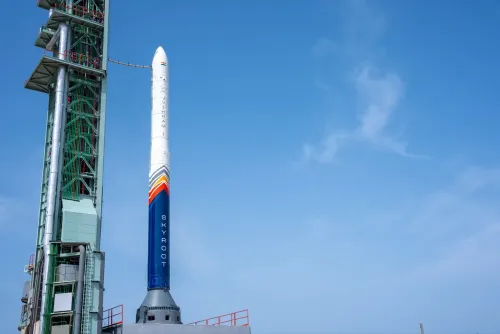
Vikram-1 , described as India's first privately developed orbital launch vehicle, lifted off on 18 July 2026 .
Delhi CM Rekha Gupta publicly congratulated Skyroot Aerospace and framed the launch as a national milestone.
Skyroot Aerospace is a Hyderabad -based startup founded in 2018 developing the Vikram series for small-satellite missions.
India's private space sector operates under IN-SPACe (est.
2020 ) and the Indian Space Policy 2023 , which formalised private participation in launch services.
The launch aligns with Atmanirbhar Bharat goals and India's ambition to capture a share of the global small-satellite launch market.
Gupta linked the achievement to opportunities for India's youth in deep-tech entrepreneurship and innovation.
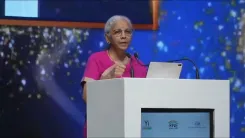
Delhi Chief Minister Rekha Gupta on Saturday, 18 July 2026, congratulated Skyroot Aerospace on the successful lift-off of Vikram-1, describing it as 'a defining milestone in India's expanding space economy' and linking the achievement to the broader vision of a Viksit Bharat (Developed India).
Context
Gupta posted on X under the hashtag #IndiaWithVikram1, calling Vikram-1 'India's first privately developed orbital launch vehicle.' She credited the breakthrough to the 'visionary leadership' of Prime Minister Narendra Modi and said it would 'strengthen India's capabilities in satellite launches, accelerate innovation, fuel deep-tech entrepreneurship and open new opportunities for our talented youth.'
The message positions the launch as a convergence of private enterprise and government-enabled reform — a narrative that has gained prominence as India works to build a commercial launch industry alongside its national space programme.
Policy Backdrop
Skyroot Aerospace, a Hyderabad-based startup founded in 2018, has been developing the Vikram series of launch vehicles targeting the small-satellite deployment market. The company operates within a policy architecture that has been progressively opened to private players over the past several years.
The government announced the opening of India's space sector to private participation in 2019, followed by the creation of IN-SPACe (Indian National Space Promotion and Authorisation Centre) in 2020 as the regulatory and facilitation body for non-government entities. The Indian Space Policy 2023 further formalised the role of private firms in launch services and satellite operations, providing a clearer commercial framework for startups like Skyroot.
ISRO, India's national space agency, has supported this private ecosystem through technology transfers and infrastructure access, consistent with the government's Atmanirbhar Bharat (self-reliant India) goals in high-technology sectors.
Stakeholders and Impact
A successful orbital mission by a private Indian firm would have significant implications for the country's small-satellite launch market ambitions. Global demand for dedicated small-satellite launches has grown sharply, and India has positioned itself as a cost-competitive alternative to established Western and commercial providers.
Beneficiaries of an expanding private launch ecosystem include STEM graduates and deep-tech entrepreneurs, as well as domestic and international small-satellite operators seeking affordable, reliable rideshare or dedicated launch options. Gupta's post specifically flagged opportunities for India's 'talented youth,' echoing a recurring government emphasis on linking space-sector growth to employment and innovation outcomes.
The milestone also carries symbolic weight for India's broader technology self-reliance narrative, coming at a time when several Indian startups are competing to establish themselves in the global new-space economy — a shift that mirrors private-sector entry seen in the United States and Europe over the preceding decade.
What's Next
Attention will now turn to follow-on commercial launch contracts that Skyroot Aerospace may secure under the Indian Space Policy 2023 framework, as well as the progress of other Indian launch-vehicle startups moving through their own test-flight programmes.
Policymakers and industry observers will also watch whether this launch accelerates government and institutional support for the broader private space ecosystem — including funding, regulatory streamlining, and access to ISRO facilities. For India's ambitions in the global satellite-launch market, a proven private orbital vehicle would mark a qualitative step forward in its competitive positioning.
Point of View
' she reinforces a pattern of centralising credit for structural reforms within the party's broader Viksit Bharat electoral and governance brand. The emphasis on youth and deep-tech entrepreneurship is notable: it signals an effort to extend the space-sector story beyond elite technical circles into a wider aspirational demographic. If Vikram-1's orbital performance is confirmed, this moment could accelerate both commercial investment in Indian launch startups and political capital around the government's new-space liberalisation agenda.
NationPress
18 Jul 2026
Frequently Asked Questions
What is Vikram-1 and who made it?
Vikram-1 is described as India's first privately developed orbital launch vehicle, built by Skyroot Aerospace , a Hyderabad-based deep-tech startup founded in 2018 that develops the Vikram series of rockets for small-satellite missions.
Why is the Vikram-1 launch significant for India?
The launch would mark the first time a privately built Indian rocket reached orbit, a milestone that signals the maturation of India's commercial space ecosystem and its potential to compete in the global small-satellite launch market.
What government policy enabled private space companies in India?
The government opened India's space sector to private players in 2019, created IN-SPACe in 2020 to regulate and facilitate non-government entities, and enacted the Indian Space Policy 2023 to formalise private roles in launch services and satellite operations.
What did Delhi CM Rekha Gupta say about the Vikram-1 launch?
CM Gupta congratulated Skyroot Aerospace on X, calling the lift-off 'a defining milestone in India's expanding space economy' and saying it would 'strengthen India's capabilities in satellite launches, accelerate innovation, fuel deep-tech entrepreneurship and open new opportunities for our talented youth.'
What is IN-SPACe and what role does it play?
IN-SPACe (Indian National Space Promotion and Authorisation Centre) was established in 2020 as the nodal body to promote, authorise, and regulate private-sector participation in India's space activities, providing startups like Skyroot Aerospace a regulatory pathway for launch operations.