CM Sai Unveils 'Bastar Vision' for Development Push
Synopsis
Chhattisgarh CM Vishnu Deo Sai has announced the 'Bastar Vision', a Centre-state initiative targeting investment, infrastructure, education, health, and employment in the tribal-majority, historically insurgency-affected Bastar region, citing PM Modi's guidance.
Key Takeaways
CM Vishnu Deo Sai announced the 'Bastar Vision' on 1 August 2026 , pledging a coordinated development push in southern Chhattisgarh.
The five stated pillars are investment, infrastructure, education, health, and employment .
Prime Minister Narendra Modi is cited as the guiding force; the initiative is framed as a joint Centre-state effort.
Bastar is a tribal-majority region with a long history of Left-Wing Extremism and developmental lag.
The BJP has consistently linked development investment in central India's tribal belt to reducing the conditions that fuel extremism.
Concrete project roll-outs, budget allocations, and investment commitments will determine whether the Vision translates into measurable change.
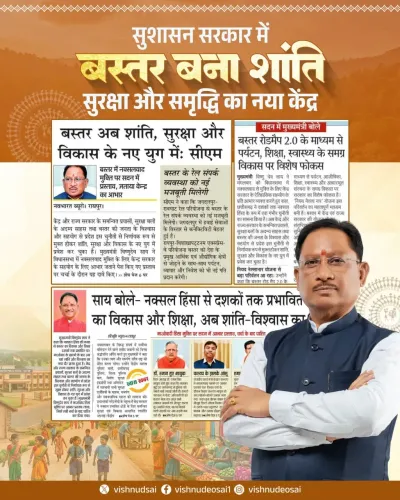
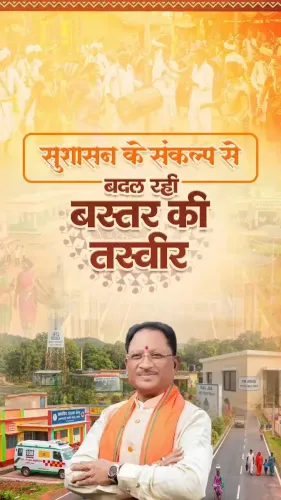
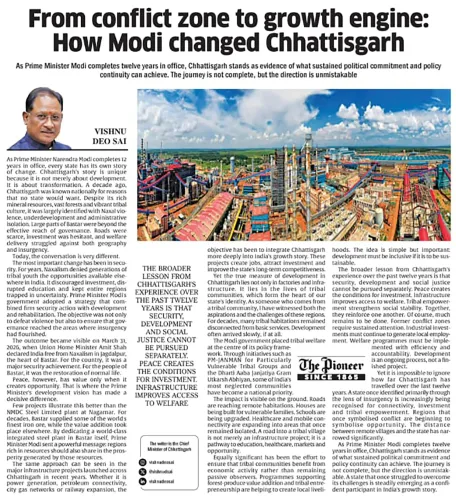
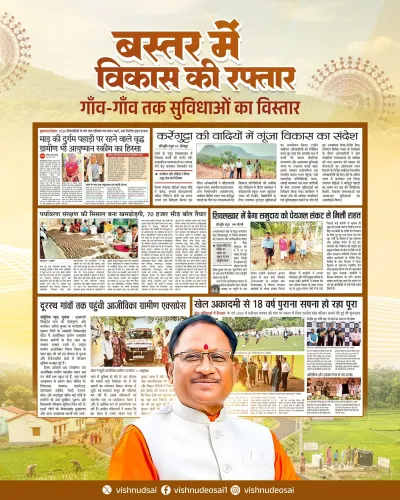
For decades, Bastar was a name synonymous with insurgency and neglect. Now, Chhattisgarh Chief Minister Vishnu Deo Sai is staking his government's ambition on flipping that script — through a sweeping framework he is calling the 'Bastar Vision'.
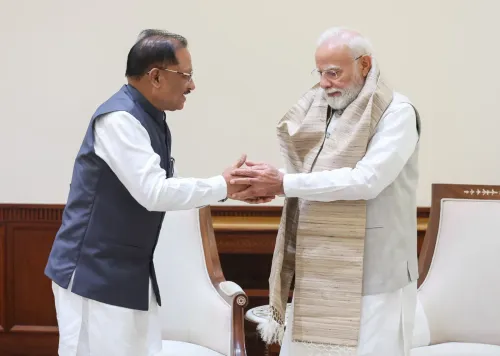
In a post on Saturday, 1 August 2026, CM Sai declared that Bastar is moving toward a 'golden future of progress' — ('प्रगति के स्वर्णिम भविष्य की ओर') — built on development, trust, and new possibilities. The Vision, he said, targets investment, infrastructure, education, health, and employment in the region, with Prime Minister Narendra Modi cited as the guiding force behind the initiative.
A Region Carrying the Weight of History
Bastar is no ordinary administrative zone. A tribal-majority expanse in southern Chhattisgarh, it has spent much of the past four decades at the epicentre of Left-Wing Extremism — a conflict that choked investment, stalled infrastructure, and kept health and education indicators among the lowest in the country.
The creation of Chhattisgarh as a separate state in 2000 was itself a governance bet: that a dedicated administration would bring sharper focus to regions like Bastar. Progress has been uneven, but the direction of travel — particularly since 2014, with central government frameworks like the Vanbandhu Kalyan Yojana targeting tribal welfare — has been consistently toward integrating these districts into the national development mainstream.
What the 'Bastar Vision' Promises
CM Sai's post frames the initiative as a product of coordinated Centre-state effort — a deliberate signal that this is not a state government acting alone, but one aligned with New Delhi's priorities. The five pillars he names — investment, infrastructure, education, health, and employment — map directly onto the gaps that have historically made Bastar a hard sell for private capital and a difficult posting for public servants.
The BJP's broader political logic here is well-established: demonstrable development in the tribal belt reduces the conditions that have historically fuelled extremism, while also consolidating the party's electoral standing among tribal communities. Bastar's districts span some of Chhattisgarh's most competitive political terrain.
What Needs to Follow the Vision
Vision documents are only as durable as the budgets and tenders that follow them. The real test for the Bastar Vision will come in the specifics — which infrastructure projects break ground, how much central scheme funding is actually released for the division, and whether private investment commitments materialise beyond announcement events.
Tribal communities, local youth, and potential investors are all watching the same thing: not the promise, but the pace. Bastar has heard ambitious language before. The question is whether this iteration comes with the institutional follow-through to match.
If it does, a region long defined by what it lacked may finally get to be defined by what it builds.
Point of View
CM Sai reinforces the party's unified governance narrative ahead of any future electoral cycle in Chhattisgarh. The real political and policy test is implementation: Bastar's developmental deficit is structural and deep, and vision frameworks have preceded this one without fully closing the gap. Investors and tribal communities will judge this iteration not by the language of the post, but by the speed and scale of projects that actually reach the ground.
NationPress
1 Aug 2026
Frequently Asked Questions
What is the Bastar Vision announced by CM Vishnu Deo Sai?
The Bastar Vision is a development framework announced by Chhattisgarh Chief Minister Vishnu Deo Sai on 1 August 2026, aimed at accelerating investment, infrastructure, education, health, and employment in the Bastar region through coordinated Centre-state effort under PM Modi's guidance.
Why is Bastar considered a developmental challenge in Chhattisgarh?
Bastar is a tribal-majority region in southern Chhattisgarh that has historically been affected by Left-Wing Extremism, which discouraged private investment and slowed infrastructure development, keeping health and education indicators among the lowest in the state.
What role does PM Modi play in the Bastar Vision?
CM Sai credited Prime Minister Narendra Modi's guidance as the driving force behind the Bastar Vision, framing the initiative as a joint Centre-state effort rather than a standalone state government programme.
How does the BJP's approach to Bastar fit its broader tribal policy?
The BJP has consistently argued that targeted development investment in India's tribal belt — through frameworks like the Vanbandhu Kalyan Yojana since 2014 — reduces the conditions that fuel extremism while improving welfare outcomes for tribal communities.
What should we watch for after the Bastar Vision announcement?
Key indicators will include the launch of specific infrastructure projects, state budget allocations for Bastar districts, release of central scheme funds for the region, and whether private investment commitments made under the Vision actually materialise.