CM Sukhu Hails Kishau Dam Deal, Eyes Rs 600 Cr Annual Gain
Synopsis
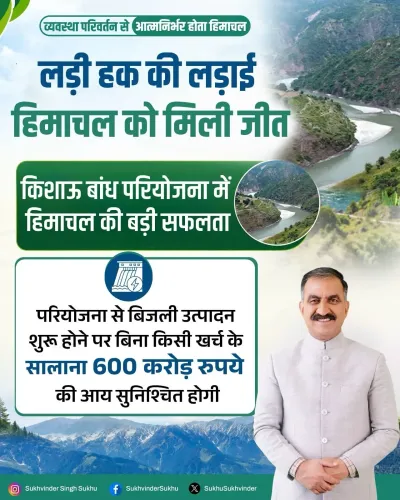
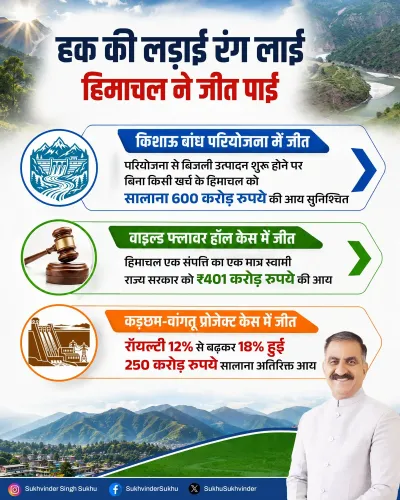
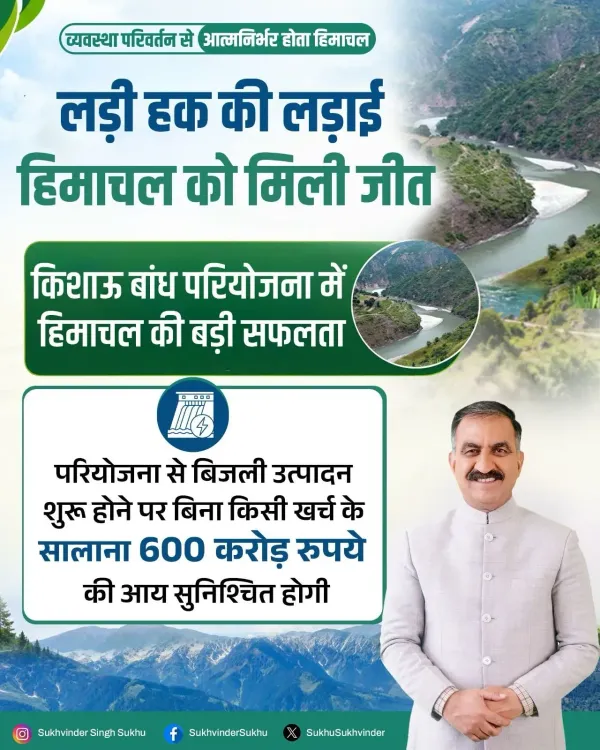
Chief Minister Sukhvinder Singh Sukhu has announced a historic resolution in the long-stalled Kishau Dam Project on the Tons River, claiming Himachal Pradesh will earn approximately Rs 600 crore annually without any capital investment — a major win in the state's push to secure its share of inter-state river revenues.
Key Takeaways
CM Sukhvinder Singh Sukhu announced on 26 June 2026 a historic breakthrough in the Kishau Dam Project .
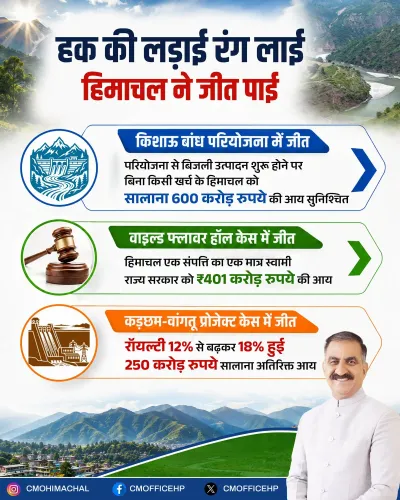
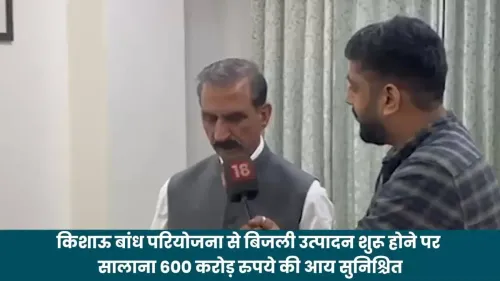
Himachal Pradesh is set to earn approximately Rs 600 crore per year from the project without any fresh capital investment by the state.
The Kishau Dam is a multipurpose project on the Tons River that has been pending for over two decades due to inter-state disputes between Himachal Pradesh and Uttarakhand .
The Sukhu government has framed the deal as part of its broader policy of protecting state resources and asserting Himachal Pradesh's rights over its natural wealth.
The Union Ministry of Jal Shakti is expected to be involved in formalising the revised project terms.
The outcome could set a precedent for benefit-sharing negotiations in other contested Himalayan inter-state river projects.
Himachal Pradesh Chief Minister Sukhvinder Singh Sukhu on Friday, 26 June 2026, announced what he called a historic breakthrough in the long-pending Kishau Dam Project, saying the state will earn approximately Rs 600 crore annually without any fresh capital investment. The announcement came via a post on X, in which Sukhu framed the development as a direct outcome of his government's policy of protecting the state's natural resources and securing its rightful share from inter-state river projects.
In his post, the Chief Minister wrote: 'हिमाचल की संपदा सुरक्षित रहे और प्रदेश को उसके अधिकार मिलें- यही हमारी सरकार की नीति है' ('It is our government's policy that Himachal's wealth remains protected and the state receives its rights'). He added that as a result of this firm commitment, Himachal Pradesh has achieved a historic success in the Kishau Dam Project, which had remained pending for years.
Context
The Kishau Dam Project is a multipurpose hydropower and irrigation scheme proposed on the Tons River, which forms the boundary between Himachal Pradesh and Uttarakhand. The project has been stalled for over two decades, primarily due to unresolved disputes between the two states over cost-sharing and the distribution of power and water benefits. Periodic attempts at central facilitation during the 2000s and 2010s failed to produce a final agreement.
CM Sukhu's claim of a breakthrough suggests that a revised benefit-sharing arrangement has now been reached, enabling Himachal Pradesh to secure a significant revenue stream from the project's eventual power generation — without committing fresh state capital to its construction or operation.
Policy Backdrop
Water is a state subject under India's constitutional framework, but rivers that cross state boundaries require negotiated inter-state compacts, often with Union government mediation. Himachal Pradesh, which sits at the headwaters of several major river systems, has historically argued that downstream states and the Centre have benefited disproportionately from projects located within its territory.
The Sukhu government has pursued a broader strategy of renegotiating such arrangements, running parallel to claims on other hydropower schemes including Renuka Dam and the Luhri Stage-I Project. The Kishau development, if formalised, would mark the most significant gain under this approach. The Union Ministry of Jal Shakti is expected to play a role in formalising revised project terms.
Stakeholders and Impact
The primary beneficiary of the deal is the Himachal Pradesh state exchequer, which stands to receive an estimated Rs 600 crore per year in royalty or power-share revenues once the project becomes operational — a figure cited by the Chief Minister in his post. For a state that carries a significant debt burden and relies heavily on central transfers, such a non-capital revenue stream would be fiscally meaningful.
The hydropower sector in both Himachal Pradesh and Uttarakhand will be watching closely, as the terms agreed for Kishau could set a precedent for benefit-sharing in other contested inter-state projects across the Himalayan belt. Downstream water users in Uttarakhand and beyond also have a stake in the project's eventual reservoir and irrigation components.
What's Next
The immediate focus will be on implementation: whether a formal inter-state agreement or memorandum has been signed, and when revenue transfers to Himachal Pradesh are expected to begin. Follow-up meetings between the governments of Himachal Pradesh and Uttarakhand, possibly convened under the aegis of the Union Ministry of Jal Shakti, will be critical to translating the political announcement into enforceable financial flows.
If the revised Kishau terms are formalised and upheld, they could strengthen the hand of other Himalayan states seeking to renegotiate legacy river agreements — making this a case with implications well beyond Himachal Pradesh alone.
Point of View
The announcement precedes a formal, publicly available agreement, and the gap between a political declaration and enforceable revenue transfers is where such deals have historically stalled. If formalised, the Kishau deal would add momentum to a broader Himalayan trend of states leveraging their upstream geography to renegotiate legacy river compacts — a trend with significant implications for federal water governance across India.
NationPress
26 Jun 2026
Frequently Asked Questions
What is the Kishau Dam Project?
The Kishau Dam Project is a multipurpose hydropower and irrigation scheme proposed on the Tons River, which forms the boundary between Himachal Pradesh and Uttarakhand. It has been pending for over two decades due to unresolved inter-state disputes over cost and benefit sharing.
What did CM Sukhu announce about the Kishau Dam?
Chief Minister Sukhvinder Singh Sukhu announced on 26 June 2026 that Himachal Pradesh has achieved a historic success in the Kishau Dam Project, securing an estimated Rs 600 crore in annual revenue for the state without any fresh capital investment.
How much money will Himachal Pradesh earn from the Kishau Dam deal?
According to CM Sukhu's announcement, Himachal Pradesh will earn approximately Rs 600 crore per year from the Kishau Dam Project without the state having to invest any additional capital.
Why has the Kishau Dam been pending for so long?
The Kishau Dam Project has been stalled for over two decades primarily because of disputes between Himachal Pradesh and Uttarakhand over how the costs and benefits — including power generation and water allocation — should be divided between the two states.
What role does the Union government play in the Kishau Dam Project?
The Union Ministry of Jal Shakti is expected to be involved in formalising the revised terms of the Kishau Dam Project, as inter-state river disputes in India often require central government facilitation to reach binding agreements.