CM Sukhu Vows Self-Reliance for HP, Full Funds for Panchayats
Synopsis
Chief Minister Sukhvinder Singh Sukhu on June 24, 2026, vowed to make Himachal Pradesh and its panchayats self-reliant, pledging to protect state resources from privatisation and guarantee uninterrupted development funds for village councils to strengthen grassroots governance.
Key Takeaways
CM Sukhvinder Singh Sukhu declared on June 24, 2026 , that making Himachal Pradesh and its panchayats self-reliant is the government's core resolve.
He pledged that his government will 'save and nurture' the state's natural wealth rather than sell it.
Sukhu assured that panchayats will face no shortage of development funds so that villages can grow stronger.
He committed to raising the state's rights on 'every platform' and said no compromise on state interests will occur under his watch.
The pledge aligns with Himachal Pradesh's long-standing policy of sustainable use of its hydropower and forest resources.
The 73rd Constitutional Amendment Act of 1992 mandates devolution of funds to panchayats, though implementation gaps remain a recurring concern across states.
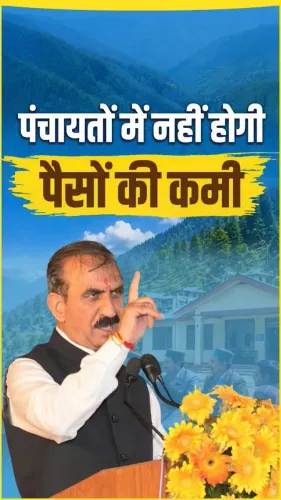
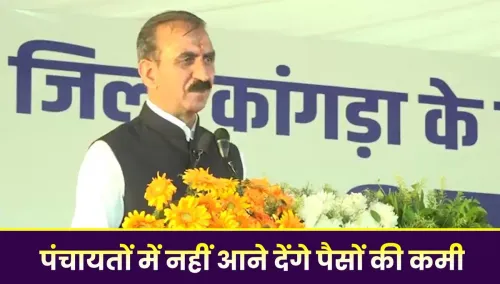
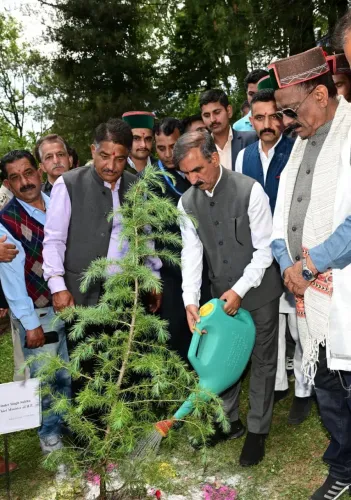
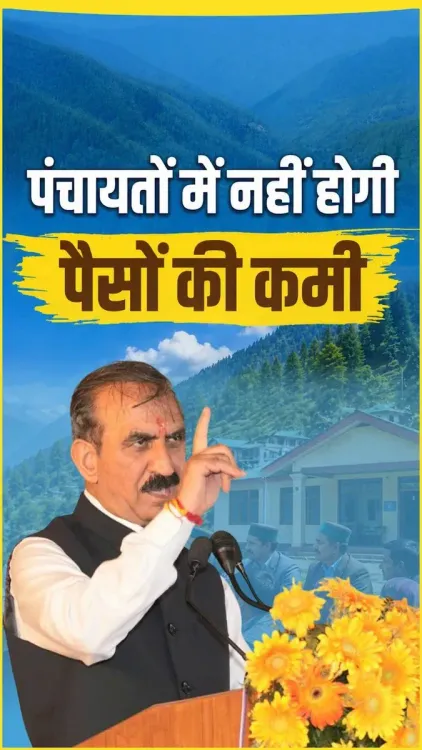
Himachal Pradesh Chief Minister Sukhvinder Singh Sukhu on Wednesday, June 24, 2026, pledged that the state and its village councils will achieve self-reliance, asserting that his government will protect the state's natural wealth rather than sell it and will ensure panchayats never face a shortage of development funds.
What CM Sukhu Said
Posting in Hindi on X, Chief Minister Sukhu declared: 'हिमाचल आत्मनिर्भर बने, पंचायतें आत्मनिर्भर बनें- यही हमारा संकल्प है' — 'Let Himachal become self-reliant, let the panchayats become self-reliant — this is our resolve.' He added that his government had come 'not to sell the state's wealth, but to save and nurture it,' and promised that 'no compromise will be made on the state's interests as long as we are here.'
On rural funding, he stated that 'there will be no shortage of money for the development of panchayats, so that villages grow stronger and move forward.' The post was accompanied by a video, suggesting the remarks may have been made at a public event or institutional gathering.
Context: Panchayats and Constitutional Backing
India's 73rd Constitutional Amendment Act of 1992 granted constitutional status to panchayati raj institutions and mandated the devolution of powers, functions, and funds to village-level bodies. Despite this framework, state governments across India have long flagged inadequate flow of central grants to local bodies as a persistent challenge to grassroots development.
Himachal Pradesh, a northern hill state rich in hydropower, rivers, and forests, has historically positioned its development model around the sustainable use of natural resources rather than their outright privatisation. CM Sukhu's pledge to 'save and nurture' the state's wealth fits squarely within that tradition.
Policy Backdrop: Federal Bargaining and Resource Rights
Indian state governments — particularly those led by opposition parties — periodically assert sovereign control over natural resources and demand adequate central funding for local governance as part of ongoing federal negotiations. Himachal Pradesh has specific stakes in this debate given its hydropower potential and the revenue it generates from rivers and forests shared with the broader national grid.
The Congress-led Sukhu government, which took office in December 2022, has framed its governance agenda around protecting state assets and strengthening rural institutions. Statements of this kind often precede or accompany budget deliberations and revisions to centrally sponsored rural development schemes.
Stakeholders and Impact
The primary beneficiaries of the pledge are Himachal Pradesh's rural communities and the thousands of elected panchayat representatives who depend on timely devolution of funds for local infrastructure, sanitation, roads, and social welfare delivery. Adequate panchayat financing is widely seen as the backbone of last-mile governance in hill states where terrain makes centralised service delivery difficult.
The commitment to protect state resources also carries implications for ongoing discussions around hydropower revenue sharing, forest rights, and environmental stewardship — areas where Himachal Pradesh has long sought a stronger voice in national policy forums.
What to Watch
Observers will track whether the Sukhu government follows through with concrete allocations in the next state budget cycle, particularly enhanced grants and untied funds for panchayat bodies. Any revision in centrally sponsored rural schemes — such as those under the Finance Commission grants or MGNREGS implementation — will test the credibility of this pledge. The statement also signals that CM Sukhu intends to raise the state's demands on every available platform in the months ahead.
Point of View
He anchors a broad ideological claim in the everyday concerns of rural Himachal Pradesh. The emphasis on not 'selling' state wealth is a recurring Congress counter-narrative against privatisation, sharpened here for a hill state whose rivers and forests are its primary economic assets. Taken together, the statement positions the Sukhu government as a firm federalist actor willing to push back against the Centre on revenue sharing and resource rights ahead of the next budget cycle.
NationPress
24 Jun 2026
Frequently Asked Questions
What did CM Sukhu say about panchayat funding in June 2026?
CM Sukhvinder Singh Sukhu stated on June 24, 2026, that there will be no shortage of money for panchayat development so that villages in Himachal Pradesh grow stronger and move forward.
What does self-reliance for Himachal Pradesh panchayats mean?
It refers to CM Sukhu's pledge to ensure panchayats have adequate, uninterrupted funds and authority to manage local development without depending on delayed or inadequate central transfers.
What is CM Sukhu's policy on Himachal Pradesh's natural resources?
CM Sukhu has stated his government will protect and nurture the state's natural wealth — including its rivers, forests, and hydropower assets — rather than privatise or sell them.
Which constitutional provision governs panchayat funding in India?
The 73rd Constitutional Amendment Act of 1992 granted constitutional status to panchayati raj institutions and mandated devolution of powers and funds to village-level bodies across India.
When did Sukhvinder Singh Sukhu become Chief Minister of Himachal Pradesh?
Sukhvinder Singh Sukhu became Chief Minister of Himachal Pradesh in December 2022 after the Indian National Congress won the state assembly election.