Women's reservation: Amit Shah says decades-long wait to end
Synopsis
The women's quota is finally being tied to a working delimitation plan, and the Lok Sabha could grow to 850 seats. Amit Shah says the decades-long wait is ending, but the package redraws India's political map using 2011 census data. The Opposition's support in the Special session is now the real test.
Key Takeaways
Amit Shah and Piyush Goyal said on 28 November 2026 that the wait for women's reservation is set to end.
The Union Cabinet cleared amendments to the Constitutional Amendment Bill on Friday , linked to delimitation and the women's quota.
The package includes the Delimitation Bill, 2026 and the Union Territories Laws (Amendment) Bill, 2026 .
It proposes delimitation based on the 2011 census and raises the Lok Sabha cap from 550 to 850 seats.
It operationalises 33% reservation for women in the Lok Sabha and state Assemblies under the Nari Shakti Vandan Act .
Shah urged all political parties to support the bill in the upcoming Special session .
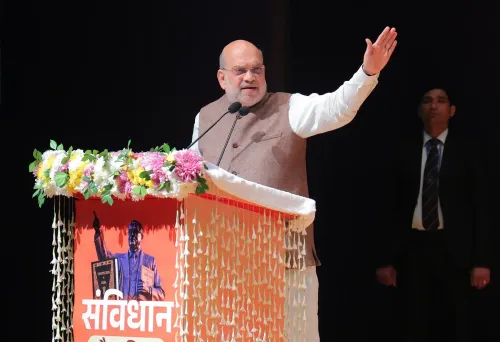
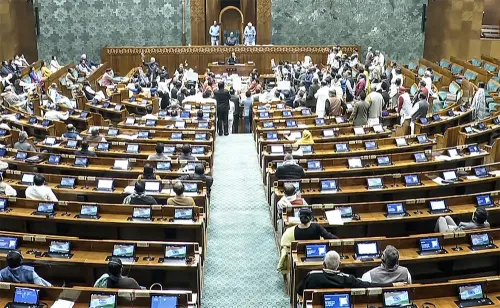
Union Home Minister Amit Shah and Union Commerce and Industry Minister Piyush Goyal on Saturday, 28 November 2026, said that the decades-long wait for women's reservation in Parliament and state Assemblies is about to end. The government is expected to reintroduce the Constitution (131st Amendment) Bill, 2026 in the upcoming Special session of Parliament. Both ministers spoke a day after the Union Cabinet in New Delhi cleared amendments linked to the proposed delimitation and women's reservation legislation.
Key Developments
The Union Cabinet on Friday approved amendments to the Constitutional Amendment Bill tied to delimitation and the women's quota. The legislative package includes the Delimitation Bill, 2026 and the Union Territories Laws (Amendment) Bill, 2026.
The proposed framework has three main aims:
- Carry out delimitation based on the 2011 census.
- Raise the maximum strength of the Lok Sabha from 550 to 850 seats.
- Put into effect one-third reservation for women in the Lok Sabha and state Assemblies.
The bill numbering differs between sources. Reports describe the bill to be reintroduced as the 131st Amendment Bill, while Shah, in his own statement, referred to the Cabinet approving the 132nd Constitutional Amendment Bill.
What Amit Shah Said
In a post on X, Shah said that giving women stronger representation in elected bodies has been a central commitment of the Modi government.
“With the Union Cabinet, under the leadership of Prime Minister Narendra Modi, approving the 132nd Constitutional Amendment Bill yesterday, the decades-long wait of the country's women is set to come to an end. The 33 per cent reservation for women in the Lok Sabha and State Assemblies, provided through the Nari Shakti Vandan Act, will now become a reality,” he said.
Shah said that having at least one-third women members in state Assemblies would make the policies and development plans of states and Union Territories more inclusive. “Their presence in the Lok Sabha will also bring a new dimension to policymaking, lawmaking, and the determination of national priorities,” he added.
He also called on the Opposition to back the legislation. “All political parties should support this historic initiative that strengthens women’s role as equal partners in governance,” Shah said.
Piyush Goyal Backs the Cabinet Decision
Goyal welcomed what he called the Cabinet's historic decision, taken under Prime Minister Narendra Modi, “to ensure women's reservation”.
“This landmark step will increase the representation of our mothers and sisters in politics while ensuring that the share of all states in the country grows in a balanced and equitable manner,” Goyal said on X. He added that the move would contribute significantly to the vision of a 'Viksit Bharat'.
Why It Matters
The women's quota was enacted through the Nari Shakti Vandan Act. Its actual rollout in legislatures has been tied to delimitation. The new package tries to break that deadlock by allowing seats to be redrawn using 2011 census data.
Raising the Lok Sabha cap to 850 would be one of the largest expansions of the lower House since Independence. It would change how seats are shared among states.
Goyal's reference to state shares growing in a “balanced and equitable manner” appears aimed at concerns that population-based delimitation could shift political weight between regions. This debate is likely to shape the Special session.
The bill now needs Opposition support to clear the constitutional threshold. All eyes will be on how parties respond when it is tabled in Parliament.
Point of View
Because its rollout was tied to delimitation. By pairing the quota with an 850-seat Lok Sabha based on 2011 census data, the Centre has linked a broadly popular reform to a far more contested exercise in regional power-sharing. Southern and smaller states will look closely at whether Goyal's promise of 'balanced and equitable' growth holds up in the actual seat allocation. Even the confusion over whether this is the 131st or 132nd amendment shows how much drafting work remains before the Special session.
NationPress
28 Nov 2026
Frequently Asked Questions
What did Amit Shah say about women's reservation?
Amit Shah said the decades-long wait of India's women is set to end after the Union Cabinet approved the amendment bill. He said the 33 per cent reservation in the Lok Sabha and state Assemblies under the Nari Shakti Vandan Act will now become a reality.
What does the Constitution Amendment Bill, 2026 propose?
It proposes delimitation based on the 2011 census, an increase in the maximum Lok Sabha strength from 550 to 850 seats, and one-third reservation for women in the Lok Sabha and state Assemblies. It is accompanied by the Delimitation Bill, 2026 and the Union Territories Laws (Amendment) Bill, 2026.
When will the women's reservation bill be introduced in Parliament?
The government is expected to reintroduce the bill in the upcoming Special session of Parliament. The Union Cabinet cleared the amendments on Friday, 27 November 2026.
What did Piyush Goyal say about the Cabinet decision?
Piyush Goyal called it a landmark step that will increase women's representation in politics while ensuring that every state's share grows in a balanced and equitable manner. He said it would contribute to the vision of a Viksit Bharat.
Has the government asked the Opposition to support the bill?
Yes. Amit Shah urged all political parties to support what he called a historic initiative that strengthens women's role as equal partners in governance.