Delhi BJP chief Harsh Malhotra honours Birsa Munda on death anniversary
Synopsis
On the 125th death anniversary of Birsa Munda, Delhi BJP chief Harsh Malhotra took the tribute beyond ritual — invoking the tribal icon's environmental message alongside his anti-colonial resistance, drawing a direct line from 19th-century forest protection to today's global warming crisis. The event at Sarai Kale Khan signals BJP's continued outreach to tribal communities ahead of state electoral cycles.
Key Takeaways
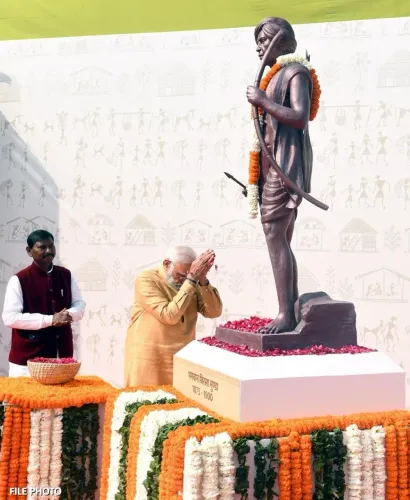
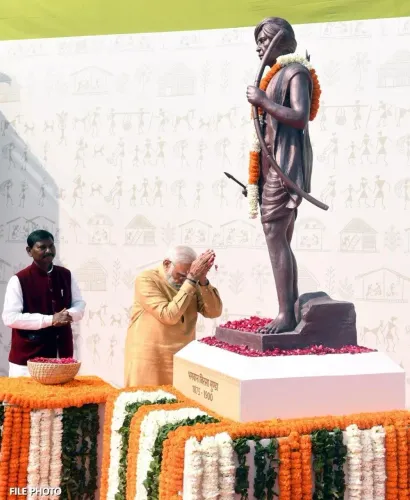
Delhi BJP President Harsh Malhotra paid floral tributes to Birsa Munda at Sarai Kale Khan, New Delhi on 9 June , his death anniversary.
Malhotra cited Munda's slogan 'Abua Dishum, Abua Raj' (Our Country, Our Rule) as a lasting symbol of tribal self-determination.
Birsa Munda was arrested on 3 March 1900 and died in Ranchi Jail on 9 June 1900 , aged 25 .
He founded the Birsait faith movement and led anti-colonial uprisings across present-day Jharkhand, Bihar , and West Bengal .
The state of Jharkhand was formed on Munda's birth anniversary, 15 November 2000 , as a tribute to his legacy.
Malhotra linked Munda's forest-protection message to present-day concerns over global warming and declining water levels.
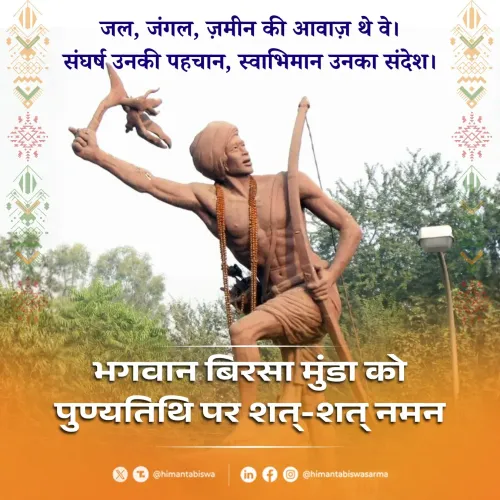
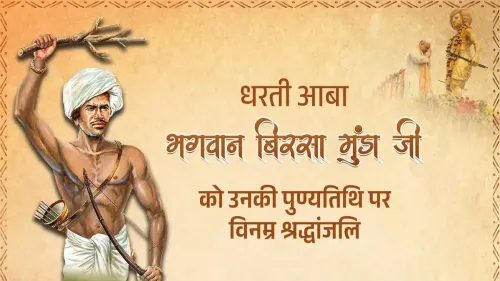
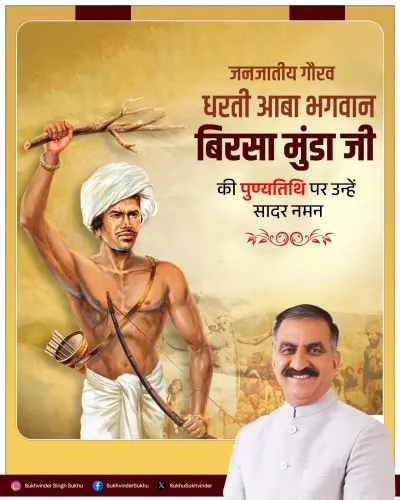
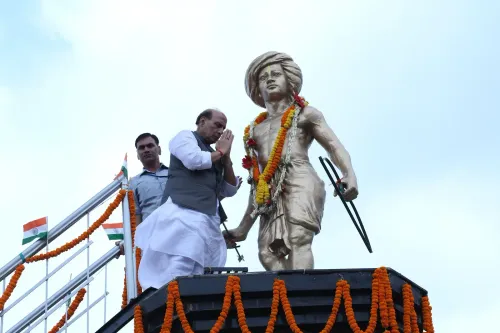
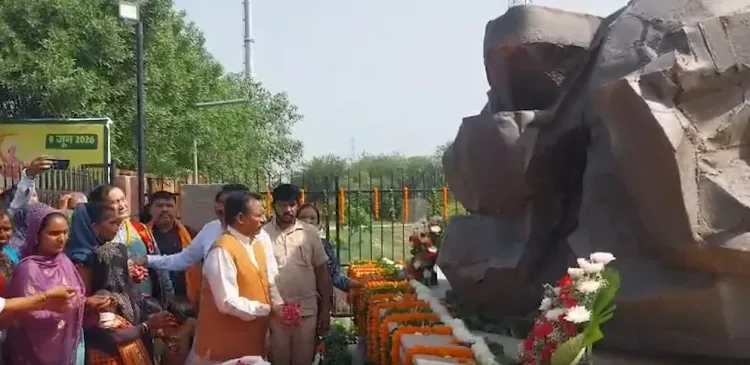
Delhi BJP President Harsh Malhotra on Tuesday, 9 June paid floral tributes to tribal leader and freedom fighter Birsa Munda on his death anniversary, joining tribal children and women at Sarai Kale Khan in New Delhi. Malhotra described Munda as a towering figure who gave his life to protect the rights, culture, and heritage of India's tribal communities.
What Malhotra Said
Speaking to reporters at the event, Malhotra invoked Munda's defining slogan. 'Abua Dishum, Abua Raj' — meaning 'Our Country, Our Rule' — was the rallying cry Munda used to galvanise tribal communities against colonial subjugation, Malhotra noted.
'Bhagwan Birsa Munda lived a short life, but he was revered as a divine figure because he fought to protect the tribal communities' water, land and cultural heritage. He worked to preserve their traditions and inspired people to protect forests and trees, thereby safeguarding the environment,' Malhotra said.
Legacy of Resistance Against Colonial Rule
Malhotra highlighted Munda's fierce resistance to British policies, particularly the Zamindari system through which colonial authorities systematically seized tribal lands. 'When the British began seizing the lands of tribal communities through the Zamindari system, Birsa Munda emerged as a leader of resistance. He was among the earliest freedom fighters who challenged British rule and courageously fought against their guns with traditional weapons such as bows and arrows,' he said.
Munda, born in the tribal belt of the Chhotanagpur Plateau, began fighting for tribal rights as a teenager. Though he briefly attended a German Mission School, he left formal education to dedicate himself to social reform and anti-colonial resistance. He later founded the Birsait faith movement, which drew followers from the Munda and Oraon communities. Between 1886 and 1890, he participated in several anti-establishment and anti-missionary movements in Chaibasa.
Who Was Birsa Munda
A fearless leader from the Munda tribe, Birsa Munda spearheaded a major tribal uprising against British rule across regions that now constitute Jharkhand, Bihar, and West Bengal. He was arrested by British authorities on 3 March 1900 and died in Ranchi Jail on 9 June 1900, aged just 25. In recognition of his enduring legacy, the state of Jharkhand was carved out of Bihar on his birth anniversary, 15 November 2000.
Relevance Today: Environment and Tribal Empowerment
Malhotra stressed that Munda's teachings carry urgent contemporary relevance, particularly on environmental conservation. 'Environmental protection is extremely important today. Due to global warming, water levels are declining, and forests are being destroyed. We must create awareness about these issues and ensure that tribal communities are empowered and brought into the mainstream while preserving their unique identity and traditions,' he said.
The tribute was paid on behalf of the Bharatiya Janata Party (BJP) and the NDA government. As India continues to grapple with deforestation and displacement of tribal populations, Munda's dual legacy — of political resistance and ecological stewardship — remains a touchstone for policymakers and activists alike.
Point of View
Odisha, and Madhya Pradesh. Malhotra's decision to frame Munda's legacy through the lens of environmental conservation is notable: it attempts to reclaim a narrative that opposition parties and civil society groups have long associated with tribal land-rights activism. Whether that framing translates into concrete policy for tribal communities — land titling, forest rights implementation, displacement rehabilitation — is the harder question the tribute leaves unanswered.
NationPress
24 Oct 2026
Frequently Asked Questions
Who was Birsa Munda and why is he remembered?
Birsa Munda was a tribal leader and freedom fighter from the Munda tribe who led a major uprising against British colonial rule in the Chhotanagpur Plateau region, now spanning Jharkhand, Bihar, and West Bengal. He is remembered for defending tribal land rights, founding the Birsait faith movement, and inspiring generations of tribal communities before his death in Ranchi Jail on 9 June 1900, aged 25.
Why did Delhi BJP chief Harsh Malhotra pay tribute to Birsa Munda?
Harsh Malhotra paid floral tributes on 9 June, the death anniversary of Birsa Munda, at Sarai Kale Khan in New Delhi, alongside tribal children and women. The event was held on behalf of the BJP and the NDA government to honour Munda's contributions to tribal rights, environmental protection, and India's freedom struggle.
What is the significance of 9 June for Birsa Munda?
9 June marks the death anniversary of Birsa Munda, who died in Ranchi Jail on this date in 1900 after being arrested by British authorities on 3 March 1900. He was just 25 years old at the time of his death.
What was the Birsait movement founded by Birsa Munda?
The Birsait was a faith movement founded by Birsa Munda that attracted followers from the Munda and Oraon tribal communities. It was part of his broader effort to unite tribal people around a shared cultural and spiritual identity as a counter to colonial and missionary influence.
How is Jharkhand connected to Birsa Munda's legacy?
The state of Jharkhand was carved out of Bihar on 15 November 2000 — Birsa Munda's birth anniversary — as a direct tribute to his legacy and the long-standing aspirations of tribal communities in the Chhotanagpur Plateau region for a separate homeland.