Delhi CM Introduces Advanced Amphibious Excavators for Drain Cleaning
Synopsis
Delhi Chief Minister Rekha Gupta has launched state-of-the-art amphibious excavators to enhance the city’s drainage cleaning operations. This initiative aims to improve water drainage and reduce monsoon waterlogging significantly.
Key Takeaways
Launch of advanced amphibious excavators in Delhi.
Focus on improving drainage capacity and reducing waterlogging.
Najafgarh Drain is crucial for managing city silt.
Year-round desilting efforts for proactive flood management.
Government's commitment to modernizing urban infrastructure.
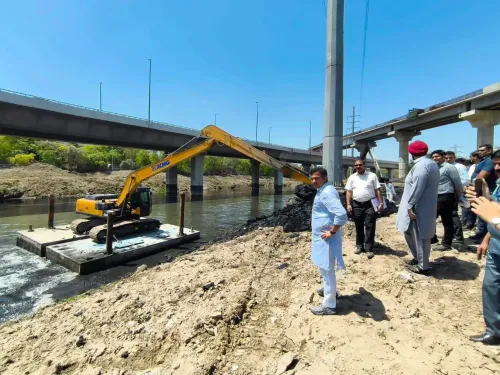
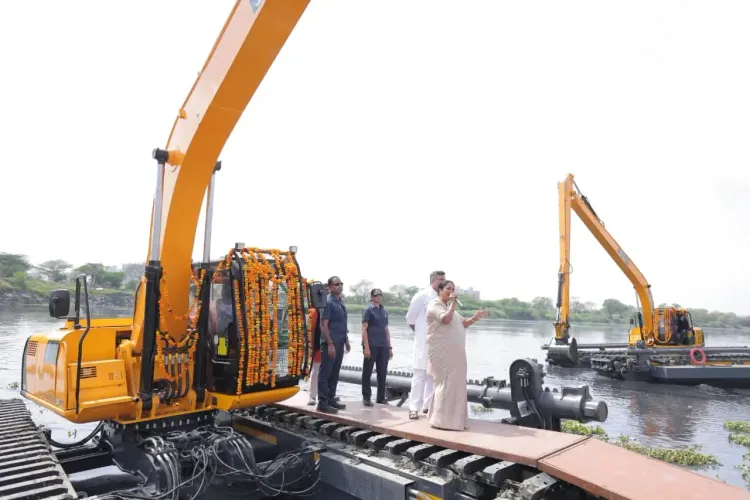
New Delhi, March 13 (NationPress) - On Friday, Delhi's Chief Minister Rekha Gupta unveiled advanced amphibious excavators (both long boom and short boom models) at the Badusarai Bridge, Najafgarh Drain, and Pankha Road Drain, aimed at enhancing the efficiency of the city's drainage cleaning efforts.
These innovative machines are set to drastically accelerate desilting activities, facilitate garbage removal, and eliminate water hyacinth from the drains, as per an official statement. This initiative is anticipated to bolster the drainage capacity and mitigate waterlogging issues during the monsoon.
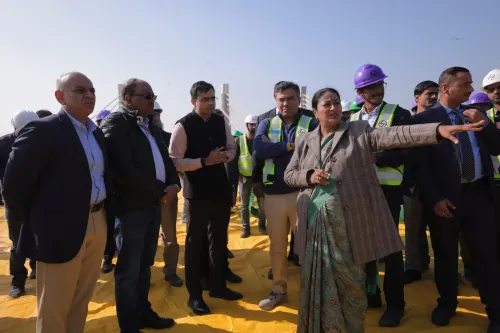
The Chief Minister emphasized the Delhi government's commitment to utilizing cutting-edge technology for effective drain cleaning and for revitalizing the Yamuna River.
The launch event was graced by Delhi Cabinet Ministers Parvesh Sahib Singh and Ashish Sood, alongside senior officials from related departments.
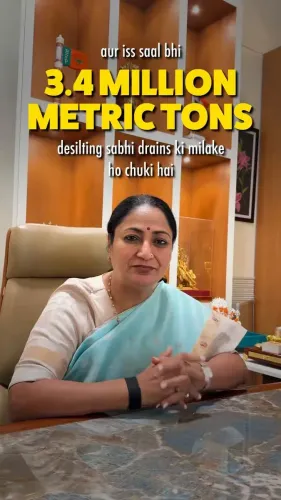
CM Gupta highlighted that the Najafgarh Drain is the largest in Delhi, responsible for transporting approximately 75% of the silt from the city's drainage system.
She remarked that the task of removing the significant silt build-up had previously been deemed extremely challenging.
However, with these modern floating machines now in use, the task has become manageable. These machines can directly access the center of the drain to extract silt, thus speeding up the removal of long-standing sludge.
Estimates suggest that over 10 million metric tonnes of silt have accumulated in the Najafgarh Drain.
The newly introduced amphibious machines will tackle this substantial accumulation. The Delhi government is also planning to acquire additional amphibious equipment.
Previously, one machine had been procured, and on Friday, four more were inaugurated. The remaining units will be delivered to the department shortly.
In addition, the Chief Minister stated that the Delhi government is now conducting desilting operations year-round, rather than confining them to the pre-monsoon period. This proactive approach aims to more effectively combat waterlogging during the rainy season.
Frequently Asked Questions
What are the new machines introduced by Delhi CM?
The newly introduced machines are state-of-the-art amphibious excavators designed for efficient drainage cleaning.
How will these machines impact water drainage in Delhi?
These machines will improve desilting operations and reduce waterlogging, especially during the monsoon season.
What is the Najafgarh Drain's significance?
The Najafgarh Drain is the largest in Delhi, carrying nearly 75% of the city's drainage silt.
How much silt has accumulated in the Najafgarh Drain?
It is estimated that over 10 million metric tonnes of silt have built up in the Najafgarh Drain.
Will more machines be deployed?
Yes, the Delhi government plans to procure additional amphibious machines to enhance drainage operations.