FM Sitharaman details ₹6,500 cr J&K infra push in Rajya Sabha
Synopsis
Union Finance Minister Nirmala Sitharaman told the Rajya Sabha on August 6, 2026 that the Centre has invested ₹1,350 crore in J&K hydel projects since 2021-22 and disbursed ₹5,166.5 crore under the 50-year interest-free SASCI scheme, with up to ₹6,293 crore earmarked for FY27 subject to reform conditions.
Key Takeaways
₹1,350 crore invested in the Kiru, Ratle, and Kwar hydroelectric projects on the Chenab river since 2021-22 .
The three projects together represent over 2,000 MW of planned generation capacity in Jammu and Kashmir . ₹5,166.5 crore disbursed to J&K under the 50-year interest-free SASCI scheme since 2025-26 .
For FY27 , ₹1,407 crore already released under SASCI's untied component; a further ₹4,886 crore is conditional on J&K meeting reform benchmarks.
FM Sitharaman made the disclosure in the Rajya Sabha on August 6, 2026 , framing the spending as affirmation that J&K is 'an integral part of India'.
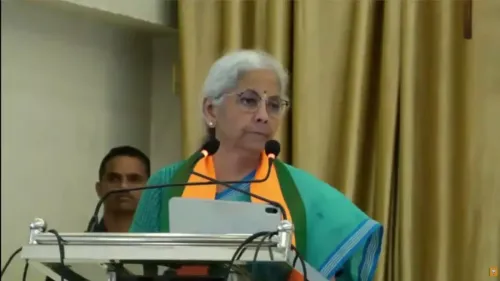
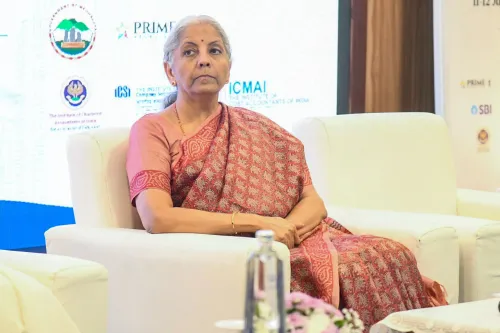
Over ₹1,350 crore flowing into Chenab basin hydropower and more than ₹5,000 crore in interest-free capital loans — Union Finance Minister Nirmala Sitharaman laid out the Centre's infrastructure arithmetic for Jammu and Kashmir in the Rajya Sabha on Thursday, August 6, 2026, framing every rupee as proof of the government's commitment to a region it calls an integral part of India.
Three Chenab projects, one strategic push
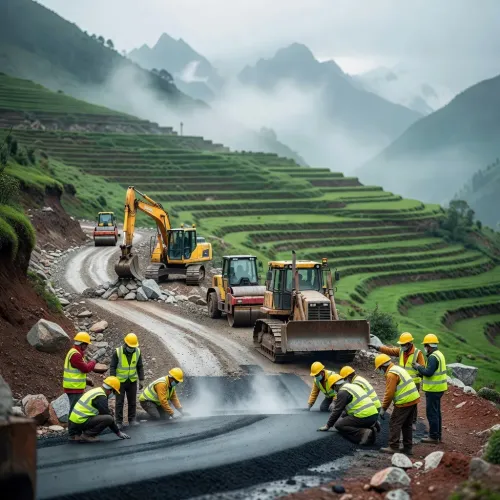
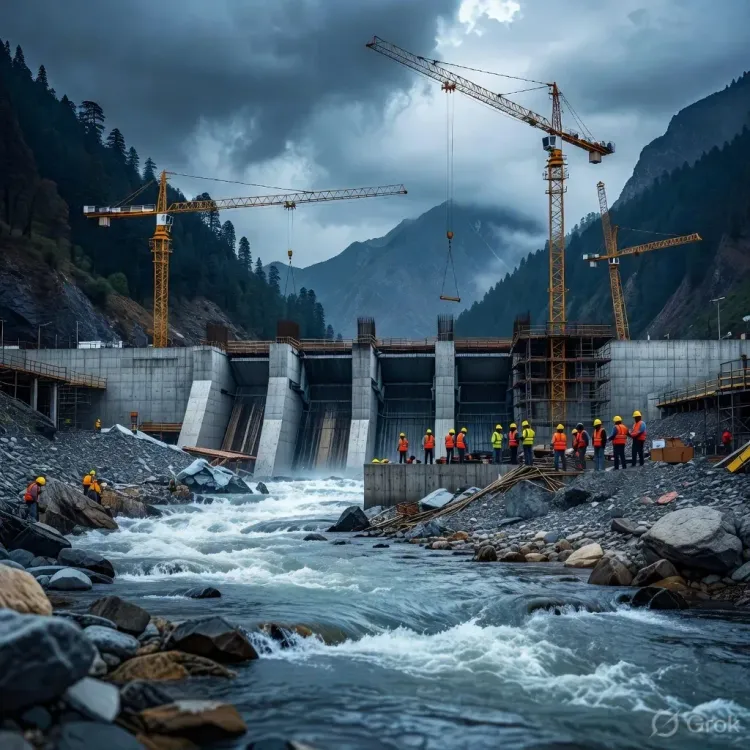
At the heart of the statement are three run-of-the-river hydroelectric projects cascading down the Chenab river in Jammu and Kashmir. The Kiru Hydropower Project (624 MW), the Ratle Hydropower Project (850 MW) in Kishtwar district, and the Kwar Hydropower Project (540 MW) together represent a combined generation capacity of over 2,000 MW. Since 2021-22, the Centre has channelled ₹1,350 crore into these projects — an investment that accelerated sharply after J&K's reorganisation as a Union Territory in 2019.
The Chenab cascade is not merely an energy play. For New Delhi, these dams are infrastructure anchors in a sensitive border region, and their commissioning timelines will be closely watched in future budget documents and J&K legislative updates.
SASCI: the interest-free lever behind capital creation
Parallel to the power projects runs a broader capital-expenditure mechanism. The Special Assistance for Capital Investment (SASCI) scheme provides 50-year interest-free loans to states and Union Territories for asset creation. Since 2025-26, J&K has received ₹5,166.5 crore under this window — a significant infusion for a UT that depends heavily on central transfers for development spending.
For FY27, Sitharaman confirmed that ₹1,407 crore has already been released under SASCI's untied component, which gives J&K flexibility in deploying funds. A further ₹4,886 crore is available contingent on the UT meeting conditions tied to reform components — a design that incentivises structural governance changes alongside capital spending.
The reform-linked conditionality inside the numbers
The conditional ₹4,886 crore tranche is the detail worth watching. SASCI's reform-linked architecture — borrowed from the interest-free loan mechanism extended to states under earlier central schemes — ties disbursements to measurable policy actions. For J&K, meeting those conditions would unlock a total FY27 SASCI envelope of roughly ₹6,293 crore, a figure that would dwarf most years of central capital support to the UT.
Sitharaman's Rajya Sabha statement, posted as part of a thread from her official account, closed with a pointed assertion: all of this, she said, 'reaffirm[s] the Centre's resolve to ensure the development of J&K, which is an integral part of India.' The political subtext is deliberate — infrastructure spending as both economic policy and constitutional statement.
The real test will come in commissioning reports for Kiru, Ratle, and Kwar, and in whether J&K clears the reform hurdles to unlock every rupee on offer.
Point of View
A design that could either accelerate J&K's institutional reform or create friction if targets slip. Sustained hydel investment on the Chenab also positions India strategically ahead of any future conversations around the Indus Waters Treaty. Taken together, the numbers reveal a Centre that views J&K development spending as simultaneously economic, political, and geopolitical.
NationPress
21 Sept 2026
Frequently Asked Questions
What is the SASCI scheme and how does J&K benefit from it?
SASCI — Special Assistance for Capital Investment — is a central scheme that provides 50-year interest-free loans to states and Union Territories for capital expenditure and infrastructure creation. J&K has received ₹5,166.5 crore under it since 2025-26, with up to ₹6,293 crore earmarked for FY27 subject to reform conditions.
What are the Kiru, Ratle, and Kwar hydropower projects?
All three are run-of-the-river hydroelectric projects on the Chenab river in Jammu and Kashmir. Kiru is rated at 624 MW , Ratle at 850 MW (in Kishtwar district), and Kwar at 540 MW , giving a combined planned capacity of over 2,000 MW.
How much has the Centre invested in J&K hydel projects since 2021-22?
₹1,350 crore has been invested in the Kiru, Ratle, and Kwar hydropower projects since 2021-22 , according to Finance Minister Nirmala Sitharaman's statement in the Rajya Sabha on August 6, 2026.
What is the conditional ₹4,886 crore SASCI tranche for J&K in FY27?
Beyond the ₹1,407 crore already released under SASCI's untied component for FY27, an additional ₹4,886 crore is available to J&K if the UT meets specific conditions tied to SASCI's reform components — a design that links capital disbursements to governance improvements.
Why did Nirmala Sitharaman make this statement in Rajya Sabha?
FM Sitharaman outlined J&K's infrastructure and capital investment figures in the Rajya Sabha on August 6, 2026 to reaffirm the Centre's development commitment to the Union Territory, explicitly stating that J&K is 'an integral part of India'.