Vikram Misri's China visit signals India's mature foreign policy reset
Synopsis
Foreign Secretary Vikram Misri's Beijing visit is not a breakthrough — it is a deliberate tone reset. With border trade resuming through Lipulekh, Shipki La, and Nathu La, and structured military and diplomatic channels being restored, India is signalling that it can manage an enduring rivalry without letting it spiral into crisis.
Key Takeaways
Foreign Secretary Vikram Misri visited China in a move analysts describe as a 'reset in tone and intent,' not a diplomatic breakthrough.
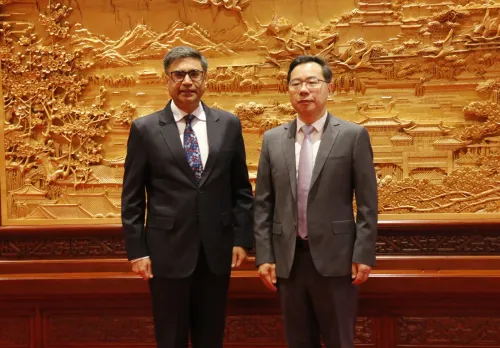
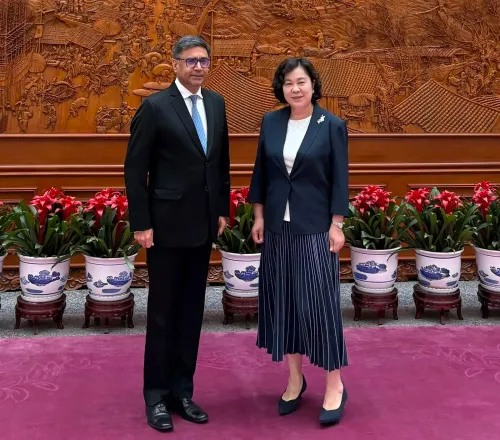
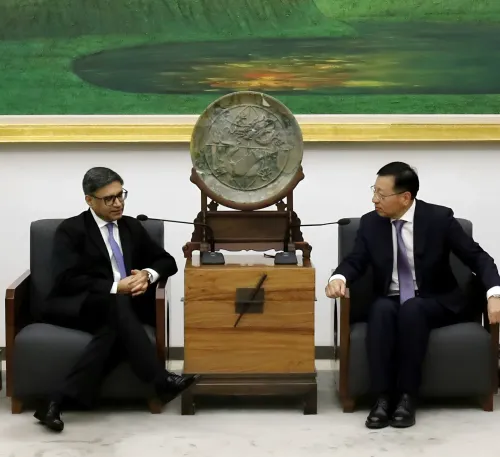
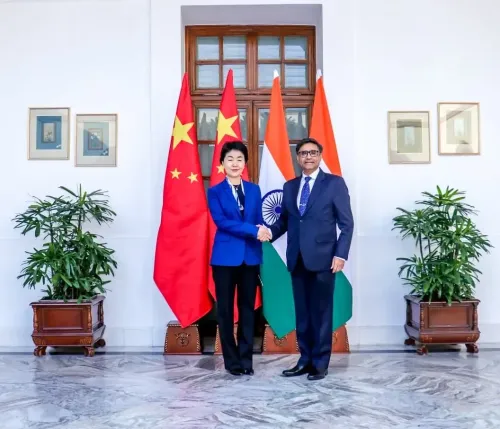
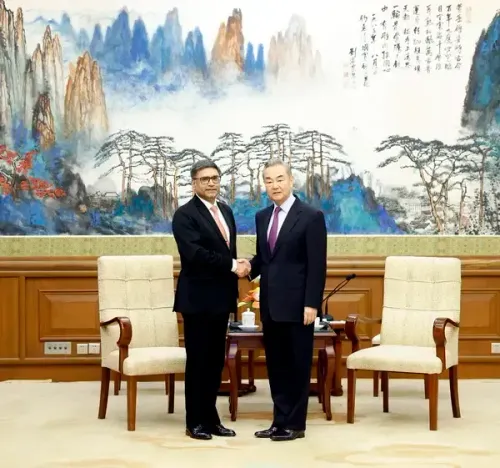
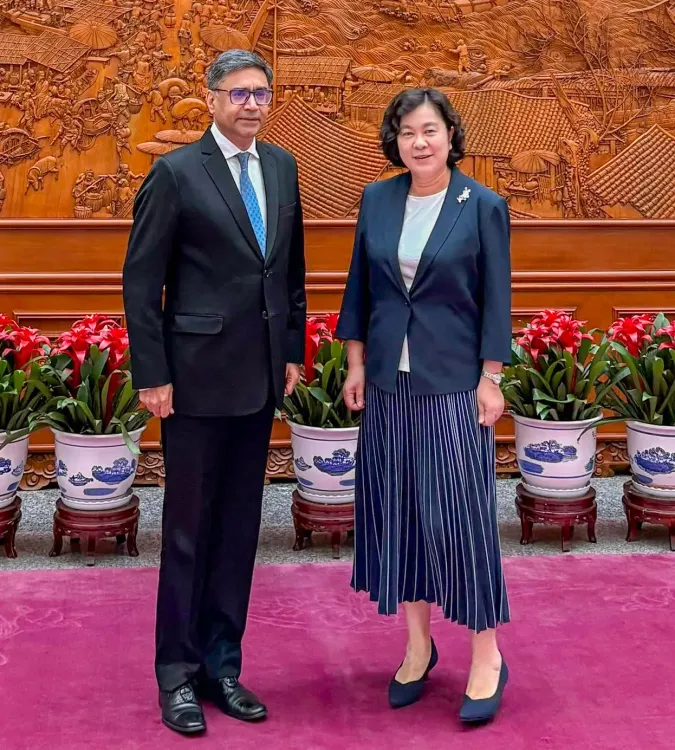
Misri met Vice Minister Hua Chunying , Hong Liang of the CPPCC , and Sun Haiyan of the CPC Central Committee during his Beijing engagements.
The MEA confirmed resumption of border trade through Lipulekh , Shipki La , and Nathu La Pass .
India's position remains unchanged: border tranquillity is a prerequisite for broader normalisation of ties.
Analysts note that a final boundary settlement remains years away, but both sides are rebuilding mechanisms — patrol protocols, hotlines, military talks — to prevent local incidents from escalating.
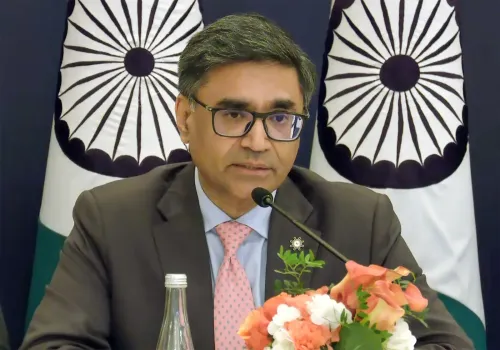
Foreign Secretary Vikram Misri's official visit to China reflects a cautious but deliberate effort to stabilise one of Asia's most consequential bilateral relationships, according to an analysis published in India Narrative. The visit, analysts note, should not be read as a diplomatic breakthrough but rather as a reset in tone and intent — a signal that New Delhi is confident enough to engage Beijing without pretending the underlying rivalry has disappeared.
What the Visit Signals
'It reflects a mature foreign policy — one confident enough to recognise complexity, to accept that rivals can still talk, trade, and set guardrails around their competition without pretending the underlying rivalry has disappeared,' wrote Arjun Mehta in his analysis for India Narrative. He added that 'the real test will lie in follow-through: whether this round of dialogue translates into sustained calm at the border, fairer economic terms over time, and resilient channels of contact that can withstand the next crisis of confidence.'
Mehta further noted that 'in a fractured global order where great-power relationships increasingly default to confrontation, even modest, hard-won stability between India and China is a strategic asset worth pursuing — not because it resolves their rivalry, but because it makes that rivalry safer to live with.'
Border Stability at the Centre
India's longstanding position — that normalcy in bilateral ties is contingent on tranquillity at the border, not the reverse — remained the anchor of Misri's engagements. Analysts indicate that a final resolution to the boundary dispute remains years away; however, both nations now appear to recognise the importance of sustaining contact through patrol protocols, hotlines, and military-to-military dialogue to prevent local skirmishes from escalating into larger confrontations.
On Tuesday, the Ministry of External Affairs (MEA) confirmed that India and China are moving ahead with an earlier understanding on the resumption of border trade through the designated trading points of Lipulekh, Shipki La, and Nathu La Pass.
Key Meetings in Beijing
On Monday, Misri met China's Vice Minister of Foreign Affairs Hua Chunying for a comprehensive review of bilateral ties. The Embassy of India in China stated on X that the two sides 'discussed means of advancing the vision of the two leaders that India and China are partners and development opportunities for each other, including through mutually beneficial outcomes across trade and economic ties, culture, and people-to-people exchanges.'
Misri also held discussions with Hong Liang, Deputy Secretary General of the 14th National Committee of the Chinese People's Political Consultative Conference (CPPCC), focusing on ways to enhance bilateral exchanges at both the political and people-to-people levels.
In a separate meeting, he engaged with Sun Haiyan, Vice Minister of the International Department of the CPC's Central Committee, to discuss deepening implementation of the guidance provided by Prime Minister Narendra Modi and Chinese President Xi Jinping for bilateral relations. The Indian Embassy noted that discussions covered 'issues of priority to both sides' and the promotion of 'political, people-to-people, academic and think-tank exchanges.'
What Comes Next
The resumption of border trade through key mountain passes and the restoration of structured military and diplomatic communication channels suggest a cautious but tangible forward movement. Whether this momentum translates into durable stability — at the Line of Actual Control (LAC) and in economic engagement — will determine the lasting significance of Misri's Beijing visit.
Point of View
' but the more telling signal is structural: India is rebuilding crisis-prevention architecture — hotlines, patrol protocols, military-to-military channels — that had effectively broken down after Galwan. The resumption of border trade through Lipulekh, Shipki La, and Nathu La is symbolically significant, but the volumes will be modest until trust is rebuilt at the LAC. The deeper question mainstream coverage glosses over is economic asymmetry: India has been far more cautious about Chinese investment and imports than Beijing has about Indian goods. Whether 'fairer economic terms' — as analysts put it — actually materialise, or whether this remains a security-first engagement with trade as rhetorical garnish, will be the real measure of this reset.
NationPress
29 Jul 2026
Frequently Asked Questions
What was the purpose of Foreign Secretary Vikram Misri's visit to China?
Misri's visit aimed to stabilise India-China bilateral ties through structured diplomatic engagement, covering border stability, trade resumption, and people-to-people exchanges. Analysts describe it as a reset in tone and intent rather than a breakthrough on unresolved disputes.
Which Indian and Chinese officials did Vikram Misri meet during his Beijing visit?
Misri met Vice Minister of Foreign Affairs Hua Chunying, Hong Liang of the 14th National Committee of the CPPCC, and Sun Haiyan of the CPC Central Committee's International Department. Discussions covered the full spectrum of bilateral ties, including border areas, trade, and leader-level guidance.
What is the status of India-China border trade after Misri's visit?
The Ministry of External Affairs confirmed that India and China are moving ahead with the resumption of border trade through Lipulekh, Shipki La, and Nathu La Pass, in line with an earlier bilateral understanding. This marks a tangible step in normalising economic engagement at the border.
Has the India-China boundary dispute been resolved?
No. Analysts cited in the India Narrative report indicate that a final settlement on the boundary question remains years away. However, both sides are rebuilding mechanisms — including patrol protocols, hotlines, and military-to-military talks — to prevent local incidents from escalating.
Why does India's foreign policy stance link border peace to broader normalisation?
India's consistent position is that tranquillity at the Line of Actual Control (LAC) is a prerequisite for normalising the wider bilateral relationship, not a consequence of it. This stance, reaffirmed during Misri's visit, reflects lessons drawn from the 2020 Galwan Valley clash and subsequent border standoffs.