Giriraj Singh Hails Handloom Sector Growth Under Modi Since 2014
Synopsis
Union Textiles Minister Giriraj Singh on 1 July 2026 lauded over a decade of Modi government initiatives — from GI tags and digital markets to affordable credit and social security — for empowering India's handloom weavers and projecting their craft globally.
Key Takeaways
Giriraj Singh posted on 1 July 2026 crediting PM Narendra Modi 's government with transforming the handloom sector between 2014 and 2026 .
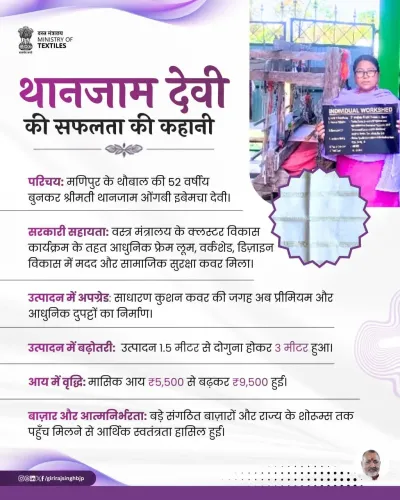
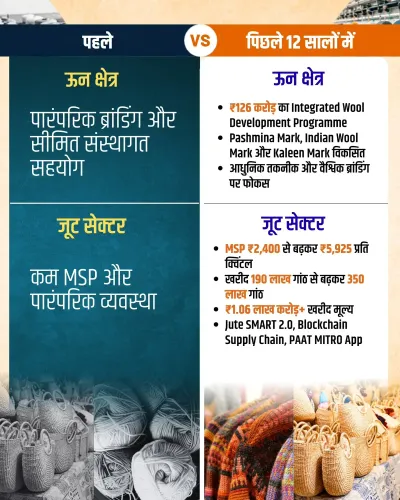
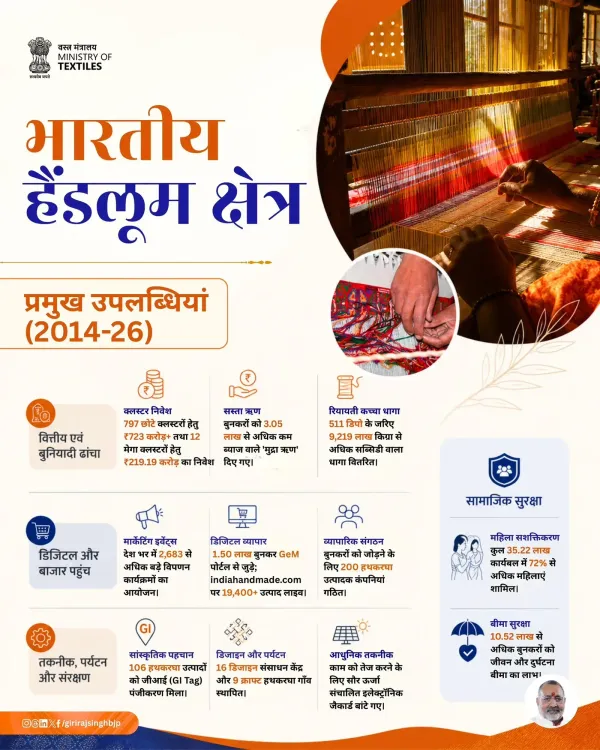
Key interventions cited include financial assistance, affordable credit, modern technology, digital marketplaces, GI tags , design innovation, and social security for weavers.
The Make in India initiative (launched September 2014 ) and the Atmanirbhar Bharat package ( May 2020 ) form the core policy spine behind handloom support.
GI tags under the 1999 Act have been used to brand and protect products such as Banarasi and Kanjeevaram sarees in domestic and global markets.
The Vocal for Local campaign has reinforced domestic consumer demand alongside export-promotion measures for handloom products.
Next Union Budget allocations and updates to the National Handloom Development Programme will be watched for concrete follow-through.
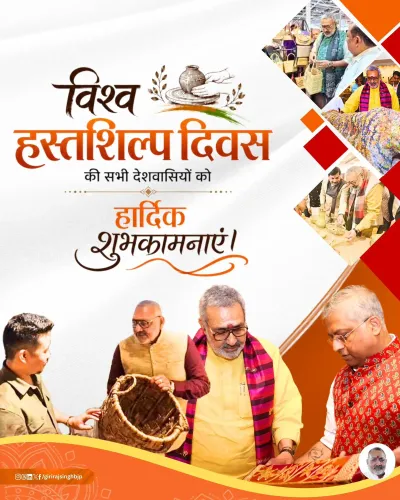
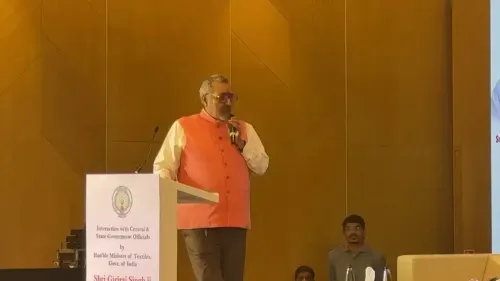
Union Textiles Minister Giriraj Singh on Wednesday, 1 July 2026 took to X to highlight a decade-plus of government support for India's handloom sector, calling it the backbone of the country's heritage, weavers' craft, and the Atmanirbhar Bharat (self-reliant India) identity.
Context
In his post, Giriraj Singh described Indian handloom as 'hamari samridh virasat, bunakaron ke kaushal aur Atmanirbhar Bharat ki sashakt pahchaan' — 'our rich heritage, the skill of weavers, and the powerful identity of a self-reliant India.' He credited initiatives spanning 2014 to 2026 under Prime Minister Narendra Modi for delivering financial assistance, affordable credit, modern technology, digital marketplaces, GI tags, design innovation, and social security to the sector. The minister concluded with the slogan 'Sashakt bunkar, samridh Bharat' — 'Empowered weavers, prosperous India.'
Policy Backdrop
The handloom push has been woven into several overlapping policy frameworks since 2014. The Make in India initiative, launched in September 2014, explicitly designated textiles and handlooms as priority sectors for investment and export growth. The Amended Technology Upgradation Fund Scheme (ATUFS) extended capital subsidies to weavers for modern looms and processing equipment, while the Atmanirbhar Bharat package announced in May 2020 layered on additional liquidity support and interest subvention for textile MSMEs and weaver clusters.
Geographical Indication (GI) tags, granted under the Geographical Indications of Goods (Registration and Protection) Act, 1999, have been a key tool for branding distinctive handloom products — from Banarasi and Kanjeevaram sarees to a range of regional weaves — giving them legal protection and premium market positioning both domestically and in export markets.
Stakeholders and Impact
India's handloom sector is among the largest cottage industries in the country, employing millions of weavers and allied artisans, many of them women in rural and semi-urban clusters. The convergence of digital marketplace access and GI branding has, over successive budget cycles, aimed to integrate these clusters into formal value chains and global supply lines. The Vocal for Local campaign has amplified consumer demand for handloom products within India, complementing export-promotion efforts.
Similar policy instruments — financial inclusion, technology upgradation, and artisanal branding — have been deployed in parallel for khadi and handicrafts sectors, suggesting a broader government strategy to formalise and scale traditional industries under the Atmanirbhar Bharat umbrella.
What's Next
Attention will now turn to the next Union Budget allocation for handloom schemes and any fresh guidelines under the National Handloom Development Programme. Parliamentary discussions on textile policy updates could also provide a platform for the ministry to detail outcomes of the measures cited by Giriraj Singh. The minister's post, framed around a twelve-year policy arc, signals that handloom welfare is likely to remain a visible political and economic priority for the ruling dispensation heading into the next budget cycle.
Point of View
Modi-branded transformation rather than announcing a new measure. It arrives at a moment when the government is keen to demonstrate rural livelihood outcomes ahead of the next budget cycle. The emphasis on GI tags, digital markets, and global recognition reflects an effort to reposition handloom not merely as a welfare sector but as an export and brand-building opportunity. The 'empowered weavers, prosperous India' framing also dovetails with the broader Atmanirbhar Bharat political messaging that the BJP has consistently deployed since 2020.
NationPress
1 Jul 2026
Frequently Asked Questions
What did Giriraj Singh say about handloom in his July 2026 post?
Giriraj Singh said Indian handloom represents the country's rich heritage and the self-reliant India identity, and credited PM Modi-led initiatives from 2014 to 2026 — including GI tags, digital markets, affordable credit, and social security — for strengthening the sector and giving weavers global recognition.
What government schemes support handloom weavers in India?
Key schemes include the National Handloom Development Programme, the Amended Technology Upgradation Fund Scheme (ATUFS) for equipment subsidies, interest subvention measures under the Atmanirbhar Bharat package, and GI tag protection under the 1999 Geographical Indications Act.
What is a GI tag and how does it help handloom weavers?
A Geographical Indication (GI) tag is a legal certification under the Geographical Indications of Goods (Registration and Protection) Act, 1999, that links a product to its place of origin. For handloom, it protects distinctive weaves like Banarasi and Kanjeevaram sarees from imitation and helps them command premium prices in domestic and export markets.
What is the Vocal for Local campaign and its link to handloom?
Vocal for Local is a government campaign encouraging Indians to prefer domestically made products. For the handloom sector it has helped boost consumer demand for traditional weaves, complementing export-promotion and GI-branding efforts.
What should one watch for next in India's handloom policy?
The next Union Budget allocation for handloom schemes and any revised guidelines under the National Handloom Development Programme will be key indicators of the government's continued commitment to the sector.