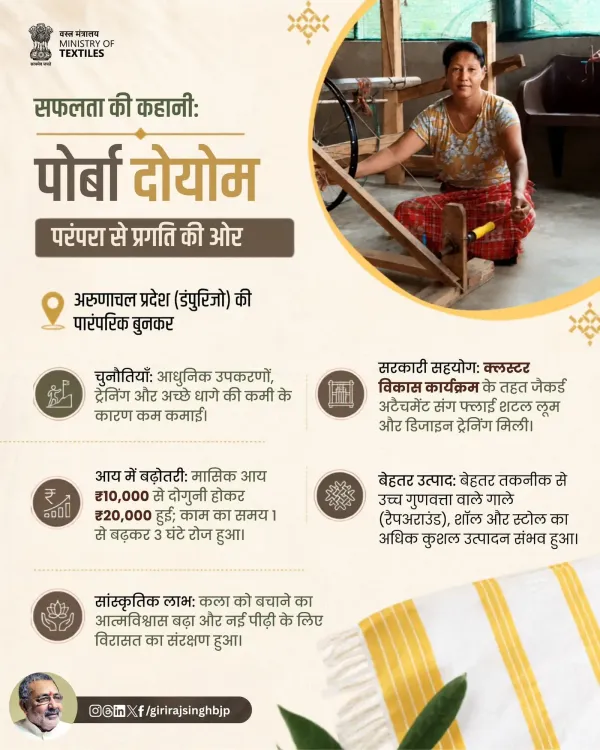
Giriraj Singh highlights weaver Porba Doyom's success story
Synopsis
Union Textiles Minister Giriraj Singh spotlighted handloom weaver Porba Doyom on 3 July 2026, saying government support, modern training and better facilities had lifted the artisan's income and recognition — encapsulating the ministry's 'Empowered weavers, prosperous India' message.
Key Takeaways
Giriraj Singh , Union Textiles Minister, posted on 3 July 2026 highlighting the success of handloom weaver Porba Doyom .
The Minister credited government support, modern training and improved infrastructure for the weaver's enhanced income and recognition.
The post carried the slogan 'Empowered weavers, prosperous India' alongside hashtags #VocalForLocal , #Handloom and #Textiles .
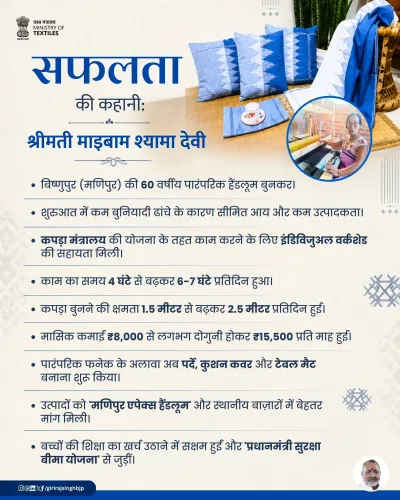
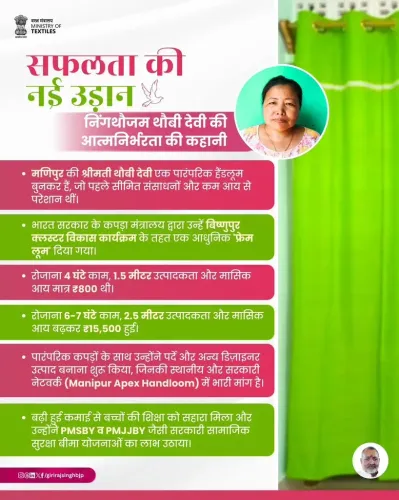
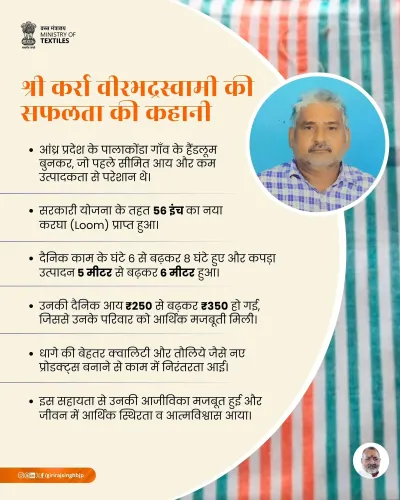
The narrative fits the Ministry of Textiles' pattern of showcasing individual artisan stories to demonstrate scheme impact.
The Vocal for Local campaign, launched in 2020 under Atmanirbhar Bharat , underpins the government's push for indigenous handloom products.
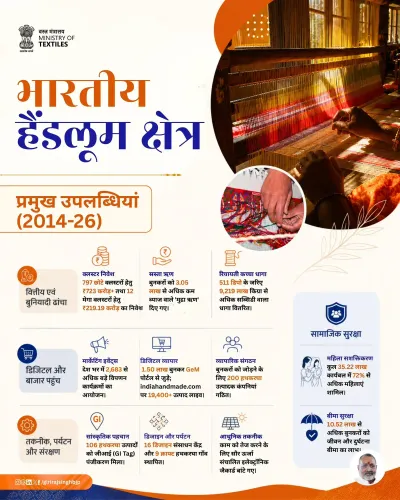
India's handloom sector employs millions of rural artisans and is central to the domestic manufacturing agenda.
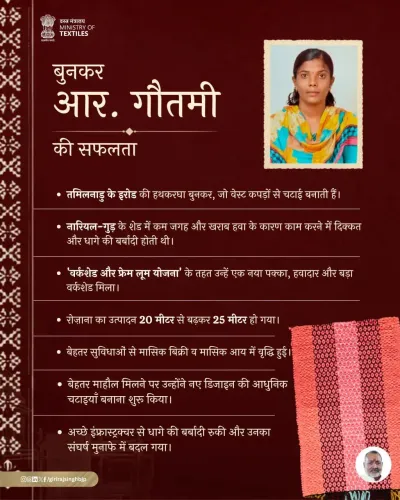
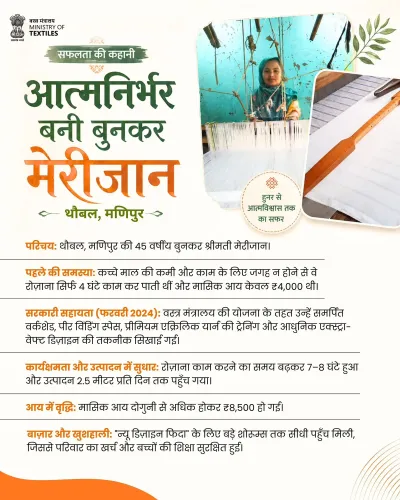
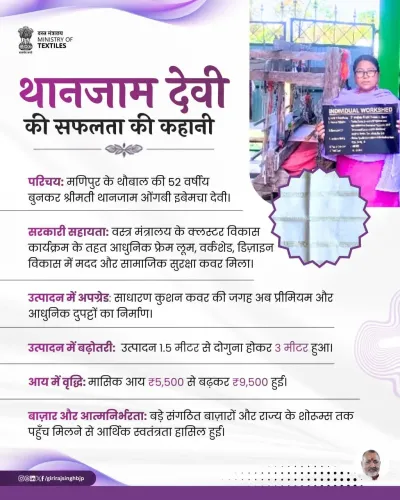
Union Textiles Minister Giriraj Singh on Friday, 3 July 2026, spotlighted the journey of a handloom weaver identified as Porba Doyom, crediting government support, modern training and improved infrastructure for transforming the artisan's craft into a source of stronger income and wider recognition.
Posting in Hindi on X, the Minister wrote: 'Porba Doyom ji ki safalta ki kahani bataati hai ki hamare bunakaron ka hunar avsar milne par nayi unchaiyon tak pahunch sakta hai' — 'The success story of Porba Doyom ji shows that the skill of our weavers can reach new heights when given the opportunity.' He added that government support, modern training and better facilities had not only given Porba Doyom's hard work a new identity but had also strengthened income. The post closed with the call: 'Empowered weavers, prosperous India' and the hashtags #VocalForLocal, #Handloom and #Textiles.
Context
The post is part of a sustained effort by the Ministry of Textiles to use individual artisan success narratives to demonstrate the on-ground impact of its welfare and skill-development programmes. Porba Doyom's story, as described by the Minister, illustrates how a combination of state support and training can translate traditional weaving skills into improved livelihoods. Such spotlights are typically timed around handloom expos, cluster development milestones or scheme anniversaries.
Policy Backdrop
The Vocal for Local campaign, launched in 2020 under the Atmanirbhar Bharat initiative, sought to build domestic demand for indigenous handloom and textile products. The Ministry of Textiles has since channelled this push through skill-training programmes, infrastructure upgrades at weaver clusters and market-linkage drives. India's handloom sector employs millions of artisans in rural areas and is central to the government's broader agenda of domestic manufacturing and reduced import dependence.
Stakeholders and Impact
Handloom weavers — many of them from economically vulnerable rural communities — are the primary beneficiaries of the policy ecosystem the Minister described. When government intervention combines skill upgradation with access to markets, individual weavers can move from subsistence-level income to sustainable livelihoods, as the Porba Doyom narrative is presented to illustrate. Artisan success stories also serve a secondary purpose: building consumer confidence in domestically produced handloom goods under the #VocalForLocal framework.
What's Next
Attention will now turn to the next Union Budget cycle and whether allocations for handloom clusters and weaver welfare schemes are revised upward. The Ministry is also expected to announce participation targets and new training modules at upcoming textile ministry events. Broader rollout of geographic indication (GI) registrations for regional handloom products could further amplify the kind of market recognition that the Minister attributed to Porba Doyom's success.
Point of View
Prosperous India' slogan, the Ministry of Textiles reinforces its Atmanirbhar Bharat messaging ahead of what is likely a budget or event cycle. The Vocal for Local hashtag keeps the post plugged into a six-year-old campaign that still carries strong recall among domestic consumers. Cumulatively, such messaging builds a political narrative around grassroots economic empowerment while simultaneously nudging consumers toward handloom purchases.
NationPress
3 Jul 2026
Frequently Asked Questions
Who is Porba Doyom and why is Giriraj Singh talking about them?
Porba Doyom is a handloom weaver whose success story was highlighted by Union Textiles Minister Giriraj Singh on 3 July 2026. The Minister cited government support, modern training and better facilities as factors that improved the weaver's income and recognition, using the story to illustrate the impact of ministry welfare programmes.
What is the Vocal for Local campaign in textiles?
Vocal for Local is a campaign launched in 2020 under the Atmanirbhar Bharat initiative to promote domestically produced handloom and textile goods. The Ministry of Textiles has used it to drive consumer demand for indigenous products and to support artisan livelihoods through skill training and market linkages.
What schemes does the Ministry of Textiles run for weavers?
The Ministry of Textiles runs several programmes covering skill training, infrastructure development at weaver clusters, market-linkage support and geographic indication registrations for regional handloom products. These are designed to improve incomes and market access for millions of rural handloom artisans across India.
What did Giriraj Singh post about handloom on 3 July 2026?
On 3 July 2026, Giriraj Singh posted in Hindi on X spotlighting weaver Porba Doyom's journey, saying that government support, modern training and better facilities had strengthened the artisan's income and identity, and closing with the message 'Empowered weavers, prosperous India'.
How many people work in India's handloom sector?
India's handloom sector employs millions of artisans, predominantly in rural areas, making it one of the largest cottage industries in the country and a key focus of government welfare and domestic manufacturing policy.