Giriraj Singh inaugurates NITRA's 52nd Foundation Day
Synopsis
Union Textiles Minister Giriraj Singh inaugurated NITRA's 52nd Foundation Day on 22 June 2026, calling India's textile sector a strong pillar of employment and economic growth, and stressing the role of research and innovation in driving global competitiveness.
Key Takeaways
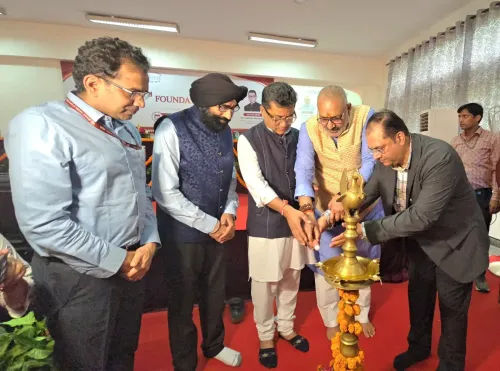
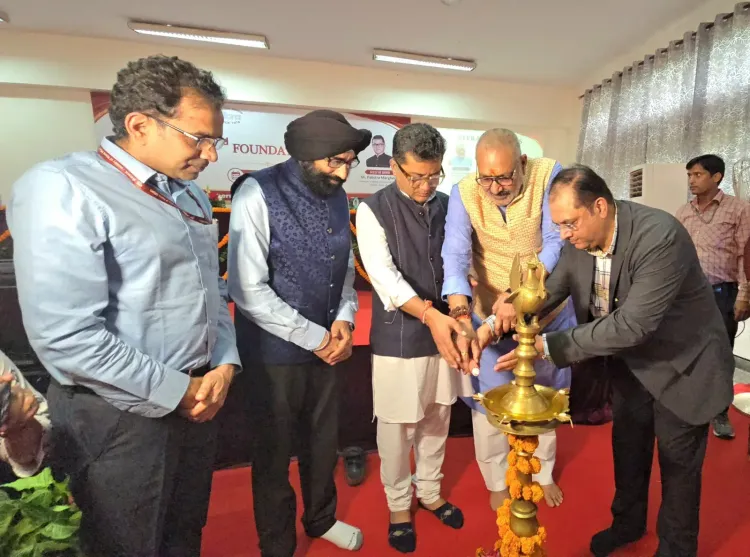
Giriraj Singh lit the ceremonial lamp at NITRA's 52nd Foundation Day on 22 June 2026 and was felicitated by the institution.
NITRA was established in 1974 and operates as an autonomous body under the Ministry of Textiles , providing applied R&D and testing services.
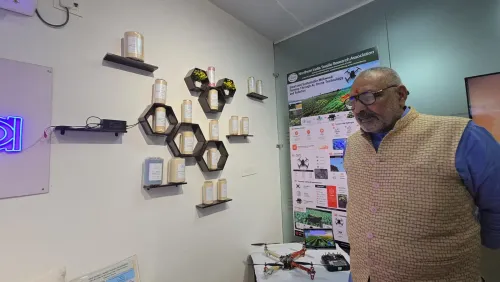
The event featured discussions on innovation, technological upgradation, and global market opportunities for the textile sector.
The government's National Technical Textiles Mission carries an outlay of Rs 1,480 crore to promote high-value technical textiles through research and skilling.
The PLI scheme for apparel and man-made fibres (notified 2021 ) and the long-running TUFS (since 1999 ) form the broader policy framework supporting NITRA's mandate.
Attention is now on Phase II of the National Technical Textiles Mission and fresh R&D allocations in the next Union Budget .
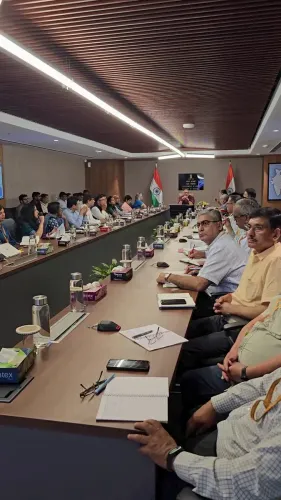
Union Textiles Minister Giriraj Singh on Monday, 22 June 2026 inaugurated the 52nd Foundation Day of the Northern India Textile Research Association (NITRA) by lighting the ceremonial lamp, and was felicitated by the institution at the event. The function brought together stakeholders from across the textile value chain to discuss innovation, technology upgradation, and global market opportunities for the sector.
Context
In his post on X, the minister wrote: 'NITRA के 52वें स्थापना दिवस के अवसर पर आयोजित कार्यक्रम में दीप प्रज्वलन कर शुभारंभ किया' — 'inaugurated the programme organised on the occasion of NITRA's 52nd Foundation Day by lighting the lamp.' He noted that the event featured 'meaningful discussions on the future of the textile industry, innovation, technological upgradation, and global opportunities.'
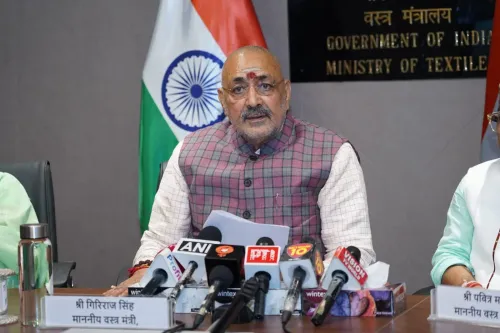
Giriraj Singh described India's textile sector as 'a strong pillar of employment, entrepreneurship, and economic development, which is being given further momentum through new technologies and research.' The event was marked by the hashtags #TextileSector, #Innovation, and #Development.
Policy Backdrop
NITRA was established in 1974 as one of four national textile research associations mandated to support industry-focused R&D, testing, and technical services across the textile value chain. It functions as an autonomous body under the Ministry of Textiles. The institution's five-decade run makes it one of the oldest applied-research bodies in the sector.
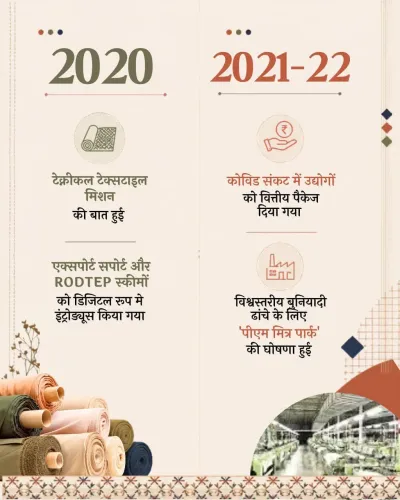
The government's National Technical Textiles Mission, approved in 2020 with an outlay of Rs 1,480 crore, has reinforced the role of such research associations by directing funds toward high-value technical textiles, skilling, and export promotion. The long-running Technology Upgradation Fund Scheme (TUFS), first launched in 1999, continues to provide interest reimbursement and capital subsidies to textile units adopting modern machinery — a policy lineage that NITRA's applied research directly supports.
The Production Linked Incentive (PLI) scheme for apparel and man-made fibres, notified in 2021, further underscores the government's push to move the sector from low-value cotton apparel toward man-made fibres and technical textiles, reducing import dependence on machinery and chemicals.
Stakeholders and Impact
Textile MSMEs, research institutions, and technical textile manufacturers are the primary beneficiaries of NITRA's work. The association provides testing, quality certification, and consultancy services that smaller units — which form the backbone of India's textile employment — often cannot access independently.
India's textile sector is among the country's largest employers, supporting millions of workers in spinning, weaving, processing, and garment manufacturing. Ministerial emphasis on linking research bodies like NITRA to global opportunities signals a continued policy intent to climb the value chain and expand exports beyond traditional markets.
What's Next
Industry observers are watching for the roll-out of Phase II of the National Technical Textiles Mission and any fresh budgetary allocation for R&D institutions in the forthcoming Union Budget. The minister's participation in NITRA's foundation day underlines the Ministry's interest in keeping applied textile research aligned with the Atmanirbhar Bharat manufacturing agenda. Sustained investment in institutions like NITRA will be critical if India is to meet its stated ambition of significantly scaling textile exports in the coming years.
Point of View
Such high-visibility ministerial engagements serve to keep institutional momentum alive ahead of budget deliberations. The felicitation of the minister by NITRA also reflects the institution's interest in maintaining close alignment with the current policy direction.
NationPress
22 Jun 2026
Frequently Asked Questions
What is NITRA and what does it do?
NITRA, or the Northern India Textile Research Association, is an autonomous body under India's Ministry of Textiles established in 1974. It provides applied research, testing, quality certification, and technical consultancy services to the textile industry, particularly supporting MSMEs and technical textile manufacturers.
Why did Giriraj Singh attend NITRA's foundation day?
As Union Textiles Minister, Giriraj Singh inaugurated NITRA's 52nd Foundation Day on 22 June 2026 by lighting the ceremonial lamp. The event focused on innovation, technology upgradation, and global opportunities for India's textile sector.
What is the National Technical Textiles Mission?
The National Technical Textiles Mission is a government scheme approved in 2020 with an outlay of Rs 1,480 crore to promote high-value technical textiles through research, skilling, and export promotion, with research bodies like NITRA playing a key role in its implementation.
What is the Technology Upgradation Fund Scheme (TUFS)?
TUFS is a long-running Ministry of Textiles programme first launched in 1999 that provides interest reimbursement and capital subsidies to textile units adopting modern technology, supporting the sector's overall modernisation drive.
What is India's PLI scheme for textiles?
The Production Linked Incentive scheme for apparel and man-made fibres was notified in 2021 to incentivise manufacturers to move toward higher-value products, reduce import dependence, and boost textile exports as part of the Atmanirbhar Bharat initiative.