CM Saini: Haryana-Rajasthan Sign Historic Water MOU in Delhi
Synopsis
Haryana CM Nayab Singh Saini announced a historic MOU between Haryana and Rajasthan on water sharing, signed in New Delhi on June 29 under Union Minister Amit Shah. The deal invokes the 1994 Upper Yamuna River Board pact and advances the Renuka, Kishau, and Lakhwar dam projects.
Key Takeaways
A historic water-sharing MOU between Haryana and Rajasthan was signed in New Delhi on June 29, 2026 .
The signing was presided over by Union Home and Cooperation Minister Amit Shah .
The agreement is anchored in the 1994 Upper Yamuna River Board (UYRB) compact , under which Rajasthan is entitled to a defined share of Yamuna waters.
The Renuka, Kishau, and Lakhwar dam projects are explicitly referenced as part of the agreement's framework.
Both states are currently governed by the BJP , with central mediation facilitating the consensus.
Implementation will hinge on the pace of dam construction and operational water-release protocols overseen by the UYRB .
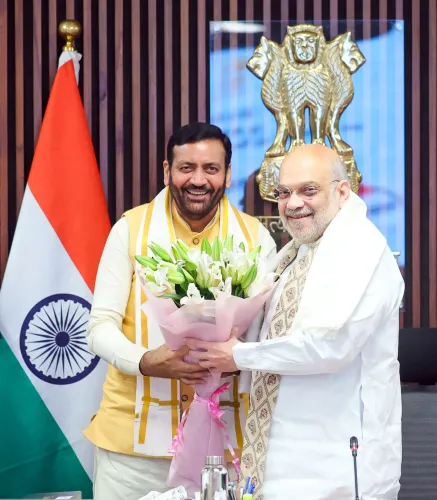
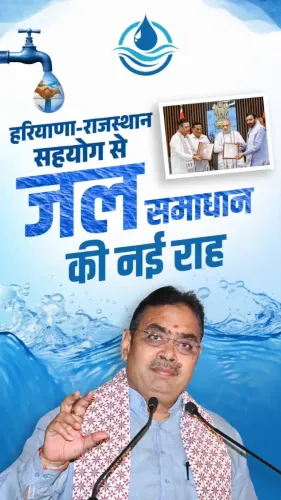
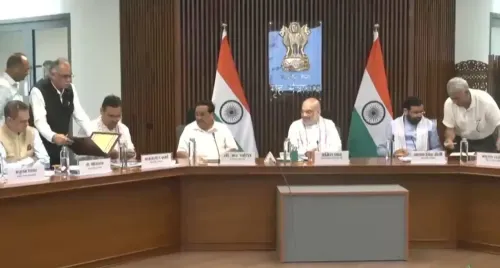
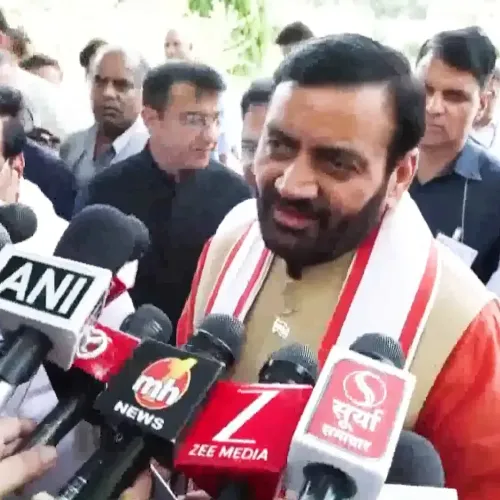
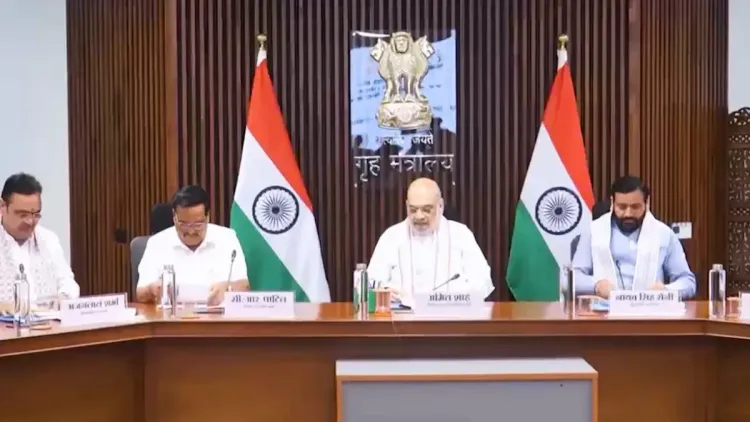
Haryana Chief Minister Nayab Singh Saini announced on Monday, June 29, 2026, that a historic water-sharing Memorandum of Understanding (MOU) was signed between Haryana and Rajasthan in New Delhi, presided over by Union Home and Cooperation Minister Amit Shah. The agreement marks a significant step toward resolving long-standing inter-state river water disputes in northern India.
Context
Posting in Hindi, CM Saini described the event as an 'aithasik jal samjhauta' (historic water agreement), stating that it was conducted under the chairmanship of Amit Shah. According to the post, water will be made available to Rajasthan in accordance with the 1994 Upper Yamuna River Board agreement, and the Renuka, Kishau, and Lakhwar dam projects are also part of the broader framework being advanced. The signing ceremony in New Delhi brought together senior officials and ministers from both states.
Policy Backdrop
The 1994 Upper Yamuna River Board (UYRB) agreement was a landmark compact among five basin states — Haryana, Uttar Pradesh, Himachal Pradesh, Rajasthan, and Delhi — to govern the allocation and utilisation of Yamuna waters. The Renuka dam (on the Giri river in Himachal Pradesh), the Kishau dam (on the Tons river on the Himachal Pradesh–Uttarakhand border), and the Lakhwar dam (on the Yamuna in Uttarakhand) are three major storage projects identified under this framework to augment dry-season flows. Progress on these projects has been intermittent for decades due to funding, inter-state coordination, and environmental clearance challenges.
The Lakhwar multipurpose project received renewed momentum in recent years after the central government took up a larger coordinating role. Completion of these three dams is considered critical to unlocking additional water for downstream states, particularly Rajasthan, which has historically pressed for its full allocated share. Today's MOU appears to formalise commitments between Haryana and Rajasthan within this larger basin-level architecture.
Stakeholders and Impact
For Rajasthan, the agreement addresses a perennial concern: reliable access to Yamuna water for its northern and eastern districts. For Haryana, formalising the arrangement under central mediation by Amit Shah signals political willingness to honour existing treaty obligations while also advancing the upstream dam projects that will benefit the state itself. Farmers, urban water utilities, and irrigation departments in both states are the primary beneficiaries if the MOU translates into timely water releases and accelerated dam construction.
The involvement of the Union Home Ministry — rather than the Jal Shakti Ministry alone — underscores the political weight attached to this agreement, as inter-state water disputes often carry significant law-and-order and electoral dimensions. Both Haryana and Rajasthan are currently governed by the BJP, which may have facilitated the consensus needed for the signing.
What's Next
The MOU is an enabling document; its real impact will depend on the pace at which the Renuka, Kishau, and Lakhwar dam projects move toward completion and on the mechanisms established for monitoring water releases. Central oversight by the Upper Yamuna River Board will likely be key to implementation. If the dam projects are expedited and water-sharing protocols are operationalised, the agreement could serve as a template for resolving other inter-state water disputes in the Yamuna basin and beyond.
Point of View
Not merely a technocratic one. With both states under BJP governance, the timing is opportune for a show of cooperative federalism ahead of future electoral cycles. The real test will be whether the Renuka, Kishau, and Lakhwar projects — stalled for years — now receive the budgetary and administrative push the MOU implicitly promises.
NationPress
28 Sept 2026
Frequently Asked Questions
What is the Haryana-Rajasthan water MOU signed on June 29, 2026?
It is a Memorandum of Understanding between Haryana and Rajasthan formalising water-sharing commitments under the 1994 Upper Yamuna River Board agreement, signed in New Delhi under Union Minister Amit Shah's chairmanship.
What is the 1994 Upper Yamuna River Board agreement?
The 1994 UYRB agreement is a compact among five Yamuna basin states — Haryana, Uttar Pradesh, Himachal Pradesh, Rajasthan, and Delhi — that allocates Yamuna river water among them and provides for storage projects to augment supply.
What are the Renuka, Kishau, and Lakhwar dam projects?
These are three major multipurpose dam projects identified under the Upper Yamuna River Board framework — Renuka on the Giri river in Himachal Pradesh, Kishau on the Tons river on the Himachal Pradesh–Uttarakhand border, and Lakhwar on the Yamuna in Uttarakhand — designed to store water and increase dry-season flows for downstream states.
Why did Amit Shah preside over a water-sharing agreement between two states?
Inter-state water disputes often carry significant political and law-and-order dimensions, making the Union Home Ministry a natural mediator. The central government's involvement also signals high political priority for the agreement.
How will the Haryana-Rajasthan MOU affect farmers and water supply?
If implemented, the MOU would ensure Rajasthan receives its entitled share of Yamuna water and accelerate dam construction, benefiting farmers and urban water utilities in both states through more reliable irrigation and drinking water supply.