Iran at BRICS urges members to condemn attacks on sovereignty, civilians
Synopsis
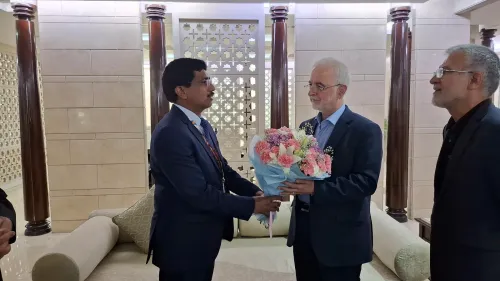
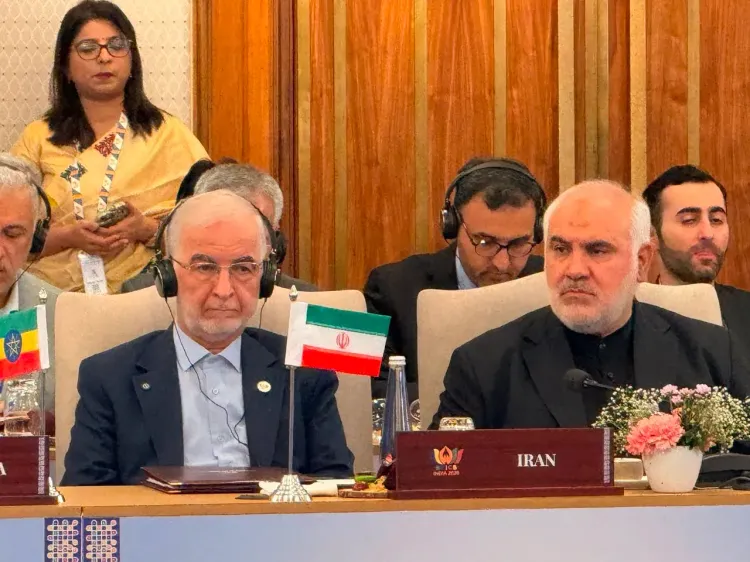
At a BRICS disaster-risk meeting in New Delhi, Iran's Interior Minister Eskandar Momeni went beyond the agenda — calling on the 11-member bloc to formally condemn attacks on sovereignty and civilian infrastructure amid active US-Iran military exchanges. The dual message: BRICS should be both a disaster-resilience engine and a geopolitical counterweight.
Key Takeaways
Iran's Interior Minister Eskandar Momeni addressed the BRICS Ministerial Meeting on Disaster Risk Reduction in New Delhi on 25 July 2025 .
Momeni called violations of Iran's territorial integrity and attacks on civilian facilities a 'clear violation' of the UN charter and international law.
He urged BRICS member states to take a 'clear and firm position' condemning aggression and attacks on national sovereignty.
Iran proposed BRICS cooperation through joint disaster exercises, technical team exchanges, and specialised training programmes.
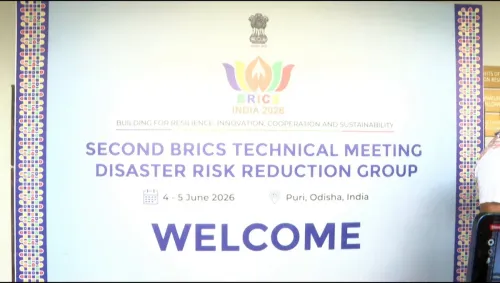
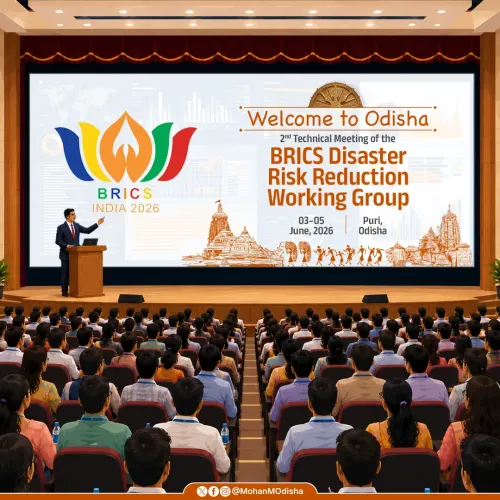
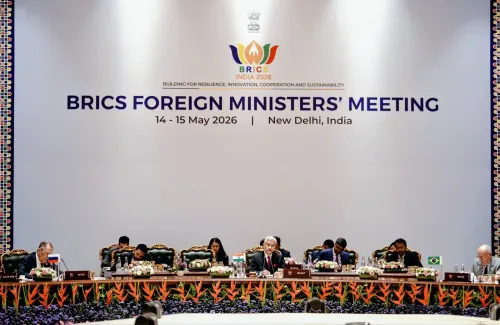
India's BRICS Chairship is themed 'Building for Resilience, Innovation, Cooperation and Sustainability' , as articulated by PM Modi at the 2025 Rio Summit .
BRICS now comprises 11 member states, including Brazil, China, India, Iran, Russia, and the UAE.
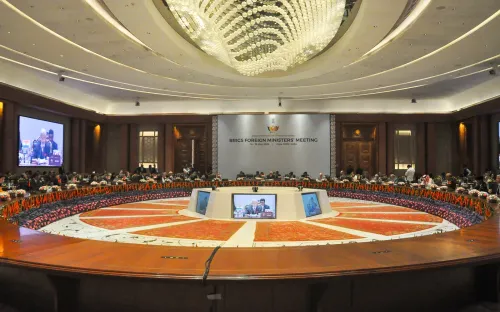
Iran's Interior Minister Eskandar Momeni on Friday, 25 July 2025, called on BRICS member states to take a 'clear and firm position' condemning aggression, violations of national sovereignty, attacks on civilians, and the destruction of critical infrastructure — remarks delivered at the BRICS Ministerial Meeting on Disaster Risk Reduction (DRR) in New Delhi. Momeni characterised the violation of Iran's territorial integrity and the targeting of civilian facilities as a 'clear violation' of the United Nations charter and the fundamental principles of international law.
Key Statements at the BRICS DRR Meeting
Addressing the ministerial gathering, Momeni argued that a united BRICS voice in defence of international law and opposition to the use of force would 'send an important message to the international community and contribute to strengthening international peace, security, and stability,' according to a post shared by the Iranian Embassy in India on X. His remarks explicitly cited the destruction of infrastructure, power plants, residential areas, schools, and hospitals as violations warranting collective condemnation.
The statements come amid renewed tensions in West Asia following ongoing military exchanges between the United States and Iran, lending his diplomatic appeal an unmistakably urgent backdrop.
Iran's Disaster Risk Proposals for BRICS
Beyond the political dimension, Momeni presented a substantive agenda on disaster resilience. He proposed that BRICS strengthen cooperation through operational plans based on the bloc's adopted documents, specialised training programmes, exchanges of technical and operational teams, and joint exercises among member states. Iran, he noted, has accumulated considerable experience managing earthquakes, floods, droughts, and storms owing to its geographical conditions, and expressed readiness to share that expertise.
Momeni also broadened the frame of resilience, describing it as encompassing not just post-disaster reconstruction but also prevention, preparedness, smart risk management, and maintaining essential services during crises. He termed the resilience of critical infrastructure a 'fundamental pillar of national security, human safety, and sustainable development.'
Multilateral Cooperation and Global Challenges
The minister underscored that climate change, natural disasters, pandemics, and the vulnerability of critical infrastructure have collectively threatened the security and development of nations worldwide. He argued that no country can effectively confront these challenges alone, making multilateral cooperation 'more essential than ever.' He described BRICS as an effective platform for promoting resilience and exchanging expertise in crisis management.
Momeni proposed transforming BRICS into not merely an engine of economic growth but a 'global model for disaster prevention, protection of critical infrastructure, and protecting human lives.' He also expressed appreciation for India hosting the meeting.
India's BRICS Chairship and the Bloc's Composition
India's BRICS Chairship is guided by the theme 'Building for Resilience, Innovation, Cooperation and Sustainability' — a people-centric approach that Prime Minister Narendra Modi articulated at the 2025 Rio Summit. BRICS now comprises 11 major emerging markets and developing economies: Brazil, China, Egypt, Ethiopia, India, Indonesia, Iran, Russia, Saudi Arabia, South Africa, and the United Arab Emirates.
Iran's dual-track message — political condemnation of aggression alongside constructive disaster-risk proposals — signals its intent to leverage the BRICS platform for both diplomatic legitimacy and technical cooperation as tensions with the West persist.
Point of View
Saudi Arabia, UAE — into an uncomfortable corner. Notably, the communiqué language Momeni sought was not confirmed as adopted, which matters: rhetorical solidarity at a ministerial podium is very different from a formal BRICS resolution. Whether the bloc's consensus architecture can absorb this kind of political loading without fracturing along geopolitical fault lines is the real test of BRICS' 11-member expansion.
NationPress
24 Jul 2026
Frequently Asked Questions
What did Iran's minister say at the BRICS meeting in New Delhi?
Iran's Interior Minister Eskandar Momeni urged BRICS member states to take a 'clear and firm position' condemning aggression, violations of national sovereignty, and attacks on civilian infrastructure. He characterised such actions as a clear violation of the UN charter and international law, speaking at the BRICS Ministerial Meeting on Disaster Risk Reduction in New Delhi on 25 July 2025.
Why is Iran raising sovereignty issues at a disaster risk meeting?
Momeni's remarks come amid active military exchanges between the United States and Iran, making the BRICS forum an opportunity for Tehran to seek multilateral diplomatic backing. Iran appears to be leveraging the disaster-risk platform to simultaneously advance a geopolitical agenda alongside substantive resilience proposals.
What disaster cooperation proposals did Iran put forward at BRICS?
Iran proposed creating operational plans based on BRICS-adopted documents, holding specialised training programmes, exchanging technical and operational teams, and conducting joint disaster exercises among member states. Momeni cited Iran's experience managing earthquakes, floods, and droughts as a basis for sharing expertise.
What is India's role in the current BRICS Chairship?
India holds the BRICS Chairship under the theme 'Building for Resilience, Innovation, Cooperation and Sustainability,' a people-centric framework articulated by Prime Minister Narendra Modi at the 2025 Rio Summit. India hosted the ministerial meeting in New Delhi where Momeni delivered his address.
How many countries are in BRICS and who are the members?
BRICS currently comprises 11 member states: Brazil, China, Egypt, Ethiopia, India, Indonesia, Iran, Russia, Saudi Arabia, South Africa, and the United Arab Emirates. The bloc serves as a platform for cooperation on global political, economic, and developmental issues.