Jal Shakti Minister Paatil highlights JJM reach in Ladakh's Dras
Synopsis
Union Jal Shakti Minister C. R. Paatil on 26 June 2026 highlighted how the Jal Jeevan Mission is delivering piped drinking water at temperatures as low as -50°C in Ladakh's Dras sector, citing the experience of a local woman and calling for community-led source sustainability efforts.
Key Takeaways
Dras, Ladakh — one of the world's second-coldest inhabited places at 11,000 feet — now has functional tap water connections under the Jal Jeevan Mission .
Temperatures in the region drop to -40 to -50 degrees Celsius , making water access historically dangerous and difficult for residents.
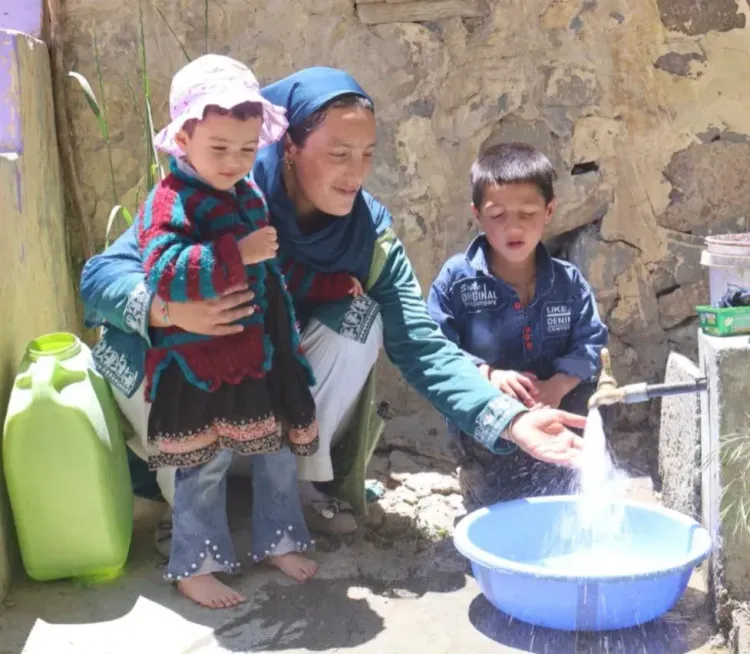
Paatil cited Rukhiya Bano of Gram Panchayat Gilyan as a direct beneficiary, describing her daily struggle before the scheme reached her village.
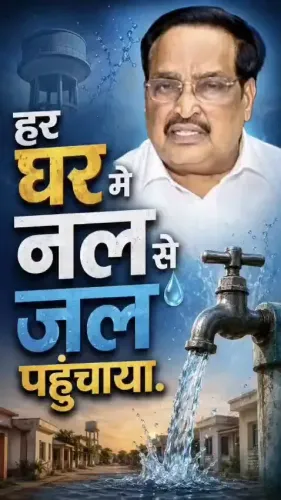
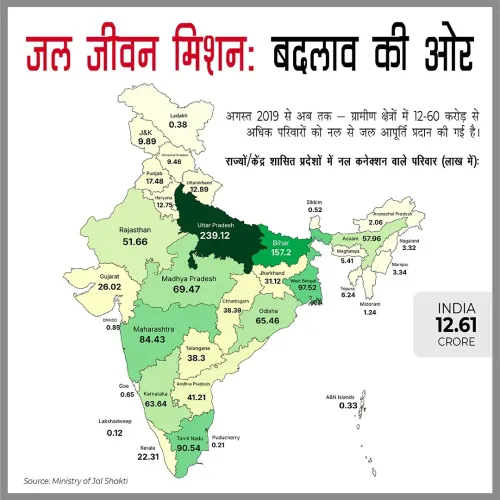
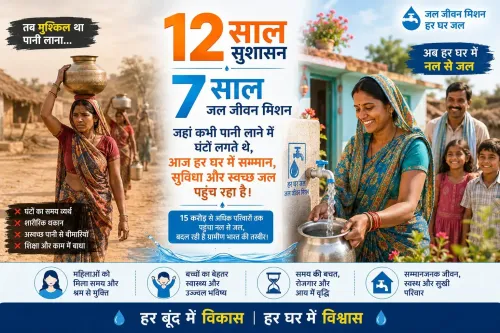
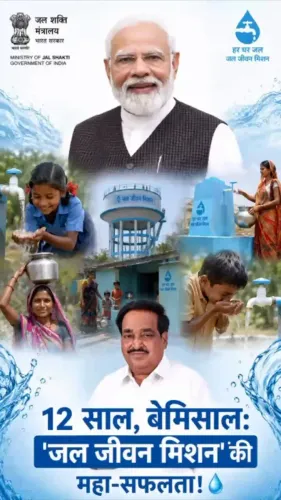
The minister stated that approximately 16 crore rural households across India have received tap water connections under the mission.
Paatil called for sustained community participation in rainwater harvesting , groundwater recharge , and source sustainability to protect the mission's gains.
The post frames water access in remote border regions as foundational to the Viksit Bharat national development agenda.
Union Jal Shakti Minister C. R. Paatil on Friday, 26 June 2026, shared the story of Rukhiya Bano, a 31-year-old resident of Gram Panchayat Gilyan in the Dras sector of Ladakh, to illustrate how the Jal Jeevan Mission has brought piped drinking water to one of the world's coldest inhabited regions.
Context
Dras, located at an altitude of roughly 11,000 feet in the Kargil district of Ladakh, is widely cited as one of the second-coldest inhabited places on earth, with winter temperatures plunging to -40 to -50 degrees Celsius. For residents like Rukhiya Bano, fetching water once meant walking to a frozen river, breaking through ice, and returning under the constant threat of accident — a routine that defined daily survival in the region.
Minister Paatil quoted Rukhiya Bano's experience directly in his post: 'jab Rukhiya Bano apne haathon se us anmol jal ko chhooti hain, to woh keval paani nahin hota' — 'when Rukhiya Bano touches that precious water with her own hands, it is not merely water — it is peace, security, and the belief in a better future for her children.' The minister used her account to underscore the human dimension of infrastructure delivery in high-altitude border villages.
Policy Backdrop
The Jal Jeevan Mission (JJM) was announced in the 2019-20 Union Budget under Prime Minister Narendra Modi, with the stated goal of providing a functional household tap connection with assured water supply to every rural household in India. The Ministry of Jal Shakti, created in 2019 by merging the erstwhile Departments of Drinking Water and Sanitation and Water Resources, River Development and Ganga Rejuvenation, is the nodal body overseeing the mission.
In his post, Paatil stated that under PM Modi's leadership, the 'historic work of delivering clean tap water to approximately 16 crore rural households across the country is continuously progressing.' He framed this as part of the broader Viksit Bharat (Developed India) vision, linking individual household water access to long-term national development. The extension of JJM to extreme terrains such as Ladakh has been a recurring emphasis in the central government's communications around the scheme.
Stakeholders and Impact
The primary beneficiaries highlighted in the post are rural households in high-altitude, climatically extreme regions — particularly women, who have historically borne the burden of water collection in remote villages. Gilyan Gram Panchayat in the Dras sector represents a category of settlement where conventional water infrastructure faces severe challenges including frozen supply lines and inaccessible terrain for much of the year.
Beyond immediate access, Minister Paatil called on citizens to ensure the gains endure, stating that it is now a 'collective responsibility' to sustain this achievement for future generations. He specifically cited rainwater harvesting, groundwater recharge, and source sustainability as the three pillars on which long-term water security must rest — signalling that the government's focus is shifting from connection targets toward maintenance and resource conservation.
What's Next
Paatil's emphasis on source sustainability points to the next phase of JJM's operational challenge: ensuring that tap connections in geographically difficult areas remain functional year-round and that the water sources feeding them are not depleted. Reviews of water quality testing protocols and greywater management in high-altitude schemes are expected to feature in upcoming parliamentary and ministry-level discussions.
The minister's call for 'jan-jan ki bhaagidaari' — participation of every citizen — in water conservation suggests a coming push for community-level ownership of infrastructure, which analysts see as critical to the mission's long-term viability in regions like Ladakh where state capacity for maintenance is constrained by terrain and seasonality.
Point of View
A location with strong strategic and symbolic resonance given its role in the 1999 Kargil conflict, is unlikely to be incidental; it reinforces the government's narrative of reaching the most neglected and sensitive corners of India. The shift in emphasis toward source sustainability and citizen participation signals that JJM is entering a second, more complex phase where the political challenge moves from announcing connections to demonstrating their durability. This framing also pre-empts criticism about scheme maintenance by distributing responsibility to communities.
NationPress
26 Jun 2026
Frequently Asked Questions
What is the Jal Jeevan Mission and what is its target?
The Jal Jeevan Mission is a central government scheme launched in 2019 aimed at providing a functional household tap connection with clean drinking water to every rural household in India. The scheme is administered by the Ministry of Jal Shakti.
Has Jal Jeevan Mission reached Ladakh and Dras?
Yes. According to Union Jal Shakti Minister C. R. Paatil's post on 26 June 2026, Jal Jeevan Mission has provided piped tap water to households in the Dras sector of Ladakh, including Gram Panchayat Gilyan, even at temperatures as low as -50 degrees Celsius.
How many rural households have tap water under Jal Jeevan Mission?
Minister C. R. Paatil stated in his post that approximately 16 crore rural households across India have received tap water connections under the Jal Jeevan Mission.
Why was water access so difficult in Dras, Ladakh?
Dras is situated at roughly 11,000 feet altitude and is one of the second-coldest inhabited places on earth. In winter, rivers freeze solid, forcing residents to break ice to collect water — a dangerous daily task, particularly for women.
What did C. R. Paatil say about sustaining Jal Jeevan Mission gains?
Minister Paatil called it a 'collective responsibility' to sustain water access for future generations, specifically urging community participation in rainwater harvesting, groundwater recharge, and ensuring the long-term sustainability of water sources.