Pralhad Joshi Highlights India's Wind Energy Growth at Global Wind Day
Synopsis
Union Minister Pralhad Joshi spoke to media at Global Wind Day in Goa on 15 June 2026, spotlighting India's wind sector expansion, energy security goals, and the role of wind, solar, and storage in achieving the Viksit Bharat vision by 2047.
Key Takeaways
Pralhad Joshi addressed media at Global Wind Day in Goa on 15 June 2026 .
He highlighted India's clean energy transformation under Prime Minister Narendra Modi .
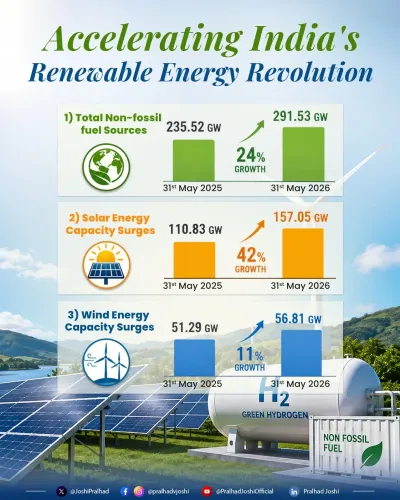
India's renewable installed capacity has grown from under 30 GW to over 170 GW since 2014.
India's revised renewable energy target stands at 450 GW by 2030 , up from the original 175 GW by 2022 pledge.
The minister stressed the combined importance of wind, solar, and storage for the Viksit Bharat goal of a developed India by 2047 .
Offshore wind tenders and battery storage funding are key policy developments to watch in the 2026-27 cycle.
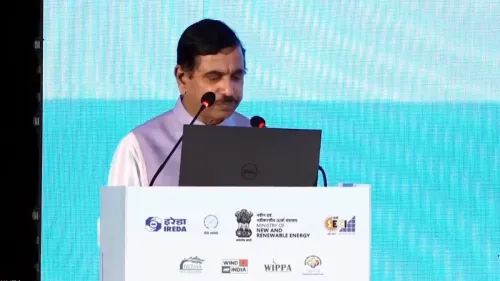
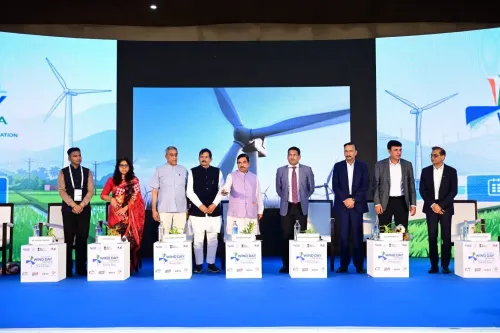
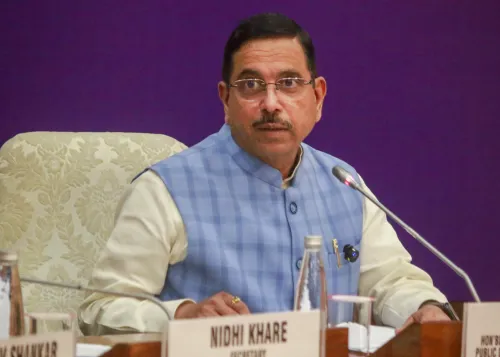
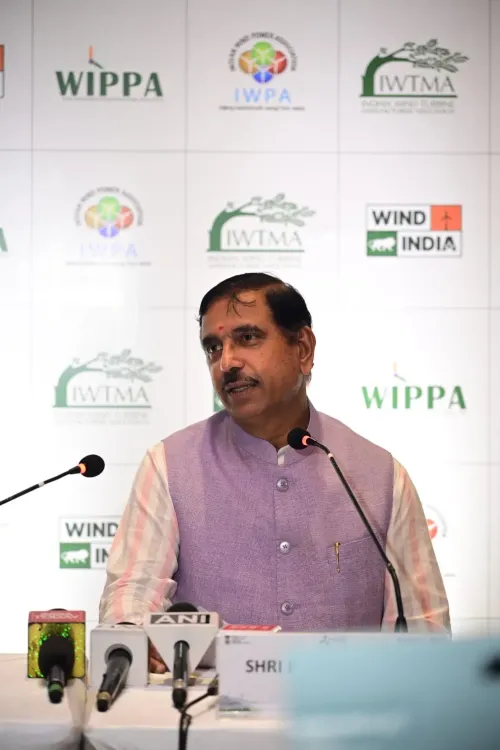
Union Minister of New and Renewable Energy Pralhad Joshi interacted with the media on the sidelines of Global Wind Day in Goa on 15 June 2026, underscoring India's clean energy transformation under Prime Minister Narendra Modi. The minister highlighted the rapid expansion of India's wind sector and its centrality to the country's energy security and long-term development goals.
Context
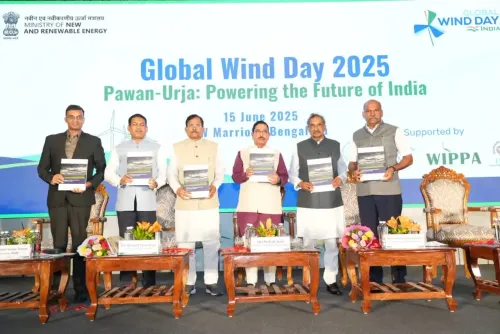
Global Wind Day, observed annually on 15 June, is an international platform to spotlight wind power's contribution to the global clean energy transition. This year's events were hosted in Goa, drawing attention to India's growing role as one of the world's leading wind energy markets. Joshi used the occasion to address the media and outline the government's clean energy priorities.
In his remarks, the minister pointed to the 'remarkable clean energy transformation' India has undergone, crediting the direction set by Prime Minister Modi since 2014. He emphasised the interlocking roles of wind, solar, and storage technologies in building a resilient energy system capable of supporting the #ViksitBharat vision — the government's goal of making India a developed nation by 2047.
Policy Backdrop
India's renewable energy ambitions have been progressively scaled up over the past decade. At the 2015 Paris Climate Summit, India committed to a target of 175 GW of renewable energy by 2022, with 60 GW earmarked for wind. By 2019, that overall target was revised upward to 450 GW by 2030, reflecting accelerating capacity additions in both wind and solar.
India further pledged to reach net-zero emissions by 2070 at COP26 in Glasgow in 2021. The country's installed renewables base has grown from under 30 GW in the mid-2010s to over 170 GW by the mid-2020s, driven by large-scale wind farms, utility solar parks, and increasingly, hybrid projects that pair generation with battery storage to address grid stability.
The Ministry of New and Renewable Energy, established in 1992, has coordinated this expansion. Under Joshi's charge, the ministry has focused on integrating storage solutions and advancing offshore wind policy as the next frontier for capacity growth.
Stakeholders and Impact
Renewable energy developers and independent power producers stand to benefit directly from sustained policy momentum, as do power consumers who gain from a more diversified and potentially cost-stable generation mix. The wind sector in particular supports manufacturing, logistics, and skilled employment across states with high wind resource potential.
Energy security is a consistent theme in the government's framing of the clean energy push. Reducing dependence on imported fossil fuels through domestic wind and solar generation has both economic and strategic dimensions, particularly as global energy markets remain volatile.
What's Next
Policy watchers are tracking the rollout of offshore wind tenders and the viability gap funding framework for battery storage projects expected in the 2026-27 budget cycle. Proposed amendments to the Electricity Act concerning renewable purchase obligations are also under parliamentary review, with their outcome likely to shape the pace of capacity addition in the near term.
With India's 2030 renewable target of 450 GW firmly on the horizon, events like Global Wind Day serve as both a progress check and a political signal that clean energy remains a flagship agenda item for the Modi government heading into the latter half of the decade.
Point of View
The government is framing climate action not as an external obligation but as an instrument of economic development — a positioning that resonates both with domestic voters and international partners. The choice of Goa as a host venue also signals an intent to broaden the renewable energy conversation beyond traditional high-capacity states like Tamil Nadu, Gujarat, and Rajasthan. With the 2030 target of 450 GW looming and offshore wind policy still nascent, the minister's public communication is likely to intensify as the policy pipeline requires fresh political momentum.
NationPress
14 Sept 2026
Frequently Asked Questions
What is Global Wind Day and why was it held in Goa in 2026?
Global Wind Day is an annual international observance on 15 June that promotes awareness of wind power's role in the clean energy transition. In 2026, events were hosted in Goa, India, reflecting the country's growing stature as a major wind energy market.
What did Pralhad Joshi say at Global Wind Day 2026?
Pralhad Joshi highlighted India's rapid wind sector growth, its contribution to energy security, and the importance of wind, solar, and storage technologies in achieving the Viksit Bharat vision of a developed India by 2047.
What is India's renewable energy target for 2030?
India has set a target of 450 GW of renewable energy capacity by 2030, revised upward from the original 175 GW by 2022 commitment made at the 2015 Paris Climate Summit.
What is Viksit Bharat and how does it relate to clean energy?
Viksit Bharat is the Indian government's vision to transform India into a developed nation by 2047. Clean energy — including wind, solar, and storage — is positioned as a core pillar of this long-term economic and development goal.
What are the next big steps for India's wind energy policy?
Key developments to watch include the rollout of offshore wind tenders, viability gap funding for battery storage projects in the 2026-27 budget cycle, and parliamentary review of proposed amendments to the Electricity Act on renewable purchase obligations.