CM Siddaramaiah Raises Karnataka Minimum Wages by 60%

Synopsis
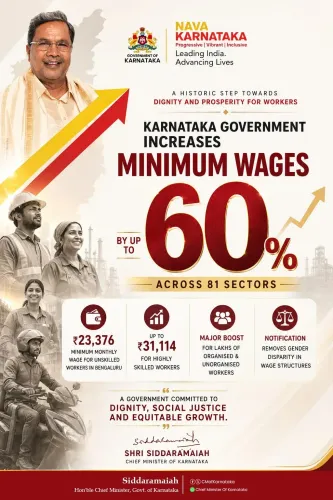
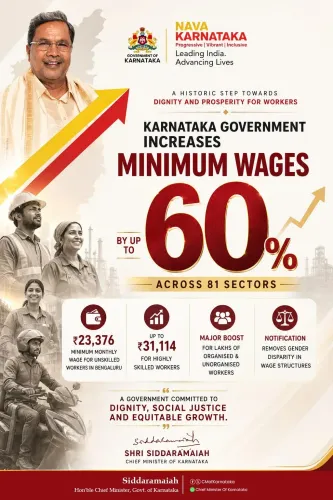
Karnataka CM Siddaramaiah has announced an average 60% minimum wage increase for workers across 83+ scheduled employments, replacing the old four-zone system with three zones. Skilled workers in Zone 3 can now earn up to ₹31,100 per month, with higher rates set for Greater Bengaluru under Zone 1.
Key Takeaways
Karnataka has revised minimum wages by an average of 60 per cent across scheduled employments.
More than 83 scheduled employment categories are covered, including e-commerce, hospitals, hotels, petrol bunks, and private finance.
The previous four-zone wage structure has been rationalised into three zones : Greater Bengaluru (Zone 1), district headquarters (Zone 2), and remaining areas (Zone 3).
Unskilled workers in Zone 3 are now entitled to a maximum of ₹19,300 per month ; skilled workers up to ₹31,100 per month .
The revision is framed under the Congress government's #GuaranteeSarkara programme and aligns with the party's 2023 election manifesto commitments on labour welfare.
The hike will become enforceable once the official gazette notification is published by the Karnataka government.
Karnataka Chief Minister Siddaramaiah announced on Tuesday, 26 May 2026 that his government has revised minimum wages for workers across the state by an average of 60 per cent, covering more than 83 scheduled employments spanning sectors from e-commerce and private hospitals to petrol pumps and religious institutions.
Context
Posting in Kannada, Siddaramaiah said the revision honours a longstanding worker demand: 'ಕನಿಷ್ಟ ವೇತನ ಹೆಚ್ಚಿಸಬೇಕೆಂಬ ಕಾರ್ಮಿಕರ ಬೇಡಿಕೆಗೆ ಮನ್ನಣೆ ನೀಡಿ' ['Honouring the workers' demand to increase minimum wages']. The announcement comes under the banner of his government's #GuaranteeSarkara programme, which has framed labour welfare as a central pillar since the Congress returned to power in Karnataka in May 2023.
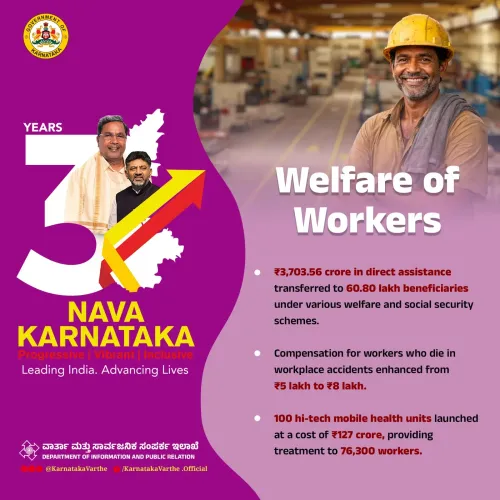
The beneficiaries include workers in e-commerce, courier services, non-teaching staff in private schools and colleges, hospitals, hotels, food processing units, petrol bunks, private finance firms, and staff at religious institutions — a cross-section of the informal and semi-formal workforce that has historically struggled to secure wage protections.
Policy Backdrop
Minimum wage revisions in India are governed by the Minimum Wages Act, 1948, which empowers state governments to fix and periodically revise wages for scheduled employments. The Code on Wages, 2019 further consolidated central labour law provisions, but implementation timelines at the state level vary significantly.
A notable structural change accompanies the wage hike: the earlier framework of four wage zones has been replaced with three zones. Zone 1 covers areas under Greater Bengaluru, reflecting higher urban living costs. Zone 2 covers district headquarters, and Zone 3 covers all remaining areas of the state. This rationalisation mirrors reforms undertaken in states such as Maharashtra and Tamil Nadu, where urbanisation patterns prompted similar zone consolidations.
Stakeholders and Impact
Under the revised structure, unskilled workers in Zone 3 — the lowest-cost areas — will receive a maximum of ₹19,300 per month, while skilled workers in the same zone can earn up to ₹31,100 per month. Rates in Zone 1 (Greater Bengaluru) are set higher to account for the city's elevated cost of living, though the Chief Minister did not specify those figures in the post.
The revision directly affects workers across more than 83 scheduled employment categories. For the large gig and service-sector workforce concentrated in Bengaluru — including e-commerce delivery personnel and private healthcare staff — the Zone 1 rates will be particularly consequential. Private sector employers across these categories will be legally required to align payroll with the revised slabs once the official gazette notification is issued.
What's Next
The revision will take effect upon publication of the official gazette notification, and industry bodies are expected to engage with the state Labour Department on implementation timelines and sector-specific clarifications. The Karnataka government's move will also serve as a reference point in ongoing national conversations about raising the central floor wage. Siddaramaiah closed his post with a commitment to the working class: 'ರಾಷ್ಟ್ರ ನಿರ್ಮಾಣದಲ್ಲಿ ಹಗಲು-ರಾತ್ರಿಯೆನ್ನದೆ ಶ್ರಮಿಸುತ್ತಿರುವ ಕಾರ್ಮಿಕ ವರ್ಗದ ಕಲ್ಯಾಣಕ್ಕೆ ನಾವು ಬದ್ಧರಿದ್ದೇವೆ' ['We are committed to the welfare of the working class who toil day and night in nation-building'] — signalling that labour welfare will remain a defining theme of his administration ahead of future electoral cycles.
Point of View
And its political timing — mid-term, under the #GuaranteeSarkara brand — is clearly deliberate. By expanding coverage to gig-adjacent sectors like e-commerce and courier services, the Siddaramaiah administration is reaching a workforce that national labour law has struggled to formally protect. The shift from four zones to three also signals a pragmatic acknowledgement that Karnataka's economic geography has changed, with Bengaluru increasingly operating as a category unto itself. Whether private sector compliance follows the gazette notification, or triggers legal challenges from industry, will determine whether this announcement translates into real income gains for workers.
NationPress
11 Oct 2026
Frequently Asked Questions
How much has Karnataka increased the minimum wage in 2026?
Karnataka has increased minimum wages by an average of 60 per cent across more than 83 scheduled employment categories, as announced by Chief Minister Siddaramaiah on 26 May 2026.
Which workers benefit from Karnataka's minimum wage hike?
Workers in e-commerce, courier services, private schools and colleges (non-teaching staff), hospitals, hotels, food processing, petrol pumps, religious institutions, and private finance firms are among those covered under the revision.
What is the new minimum wage in Karnataka for skilled workers?
Skilled workers in Zone 3 (areas outside district headquarters and Greater Bengaluru) are entitled to a maximum revised wage of ₹31,100 per month under the new structure.
What are the three wage zones in Karnataka's new system?
Zone 1 covers Greater Bengaluru, Zone 2 covers district headquarters across Karnataka, and Zone 3 covers all remaining areas of the state. The earlier system had four zones.
When will the Karnataka minimum wage revision come into effect?
The revised wages will come into effect once the Karnataka government publishes the official gazette notification. The Chief Minister's announcement on 26 May 2026 precedes that formal step.