Arunachal CM Pema Khandu backs ILP department, high-level panel on indigenous rights
Synopsis
After a seven-and-a-half-hour stakeholder marathon in Itanagar, Arunachal Pradesh CM Pema Khandu gave in-principle approval for a dedicated ILP Department — a demand pending for years — and announced a high-level committee to chart a policy roadmap on indigenous rights and demographic concerns, with a follow-up meeting set for 29 May.
Key Takeaways
CM Pema Khandu chaired a 7.5-hour consultative meeting in Itanagar on 27 May on indigenous rights, ILP regulation, and demographic concerns.
The state government gave in-principle approval to four major demands , including creation of a dedicated ILP Department under the Bengal Eastern Frontier Regulation (BEFR).
A high-level committee with 7 members each from AITF, AAPSU, and STBAC will be formally constituted at a follow-up meeting on 29 May .
Khandu linked the concerns to a national challenge, citing Union Home Minister Amit Shah’s newly constituted High-Level Committee on Demographic Change at the Centre.
The CM advocated vocational skilling of tribal youth to reduce dependence on outside labour, citing a Rs 10 lakh project in Pasighat completed at a saving of Rs 8 lakh over outside quotes.
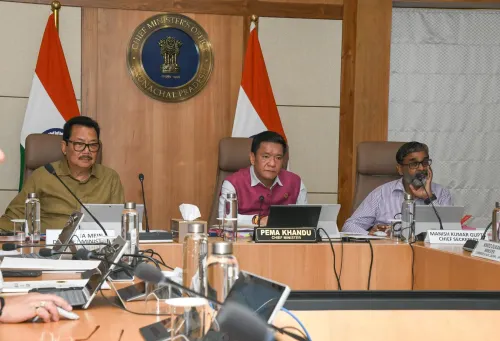
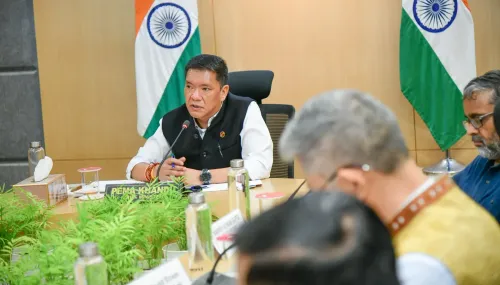
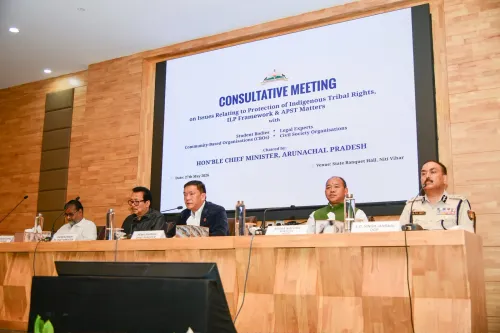
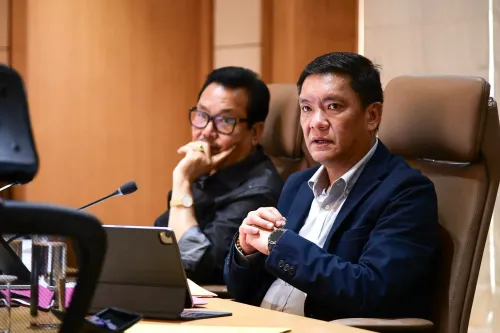
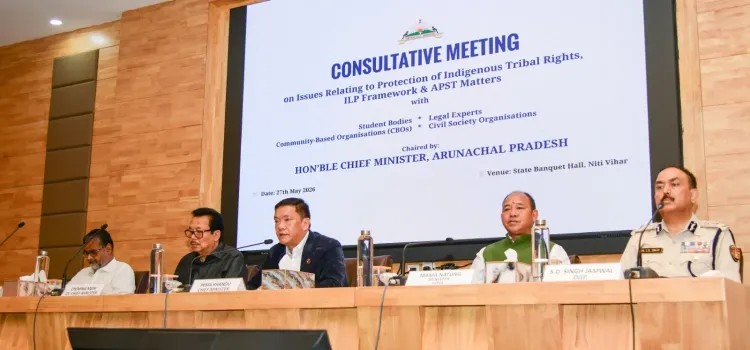
Arunachal Pradesh Chief Minister Pema Khandu on Wednesday, 27 May assured all stakeholders that the state government would work collectively to deliver concrete, long-term solutions on Inner Line Permit (ILP) regulation, indigenous tribal rights, and demographic concerns — following a seven-and-a-half-hour consultative meeting at the state Banquet Hall in Niti Vihar, Itanagar. The Chief Minister described the deliberations as “historic” and announced in-principle government approval for a dedicated ILP Department.
Key Outcomes of the Consultative Meeting
The marathon session brought together representatives from the Arunachal Indigenous Tribes Forum (AITF), the All Arunachal Pradesh Students’ Union (AAPSU), and the ST Bachao Andolan Committee (STBAC), along with political leaders, legal experts, civil society representatives, and senior officials from the Home, Law, Political, and Indigenous Affairs departments. Khandu stated that the state government has, in principle, accepted the four major demands placed before it during the meeting.
The most significant among these is the long-pending creation of a separate ILP Department to manage and regulate the permit system under the Bengal Eastern Frontier Regulation (BEFR) — a demand that both AAPSU and STBAC had advocated for years. Khandu credited the Scheduled Tribe Bachao Andolan Committee for persistently drawing the government’s attention to what he called a “long-burning issue” that had remained unresolved through repeated rounds of discussion.
National Context: Demographic Change and Illegal Immigration
Khandu situated the concerns within a broader national challenge, linking them to illegal immigration, demographic shifts, and threats to indigenous identity and cultural preservation. He referenced Prime Minister Narendra Modi’s Independence Day address on 15 August 2025, in which the Union government acknowledged demographic imbalance and illegal immigration as serious issues affecting law and order, indigenous culture, and national security.
The Chief Minister further informed the gathering that Union Home Minister Amit Shah has recently constituted a national-level High-Level Committee on Demographic Change, comprising a retired judge, retired IAS and IPS officers, and senior officials from the Ministry of Home Affairs (MHA). This national-level initiative, Khandu indicated, provides a larger framework within which Arunachal Pradesh’s specific concerns can be addressed.
Skilling Local Youth to Reduce Dependence on Outside Labour
Beyond regulatory measures, Khandu strongly advocated skilling and capacity-building of local tribal youth as a sustainable strategy to reduce dependence on outside labour. Citing Mizoram as a model, he stressed the importance of dignity of labour and vocational skill development.
He shared a concrete example: a group of tribal youth trained in plumbing and electrical works in Bengaluru subsequently completed a project in Pasighat for Rs 10 lakh, against an outside contractor’s quote of Rs 18 lakh — delivering substantial savings while generating local employment. Khandu urged apex community-based organisations to actively support such skill development initiatives.
High-Level Committee and Next Steps
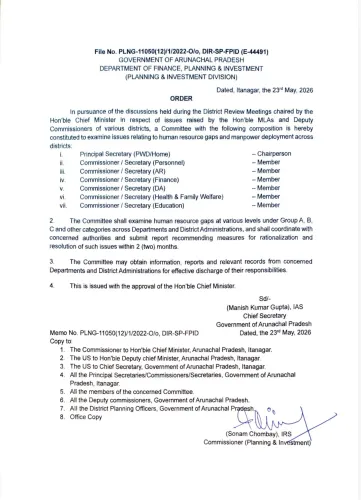
As a key structural outcome, Khandu announced the formation of a high-level committee to deliberate further on the issues discussed and recommend a policy roadmap. A follow-up meeting is scheduled for 29 May for the formal constitution of the panel, which will include seven members each from AITF, AAPSU, and STBAC, along with representatives from the legal fraternity.
The Chief Minister assured that the committee will be officially notified after membership is finalised, and that all recommendations will be discussed transparently before any final policy decisions are taken. Reaffirming the spirit of “Team Arunachal”, Khandu called on all stakeholders to work together to safeguard indigenous rights, strengthen governance, and ensure the state’s long-term peace and stability. The committee’s recommendations are expected to shape the state’s legislative and administrative approach to ILP reform in the months ahead.
Point of View
But in-principle has been the operative phrase in Arunachal’s ILP discourse for well over a decade. The real test is whether the high-level committee produces a time-bound legislative or executive instrument — not another consultative report. Linking local concerns to the Centre’s national demographic committee is a smart political framing, but it also risks diffusing accountability: if the issue is national, state-level inaction becomes easier to explain away. The skilling argument is sound in principle, but the Pasighat anecdote, however encouraging, is a data point of one. Structural change in labour dependence requires scale, sustained funding, and industry linkages that a single consultative meeting cannot guarantee.
NationPress
11 Oct 2026
Frequently Asked Questions
What was decided at the Arunachal Pradesh consultative meeting on 27 May?
Chief Minister Pema Khandu announced in-principle government acceptance of four major demands, most notably the creation of a dedicated ILP Department under the Bengal Eastern Frontier Regulation. A high-level committee will be formally constituted on 29 May to recommend a policy roadmap on indigenous rights and demographic concerns.
What is the Inner Line Permit (ILP) and why does it matter in Arunachal Pradesh?
The Inner Line Permit is a travel document required for non-residents to enter protected states like Arunachal Pradesh, governed under the Bengal Eastern Frontier Regulation (BEFR). It is seen as a critical safeguard for indigenous tribal communities against demographic change and illegal immigration, and its regulation has been a long-standing demand of student and tribal bodies.
Who will be part of the new high-level committee announced by CM Khandu?
The committee will include seven members each from the Arunachal Indigenous Tribes Forum (AITF), the All Arunachal Pradesh Students’ Union (AAPSU), and the ST Bachao Andolan Committee (STBAC), along with representatives from the legal fraternity. Its formal constitution is scheduled for 29 May 2025.
How does the Centre’s High-Level Committee on Demographic Change relate to Arunachal’s concerns?
Union Home Minister Amit Shah recently constituted a national-level High-Level Committee on Demographic Change comprising retired judicial and administrative officers and senior MHA officials. CM Khandu cited this as evidence that the Union government recognises illegal immigration and demographic imbalance as serious national security and cultural concerns, providing a broader framework for Arunachal’s specific demands.
What is the government’s plan to reduce dependence on outside labour in Arunachal Pradesh?
CM Khandu advocated vocational skilling and capacity-building of local tribal youth, citing Mizoram as a model. He pointed to tribal youth trained in plumbing and electrical works in Bengaluru who completed a Pasighat project for Rs 10 lakh against an outside quote of Rs 18 lakh, and urged community organisations to support such training programmes.