Labour crisis pushes Kanyakumari paddy farmers to mechanised transplantation
Synopsis
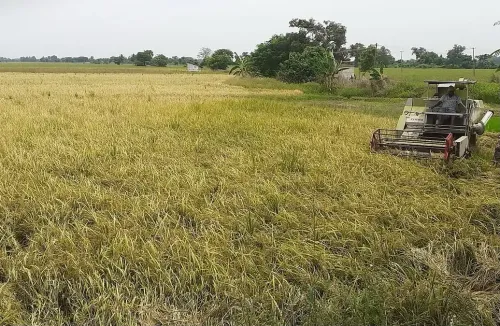
Up to 90% of paddy transplantation in parts of Kanyakumari is now done by machines — not by choice, but by necessity. A vanishing skilled workforce, particularly among rural women, has pushed farmers toward mechanisation even as drainage failures, nursery costs, and patchy machine work keep the old methods alive. The cycle is self-fuelling, and it's already rewriting rural livelihoods across the district.
Key Takeaways
Acute labour shortage in Kanyakumari district is forcing paddy farmers to adopt mechanised transplantation during the Kumbapoo paddy season .
Mechanisation has reached 80% in Thazhakudy and around 90% in Theroor .
Mechanised transplantation costs approximately ₹4,500 per acre versus ₹5,250 for manual methods, though nursery preparation adds extra costs.
Skilled machine operators have arrived from Mayiladuthurai district to meet rising local demand.
The shift has reduced agricultural working days for rural women, pushing many into non-farm occupations and deepening the labour cycle.
The Agriculture Department has set a cultivation target of 5,650 hectares for the current season, with Thovalai , Agastheeswaram , and Kalkulam taluks as the primary growing zones.
An acute shortage of agricultural labourers has compelled paddy farmers in Tamil Nadu's Kanyakumari district to pivot sharply toward mechanised transplantation, marking a structural break from generations of traditional cultivation practice as the Kumbapoo paddy season gets underway in November 2026. The shift, driven by a dwindling pool of skilled workers, is now reshaping the district's rural employment landscape in ways that may prove irreversible.
Scale of mechanisation on the ground
The transition has advanced furthest in key paddy-growing pockets. In Thazhakudy, nearly 80% of paddy transplantation is now carried out by machines, while the figure has climbed to around 90% in Theroor. Chenbagaramanputhoor is among other areas where mechanised methods have gained considerable ground. To meet the surge in demand, skilled machine operators have travelled from Mayiladuthurai district to assist farmers in Kanyakumari.
Cost comparison and persistent challenges
Mechanised transplantation costs approximately ₹4,500 per acre, compared with roughly ₹5,250 per acre for manual transplantation — a saving that has nudged many cultivators toward machinery. However, the economics are not straightforward. Preparing nurseries to meet machine-compatibility standards demands additional expenditure, effort, and specialised techniques. Substandard work by some machine operators has emerged as a fresh concern, with farmers occasionally forced to hire manual workers to fill gaps in areas missed by machines, adding unplanned costs.
Fields with inadequate drainage facilities also continue to resist mechanisation, requiring manual transplantation in those patches. These operational constraints mean the two methods are likely to coexist for the foreseeable future, rather than machines fully displacing hand labour.
Women workers bear the brunt of the shift
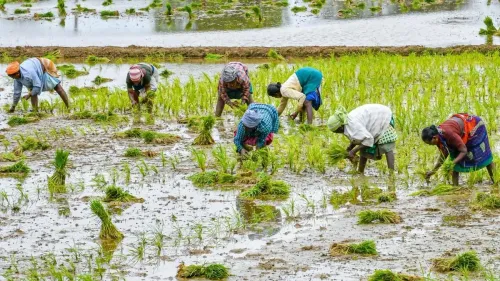
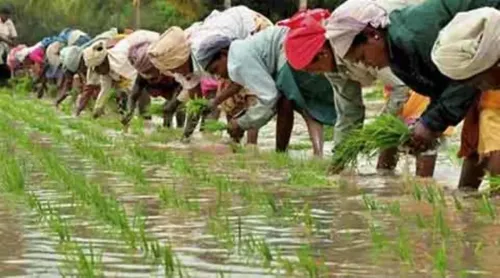
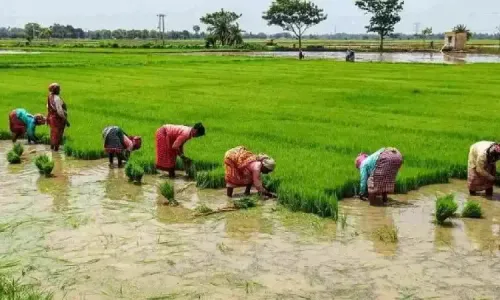
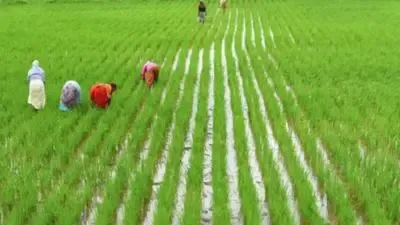
Paddy transplantation has traditionally been the preserve of rural women, who formed the backbone of this seasonal workforce. As mechanisation reduces the number of available agricultural working days, many women have been pushed toward non-agricultural occupations in search of steadier income. This exit of experienced workers has, in turn, deepened the labour shortage — creating a self-reinforcing cycle where declining workforce availability accelerates mechanisation, which further shrinks employment opportunities in agriculture.
Season targets and affected zones
The Agriculture Department has set a cultivation target of 5,650 hectares for the ongoing Kumbapoo paddy season in Kanyakumari district. Transplantation activity is currently most intensive in Thovalai, Agastheeswaram, and Kalkulam taluks, where paddy cultivation is most heavily concentrated.
This comes amid a broader national trend of rural-to-urban migration among younger generations, who are increasingly opting out of farm labour. Kanyakumari's experience mirrors patterns already documented in Punjab, Andhra Pradesh, and parts of Odisha, where mechanisation has outpaced the capacity of rural households to adapt. How the district manages this transition — particularly for its displaced women workers — will likely serve as a test case for Tamil Nadu's agricultural policy in the years ahead.
Point of View
They don't just leave a job; they exit a skills chain that took generations to build. The cost differential between machine and manual transplantation is real but narrow, and once nursery preparation and patch-up labour are factored in, the savings shrink further. The harder question — who retrains displaced women, and what the state's role is in managing that transition — is conspicuously absent from both policy and public debate.
NationPress
19 Nov 2026
Frequently Asked Questions
Why are Kanyakumari farmers switching to mechanised paddy transplantation?
An acute shortage of skilled agricultural labourers, especially women who traditionally carried out transplantation, has left farmers with few alternatives. With younger generations opting out of farm work, the pool of experienced workers has steadily shrunk, making mechanisation a practical necessity rather than a preference.
How much does mechanised transplantation cost compared to manual methods in Kanyakumari?
Mechanised transplantation costs approximately ₹4,500 per acre, while manual transplantation costs around ₹5,250 per acre. However, farmers note that preparing machine-compatible nurseries involves additional expenditure and effort, which can narrow the net saving.
Which areas of Kanyakumari have adopted mechanisation the most?
Thazhakudy leads with nearly 80% of transplantation done by machines, while Theroor has reached around 90%. Chenbagaramanputhoor is among other areas where mechanised methods are widely used. Skilled operators from Mayiladuthurai district have arrived to meet demand.
What is the paddy cultivation target for Kanyakumari this season?
The Agriculture Department has set a target of 5,650 hectares for the ongoing Kumbapoo paddy season. Transplantation is most active in the Thovalai, Agastheeswaram, and Kalkulam taluks.
How has mechanisation affected rural women workers in Kanyakumari?
The decline in agricultural working days has pushed many rural women — who formed the core of the transplantation workforce — to shift to non-agricultural occupations. This exit deepens the labour shortage further, creating a cycle that accelerates dependence on machinery while reducing livelihood options in the farm sector.