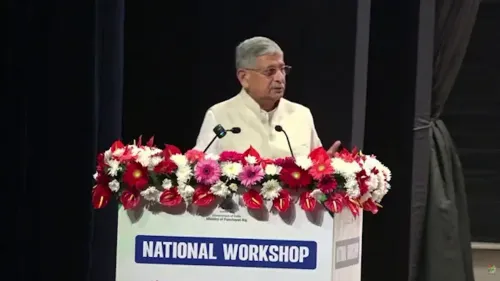
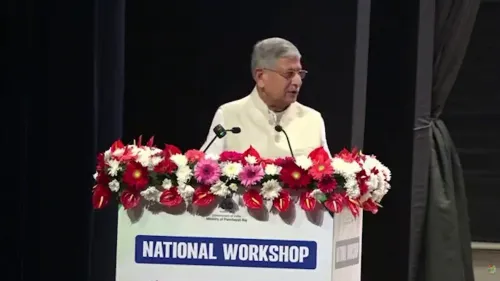
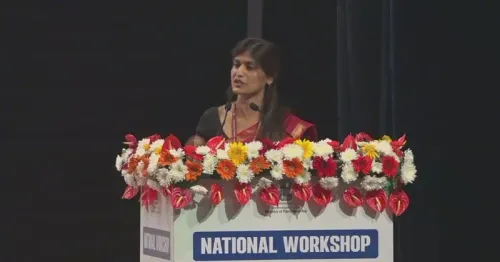
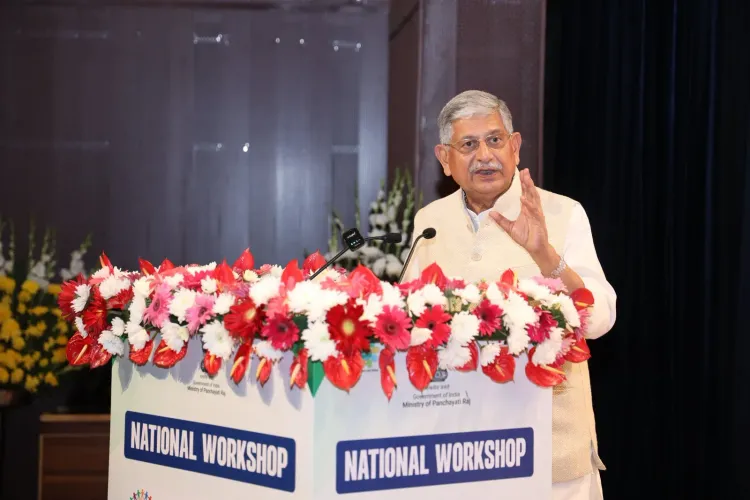
Lalan Singh addresses Jan Yojana Abhiyan 2026–27 national workshop
Synopsis
Union Minister Rajiv Ranjan Singh (Lalan Singh) addressed a one-day national workshop in New Delhi on the People's Plan Campaign 2026–27 on 30 October, launching the annual cycle for preparing Gram Panchayat Development Plans across India.
Key Takeaways
Union Minister Rajiv Ranjan Singh (Lalan Singh) addressed a day-long national workshop on the Jan Yojana Abhiyan 2026–27 in New Delhi on 30 October 2026 .
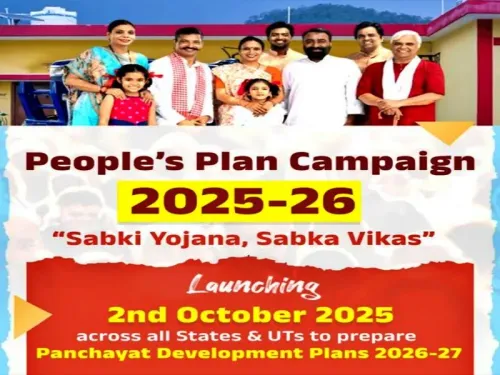
The People's Plan Campaign (Sabki Yojana Sabka Vikas) was launched in 2018 to conduct structured gram sabha consultations for annual panchayat development plans.
Gram Panchayat Development Plans were institutionalised after the 14th Finance Commission's 2015 recommendations , rooted in the 73rd Constitutional Amendment of 1992 .
The minister linked the campaign to #PMVGSY and #ViksitBharat , framing grassroots planning as integral to India's 2047 development goal.
The October workshop is designed to cascade guidelines to state and district levels ahead of the main GPDP preparation window for 2026–27 .
Every autumn, India's grassroots planning machinery gets its marching orders — and on Friday, 30 October 2026, Union Panchayati Raj and Fisheries Minister Rajiv Ranjan Singh fired the starting gun for the next cycle, addressing a day-long national workshop in New Delhi on the Jan Yojana Abhiyan (People's Plan Campaign) 2026–27.
What the Jan Yojana Abhiyan actually does
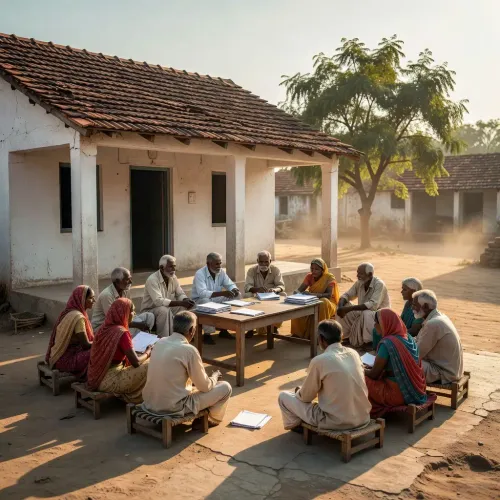
The People's Plan Campaign — officially known as Sabki Yojana Sabka Vikas ('Everyone's Plan, Everyone's Development') — is the annual structured consultation process through which India's roughly 2.5 lakh gram panchayats prepare their Gram Panchayat Development Plans (GPDPs). Launched in 2018 by the Ministry of Panchayati Raj, the campaign is designed to ensure that local priorities — whether a village road, an anganwadi, or a water supply line — are captured in a formal plan before central and state schemes allocate funds.
The constitutional backbone goes back to the 73rd Amendment Act of 1992, which mandated decentralised planning and gave panchayats the authority to prepare their own development plans. The 14th Finance Commission's 2015 recommendations institutionalised GPDPs further, tying untied grants to their proper preparation.
Why a national workshop in October
The October timing is deliberate. State governments and district administrations need several weeks to cascade the campaign guidelines down to the block and village levels before the peak planning window opens. A national workshop this early in the financial cycle ensures that state nodal officers, panchayat trainers, and line-department officials are aligned on the template, the convergence framework, and the digital tools — so the 2026–27 GPDP cycle begins on schedule.
Minister Singh's hashtags — #PMVGSY, #ViksitBharat, and #SabkiYojanaSabkaVikas — signal an explicit link between village-level planning and the government's flagship Viksit Bharat (Developed India) vision, with the Pradhan Mantri Gram Sadak Yojana cited as a convergence scheme.
From gram sabha to national blueprint
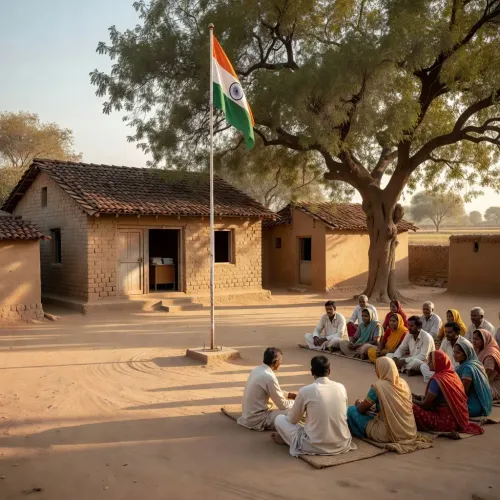
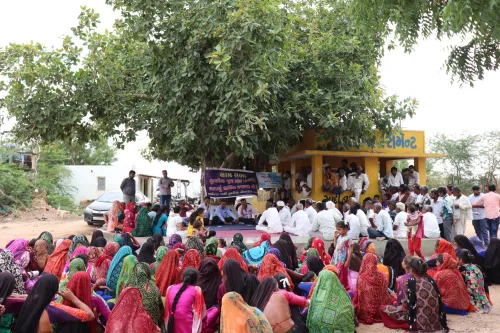
The GPDP process is more than a paperwork exercise. When done well, gram sabhas — open village assemblies — identify local gaps, prioritise schemes from more than 30 central ministries, and create a single integrated plan. That bottom-up data, in theory, feeds upward into block, district, and eventually state plans. The Ministry of Panchayati Raj monitors GPDP preparation through its digital platform and assesses quality through a national ranking of panchayats.
With India's ambition of Viksit Bharat by 2047 increasingly framed as a function of last-mile delivery, the quality of these grassroots plans carries more policy weight than ever.
Point of View
Not just administrative compliance exercises. With Parliament's winter session approaching, the rollout of 2026–27 GPDPs could surface as a metric in debates over rural development scheme convergence. The campaign's credibility ultimately rests on whether gram sabhas in remote panchayats translate into genuinely funded, locally-owned plans — a gap that policy observers have flagged consistently.
NationPress
30 Oct 2026
Frequently Asked Questions
What is the Jan Yojana Abhiyan or People's Plan Campaign?
The Jan Yojana Abhiyan, also known as the People's Plan Campaign (Sabki Yojana Sabka Vikas), is an annual nationwide exercise launched in 2018 by the Ministry of Panchayati Raj to help gram panchayats prepare their Gram Panchayat Development Plans through participatory gram sabha consultations.
What is a Gram Panchayat Development Plan (GPDP)?
A Gram Panchayat Development Plan is a mandatory annual integrated plan prepared by each gram panchayat that identifies local development priorities and converges central and state government schemes. It was institutionalised following the 14th Finance Commission's 2015 recommendations.
Who is Lalan Singh and what ministry does he head?
Lalan Singh is the popular name for Rajiv Ranjan Singh, Union Minister of Panchayati Raj, Fisheries, Animal Husbandry and Dairying, and a senior leader of the Janata Dal (United).
Why does the national workshop for People's Plan Campaign happen in October?
October timing allows state governments and district administrations enough lead time to train panchayat functionaries and align line departments before the peak GPDP preparation window opens, ensuring plans are ready before the next financial year's scheme allocations are made.
How does the People's Plan Campaign connect to Viksit Bharat?
The Ministry of Panchayati Raj frames GPDPs as grassroots inputs into the government's Viksit Bharat (Developed India by 2047) vision, linking village-level needs identification with convergence of over 30 central schemes to ensure last-mile delivery of development.