Nripendra Misra Discusses Political Influence on Ayodhya Events
Synopsis
On April 11, Nripendra Misra shared insights on the political dynamics behind the 1992 Babri Masjid demolition. His reflections reveal how political leadership predominates over bureaucratic decision-making during crises in Ayodhya's contentious history.
Key Takeaways
Political Leadership: Key decisions during crises are often politically motivated.
Kalyan Singh's Directive: No police firing was ordered during the Babri Masjid demolition.
Historical Context: The 1990 police firing resulted in significant casualties.
Comparative Analysis: Misra contrasts leadership styles of Kalyan Singh and Mulayam Singh Yadav.
Moral Responsibility: Kalyan Singh resigned taking moral responsibility for the incident.
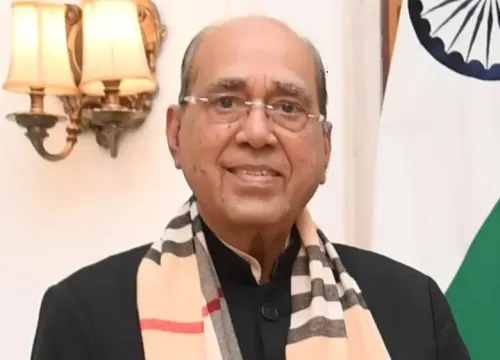
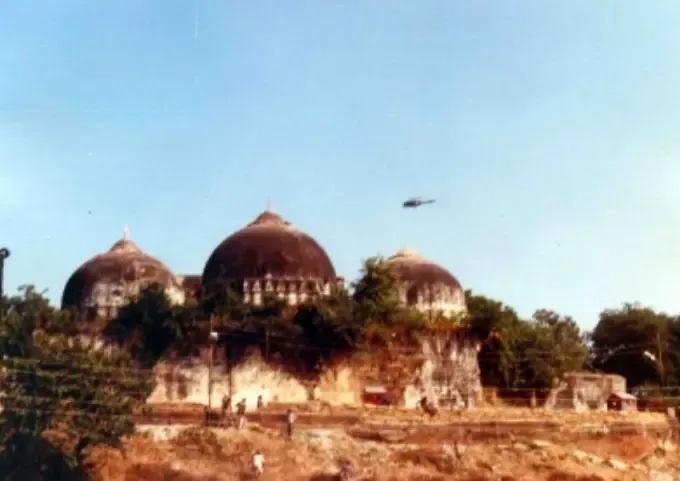
Ayodhya, April 11 (NationPress) Nripendra Misra, the Chairman of the Ram Mandir Construction Committee and former Principal Secretary to the late Kalyan Singh, reflected on the events surrounding the 1992 Babri Masjid demolition. He asserted that crucial decisions in such scenarios tend to be influenced more by political leaders than by bureaucratic figures.
While recalling that tumultuous period, Misra mentioned that in 1992, despite alarming reports indicating a breakdown of law and order in Ayodhya, then Chief Minister Kalyan Singh had explicitly ordered the police not to fire upon the 'Karsevaks'.
He also noted the differences in approaches during crises between his time under various administrations, particularly highlighting the contrasting methods of former Chief Ministers Mulayam Singh Yadav and Kalyan Singh.
Misra stated to the media, "Decisions of this nature do not originate from the Principal Secretary’s office. Approximately 90 percent of such decisions are politically motivated, with only 10 percent involving insights from the Home Secretary, Chief Secretary, and Director General of Police."
He added, "I had the privilege of serving as Principal Secretary to both Mulayam Singh Yadav and Kalyan Singh. You might recall that when Kalyan Singh received reports indicating a law and order crisis in Ayodhya, he gave a written directive stating that no firing would occur in the sacred city."
His comments arise in relation to the earlier Ayodhya firing incident when police opened fire on karsevaks on October 30 and November 2, 1990, during Mulayam Singh Yadav's term as Chief Minister of Uttar Pradesh.
During that time, numerous devotees of Lord Ram had gathered in Ayodhya to participate in the Vishva Hindu Parishad's Kar Seva.
The police's actions against the unarmed karsevaks reportedly resulted in over 28 fatalities.
Former Chief Minister Mulayam Singh Yadav later acknowledged that the orders for the police action were given by him, justifying it as necessary to safeguard the Babri Masjid and maintain national unity.
Conversely, during the Babri Masjid demolition on December 6, 1992, Kalyan Singh, who was then the Chief Minister of Uttar Pradesh, insisted that no firing should occur against the karsevaks, even amidst the crisis.
He reportedly stated, "Karsevaks will not be shot for a building," and subsequently resigned from his position, taking moral responsibility for the events that transpired.
Kalyan Singh’s resignation followed the Babri Masjid demolition on the evening of December 6, 1992.
Nripendra Misra's comments emphasize the differing administrative and political responses during two pivotal and contentious episodes in the history of Ayodhya, underscoring the prevailing influence of political decision-making in law and order matters.
Point of View
Nripendra Misra's reflections on the political intricacies during the Babri Masjid demolition underscore the significant role of political leadership in shaping law and order decisions. The contrast between the actions of Kalyan Singh and Mulayam Singh Yadav during crises reveals the complex interplay between politics and governance in India.
NationPress
20 Sept 2026
Frequently Asked Questions
What role did Nripendra Misra play during the Ayodhya events?
Nripendra Misra served as the Principal Secretary to former Chief Ministers, providing insights into decision-making processes during the Babri Masjid demolition.
What were the contrasting approaches of Kalyan Singh and Mulayam Singh Yadav?
Kalyan Singh ordered no police firing during the Babri Masjid demolition, while Mulayam Singh Yadav's government ordered firing on karsevaks in an earlier incident.
How many casualties were reported during the 1990 firing incident?
The police firing on unarmed karsevaks in 1990 resulted in the deaths of more than 28 individuals.
What was Kalyan Singh's response to the law and order crisis?
Kalyan Singh issued a directive stating that no firing would occur in Ayodhya, emphasizing the importance of the sacred city.
Why does Nripendra Misra highlight political decisions?
Misra argues that most law and order decisions during crises are politically driven, significantly affecting outcomes.