Modi's appeal reshapes Surat IT sector: hybrid work, carpooling rise
Synopsis
Modi's appeal for fuel conservation and shared mobility isn't just political messaging — in Surat's IT sector, it's already changing how companies roster staff and how employees commute. BizInsights has shifted 70% of its workforce remote; interns are carpooling 20 km to work. A soft nudge is producing measurable behavioural change.
Key Takeaways
PM Narendra Modi's appeal for fuel conservation and shared mobility has prompted operational changes in parts of Surat's IT sector.
BizInsights IT Solutions has moved approximately 70% of staff to remote work, limiting office attendance to critical assignments.
In a team of over 20 employees , around 12 to 13 are currently working from home.
IT professional Dhruvi now commutes by sharing a ride with family rather than driving alone.
Intern Kartik , who travels 15–20 km daily, regularly carpools and has increased public transport use, citing both cost savings and lower resource consumption.
The hybrid model mirrors pandemic-era practices but is now driven by a national resource-efficiency push rather than a health emergency.
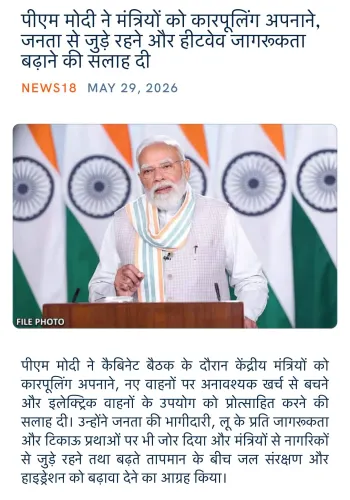
Prime Minister Narendra Modi's call for efficient use of national resources — encompassing fuel conservation, shared mobility, and flexible working arrangements — is visibly reshaping workplace and commuting practices within parts of Surat's information technology sector, according to employees and business leaders in the city.
How IT Firms Are Responding
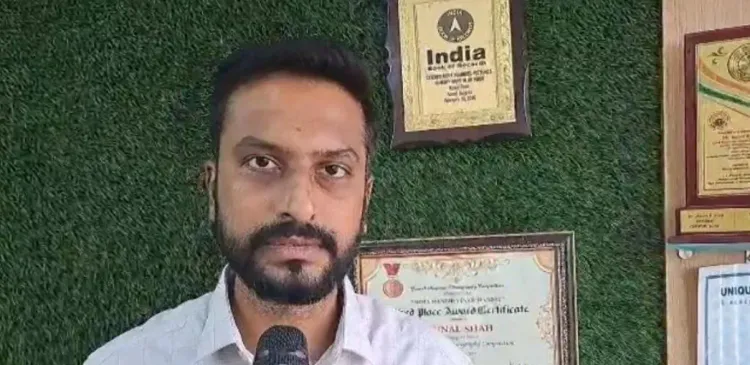
Kunal Shah, Chief Executive Officer and Director of BizInsights IT Solutions, said his company restructured its working model directly in response to the Prime Minister's appeal. Approximately 70 per cent of staff are now working remotely, with in-office attendance restricted to employees on critical assignments or approaching project deadlines.
'The appeal that PM Modi has made, we are following it quite well and are continuing to follow it,' Shah said. In a workforce of over 20 employees, around 12 to 13 are currently working from home, with coordination maintained through online meetings, phone calls, and digital platforms — an arrangement Shah described as ensuring 'continuity of work while supporting reduced travel requirements.'
A Familiar Model, Redeployed
Shah noted that hybrid and remote working models, widely adopted during the Covid-19 pandemic, are being reintroduced in a more targeted form. This time, the driver is not a public health emergency but a national resource-efficiency push. He argued that the approach carries a dual benefit: cutting fuel consumption and reducing private vehicle dependency.
'Fuel will be saved, and people will use public transport… dependency on external fuel should be reduced as much as possible,' Shah said, adding that employees are also encouraged to share travel where practical. He also called on businesses to adopt a cooperative rather than purely competitive outlook, suggesting that companies explore ways to support unemployed individuals through freelancing or smaller assignments to sustain economic activity.
Employees Shift Commuting Habits
Dhruvi, an IT professional in Surat, said her organisation has adopted partial work-from-home arrangements. On days when office attendance is required, she travels with a family member rather than driving alone. 'Earlier we used to come by personal vehicle, but now I come with my father or brother, whoever is available, so they drop me,' she said, noting that shared household travel has become more common.
Kartik, an intern who commutes approximately 15 to 20 kilometres to work, said he regularly carpools with a friend and occasionally uses private cabs. He also reported an increase in public transport use for non-work travel, citing both cost savings and reduced resource consumption. 'The money in our hands is being saved, and we are not consuming too many resources. So in both ways, it's a win-win,' he said.
Broader Significance
The shifts described by Surat-based IT workers reflect a wider pattern: Modi's appeal is functioning less as a regulatory mandate and more as a behavioural nudge that firms and individuals are translating into operational decisions. This comes amid India's sustained focus on energy security and import dependency, with fuel efficiency increasingly framed as both an economic and strategic priority. Whether these changes outlast the immediate appeal — or remain embedded as lasting workplace norms — will depend on continued institutional reinforcement.
Point of View
But it also raises a question: how durable is behaviour change that rests on exhortation rather than policy? Hybrid work and carpooling are genuine efficiency gains, yet India has no national framework to measure or incentivise them at scale. Without that, what Surat's IT workers are doing today could quietly reverse the moment the appeal fades from the news cycle.
NationPress
9 Oct 2026
Frequently Asked Questions
What did PM Modi appeal for regarding fuel and transport?
PM Modi called for more efficient use of national resources, specifically urging citizens and businesses to reduce fuel consumption, adopt carpooling and public transport, and use work-from-home arrangements where feasible. The appeal has been cited by Surat IT firms and employees as influencing their workplace and commuting decisions.
How has Surat's IT sector responded to Modi's appeal?
Companies such as BizInsights IT Solutions have shifted approximately 70% of staff to remote work, restricting office attendance to employees on critical or deadline-driven assignments. Employees have also adopted carpooling and family-shared commutes on days when office presence is required.
Is this a return to pandemic-era work-from-home policies?
According to BizInsights CEO Kunal Shah, the hybrid model being reintroduced mirrors Covid-19-era practices but is now applied in a more targeted way, driven by the national fuel-efficiency push rather than a public health mandate. The intent is to reduce private vehicle use and fuel dependency.
What benefits are employees reporting from carpooling and hybrid work?
Employees report both financial and environmental benefits. Intern Kartik, who commutes 15–20 km daily, cited cost savings and lower resource consumption from carpooling and public transport use, calling it 'a win-win.' IT professional Dhruvi noted reduced private vehicle use by sharing rides with family members.
Which city and sector does this report focus on?
The report focuses on Surat, Gujarat, specifically within segments of its information technology sector. The changes described are based on accounts from local IT company leadership and employees, and may not be representative of the broader national IT industry.