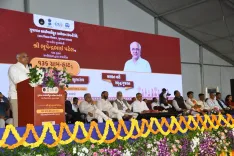
Nadda hails Assam UCC bill, third BJP state to pass it
Synopsis
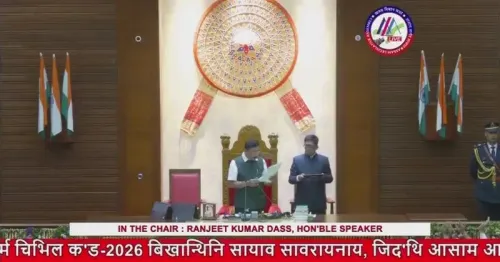
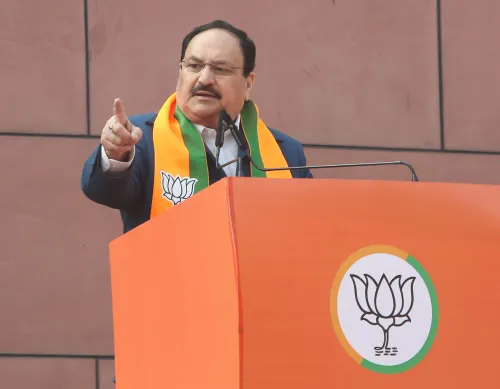
Union Health Minister and BJP president J. P. Nadda praised Assam's passage of the Uniform Civil Code bill on 27 May 2026, calling it a commendable step and congratulating CM Himanta Biswa Sarma. Assam becomes the third BJP-governed state after Uttarakhand and Gujarat to clear such legislation, advancing the party's long-standing UCC agenda.
Key Takeaways
Assam passed a Uniform Civil Code bill , becoming the third state after Uttarakhand and Gujarat to do so.
Nadda , Union Health Minister and BJP national president, publicly congratulated CM Himanta Biswa Sarma and all supporting legislators.
Nadda called vote-bank-driven appeasement policies that grant special rights to particular communities 'an insult to democracy.' The BJP frames the UCC as the legislative expression of PM Modi's Sabka Saath, Sabka Vikas philosophy of equal rights for all citizens.
The UCC draws from Article 44 of the Constitution and aims to replace religion-specific personal laws on marriage, divorce, inheritance and adoption.
Legal challenges before the Gauhati High Court or Supreme Court are widely anticipated as the law moves toward implementation.
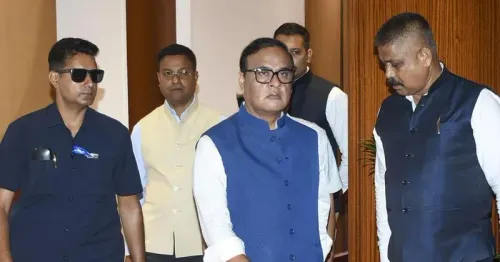
Union Health Minister J. P. Nadda on Wednesday, 27 May 2026 congratulated Assam Chief Minister Himanta Biswa Sarma and all supporting legislators after the Assam Legislative Assembly passed the Uniform Civil Code (UCC) bill, making Assam the third state in India — after Uttarakhand and Gujarat — to clear such legislation.
Context
Nadda, who also serves as BJP national president, posted in Hindi praising the bill's passage as 'अभिनंदनीय कदम' (a commendable step). He wrote that giving special rights to any particular community through appeasement policies driven by vote-bank politics is 'लोकतंत्र का अपमान' — 'an insult to democracy'. The post directly names Prime Minister Narendra Modi and frames the UCC push as an expression of the BJP's governing philosophy of 'Sabka Saath, Sabka Vikas, Sabka Prayas aur Sabka Vishwas' (Together with all, development for all, effort of all, trust of all).
Policy backdrop
The Uniform Civil Code is rooted in Article 44 of the Indian Constitution, a Directive Principle of State Policy that calls on the state to secure a uniform civil law for all citizens covering marriage, divorce, inheritance and adoption — areas currently governed by religion-specific personal laws. Uttarakhand became the first state to enact a state-level UCC law on 7 February 2024, and BJP's 2019 Lok Sabha manifesto had reiterated the party's commitment to a nationwide code. The Supreme Court, in the 2018 Shayara Bano case, had also urged Parliament to consider enacting a UCC.
Since 2014, BJP-led governments have pursued incremental state-level UCC legislation in states under their control, framing it as a means to end religion-based legal differentiation and advance gender justice. Assam's passage of the bill follows the same legislative template established by Uttarakhand, with similar discussions having taken place in Gujarat and Madhya Pradesh.
Stakeholders and impact
A UCC, if fully implemented, would replace personal laws applicable to Hindus, Muslims, Christians and other communities with a single set of civil rules applicable to all citizens regardless of religion. Proponents argue this advances gender equality — particularly for women whose rights under certain personal laws are more restricted — and promotes national integration. Critics and religious minority groups have historically raised concerns about cultural and religious autonomy, and legal challenges before the Gauhati High Court or the Supreme Court are widely anticipated once the Assam law moves toward implementation.
Nadda's statement signals that the BJP intends to use its state-level majorities as a testing ground for the UCC framework before any potential push at the national level, with all citizens — particularly women and religious minorities — standing as the primary stakeholders in the outcome.
What's next
Attention will now turn to the rules notification and rollout timeline for the Assam UCC, the precise provisions of the bill, and whether additional BJP-governed states table similar legislation in upcoming assembly sessions. Any legal challenge before a constitutional court could set significant precedent for the viability of state-level UCC laws and, by extension, for a potential national-level code. Nadda's public endorsement underscores that the UCC remains a live and high-priority item on the BJP's legislative agenda ahead of future electoral cycles.
Point of View
Not merely an electoral promise. By invoking the Sabka Saath, Sabka Vikas framework and explicitly calling appeasement politics 'an insult to democracy,' the statement is calibrated to contrast the BJP's position sharply with Opposition parties ahead of future electoral contests. The three-state UCC arc — Uttarakhand, Gujarat, Assam — also functions as a legal and political stress-test: each new enactment builds precedent and public familiarity before any potential national push. How courts respond to challenges against the Assam law will be closely watched as a barometer for the UCC's constitutional durability.
NationPress
10 Oct 2026
Frequently Asked Questions
Which states have passed the Uniform Civil Code bill in India?
As of May 2026, three states have passed UCC bills: Uttarakhand (the first, in February 2024), Gujarat , and now Assam . All three are governed by the BJP .
What did JP Nadda say about the Assam UCC bill?
J. P. Nadda called the passage of the Assam UCC bill a 'commendable step,' congratulated CM Himanta Biswa Sarma and supporting legislators, and said the BJP is committed to ending discrimination and giving equal rights to all citizens under PM Modi's leadership.
What is the Uniform Civil Code and why is it significant?
The Uniform Civil Code is a proposed set of common civil laws — covering marriage, divorce, inheritance and adoption — that would apply equally to all citizens regardless of religion, replacing existing religion-specific personal laws. It is a Directive Principle under Article 44 of the Indian Constitution.
Can Indian states pass their own Uniform Civil Code?
Yes. Since civil law falls under the Concurrent List of the Indian Constitution, state legislatures can enact UCC legislation for their respective states. Uttarakhand set this precedent in February 2024 , and Assam has now followed.
Will the Assam UCC bill face legal challenges?
Legal challenges before the Gauhati High Court or the Supreme Court of India are widely anticipated once the Assam UCC law moves toward implementation, as opponents are expected to contest it on grounds of religious and cultural autonomy.