Nadda highlights decade of health infra growth, cites 23 AIIMS
Synopsis
Union Health Minister J. P. Nadda on 9 July 2026 highlighted a decade of health infrastructure growth under PM Modi, stating India now has 23 AIIMS with 18 fully operational and construction on the remaining five progressing rapidly.
Key Takeaways
Union Health Minister J.
Nadda posted on 9 July 2026 crediting PM Modi's decade in power with 'unprecedented progress' in India's health sector.
India now has a total of 23 AIIMS , of which 18 are fully operational ; work on the remaining five is ongoing.
The AIIMS expansion is driven by the Pradhan Mantri Swasthya Suraksha Yojana , first launched in 2003 and substantially scaled up after 2014 .
The Union Budget 2015-16 announced 13 new AIIMS to address regional imbalances in tertiary healthcare.
Key beneficiaries include rural and semi-urban patients and medical students in historically under-served states.
Operationalisation of the five remaining AIIMS and supplementary budget allocations for 2026-27 are the immediate policy watchpoints.
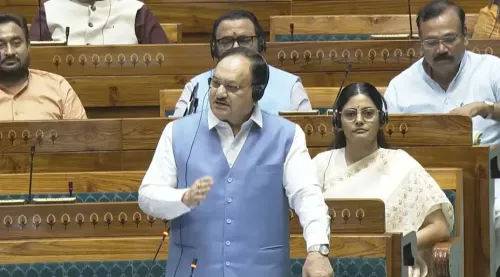
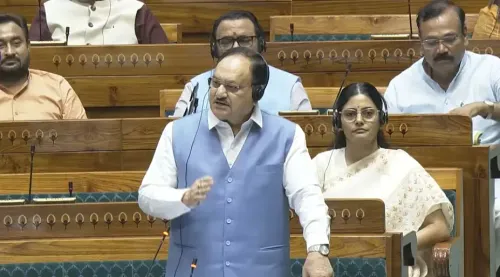
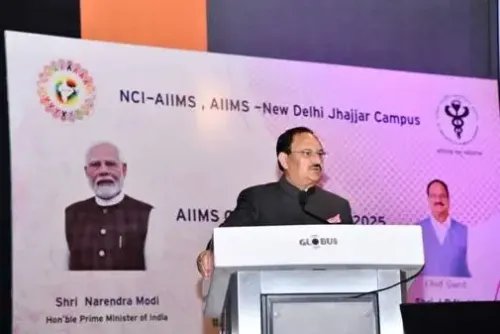
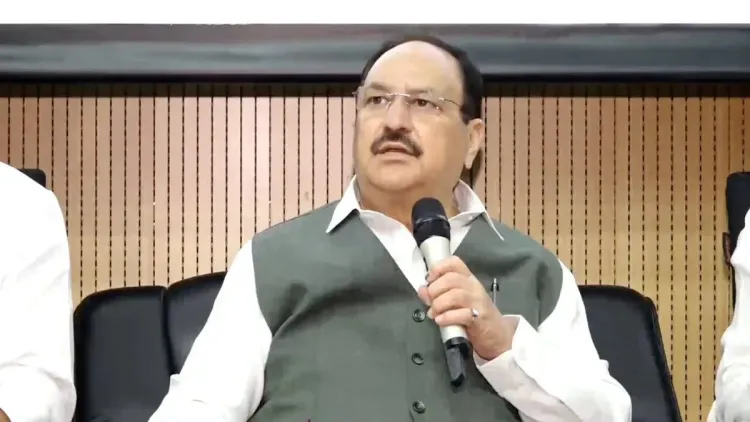
Union Health Minister J. P. Nadda on Thursday, 9 July 2026, credited the decade-long tenure of Prime Minister Narendra Modi with an 'unprecedented leap' in India's health infrastructure, pointing specifically to the expansion of All India Institutes of Medical Sciences (AIIMS) as a marker of that progress. Nadda stated that the country now has a total of 23 AIIMS, of which 18 are fully operational, with work on the remaining institutes progressing rapidly.
Context
Posting in Hindi on X (formerly Twitter), Nadda wrote: 'आदरणीय प्रधानमंत्री श्री @narendramodi जी के नेतृत्व में पिछले एक दशक में स्वास्थ्य क्षेत्र में अभूतपूर्व प्रगति हुई है' — 'Under the leadership of respected Prime Minister Shri Narendra Modi, unprecedented progress has been made in the health sector over the last decade.' He added that a 'long leap' had been taken in health services and health infrastructure, and that of the 23 AIIMS in the country, 18 are currently operational while work on the rest is continuing at pace.
The post, which was accompanied by a video, reflects the ruling Bharatiya Janata Party (BJP)'s ongoing effort to highlight governance milestones in the social sector as the party approaches its twelfth year in power at the Centre.
Policy Backdrop
The AIIMS expansion is rooted in the Pradhan Mantri Swasthya Suraksha Yojana (PMSS Yojana), a central scheme first launched in 2003 to set up six new AIIMS and upgrade existing government medical colleges. The scheme received a significant push post-2014, and the Union Budget 2015-16 announced the establishment of 13 additional AIIMS across different states to address regional imbalances in tertiary healthcare access.
The stated rationale has been to reduce out-of-pocket expenditure for patients in smaller cities and rural areas who previously had to travel to New Delhi, Mumbai, or other major centres for advanced care. Each new AIIMS is also expected to generate postgraduate and undergraduate medical seats, directly addressing the shortage of trained doctors in tier-2 and tier-3 districts.
Stakeholders and Impact
The primary beneficiaries of the AIIMS rollout are rural and semi-urban patients who gain access to subsidised tertiary care closer to home, and medical students who benefit from increased seats in premier institutions. States that have received new AIIMS — including those in the north-east, eastern India, and other historically under-served regions — stand to see multiplier effects on local health economies and medical workforces.
Critics and health-policy observers have, however, long noted that the pace of construction and operationalisation of new AIIMS has lagged behind announced timelines, with several campuses functioning out of temporary facilities or with incomplete departments. The gap between the 23 sanctioned and 18 operational institutes cited by Nadda reflects this ongoing execution challenge.
What's Next
Parliamentary scrutiny of construction timelines for the five remaining AIIMS is expected to intensify, particularly around supplementary budget allocations for the 2026-27 fiscal year. The Health Ministry is likely to face questions on faculty recruitment, equipment procurement, and the operationalisation roadmap for institutes still functioning in partial capacity. How quickly the remaining campuses reach full functionality will be a key metric by which the government's health-infrastructure record is ultimately judged.
Point of View
Using a concrete infrastructure number — 23 AIIMS, 18 operational — to anchor a broader narrative of governance delivery as the BJP approaches its twelfth year in power. The choice of AIIMS as the headline metric is deliberate: these institutions carry elite symbolic weight while also signalling reach into under-served regions. The acknowledgement that five institutes are still under construction, however, quietly concedes an execution gap that opposition parties and health-policy analysts are likely to press on. Ultimately, the post reflects the government's strategy of converting long-gestation infrastructure projects into electoral and reputational capital before they are fully complete.
NationPress
9 Jul 2026
Frequently Asked Questions
How many AIIMS are there in India in 2026?
According to Union Health Minister J. P. Nadda, India has a total of 23 AIIMS as of July 2026, of which 18 are fully operational and work on the remaining five is continuing.
What is the Pradhan Mantri Swasthya Suraksha Yojana?
The Pradhan Mantri Swasthya Suraksha Yojana (PMSS Yojana) is a central government scheme launched in 2003 to establish new AIIMS and upgrade existing government medical colleges, substantially expanded after 2014 to address regional gaps in tertiary healthcare.
Which new AIIMS were announced in the 2015-16 Union Budget?
The Union Budget 2015-16 announced the setting up of 13 new AIIMS across different states to reduce regional imbalances in access to premier tertiary healthcare.
What did JP Nadda say about health infrastructure under Modi?
Nadda said that under PM Modi's leadership over the last decade, 'unprecedented progress' has been made in health services and infrastructure, citing 23 AIIMS — with 18 operational — as a key milestone.
Why is AIIMS expansion important for rural India?
New AIIMS campuses bring subsidised, high-quality tertiary care closer to patients in smaller cities and rural areas, reducing the need to travel to large metros and cutting out-of-pocket medical expenditure for millions of families.