CM Odisha Hails SARTHAK-PDS Phase-2 Cabinet Nod
Synopsis
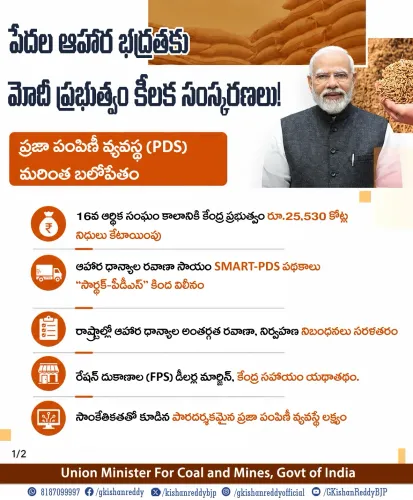
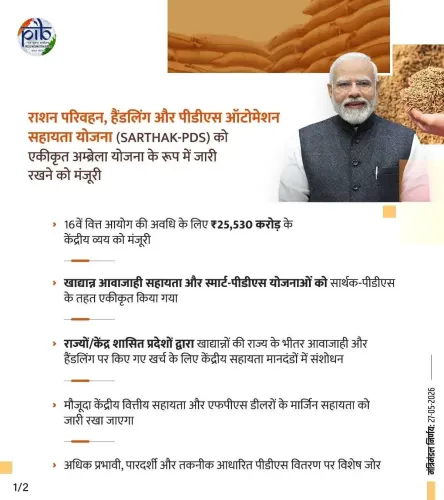
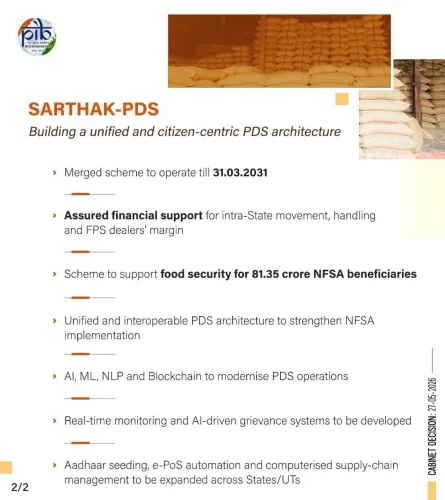
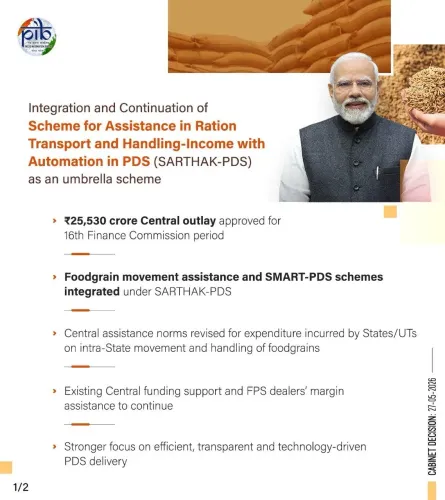
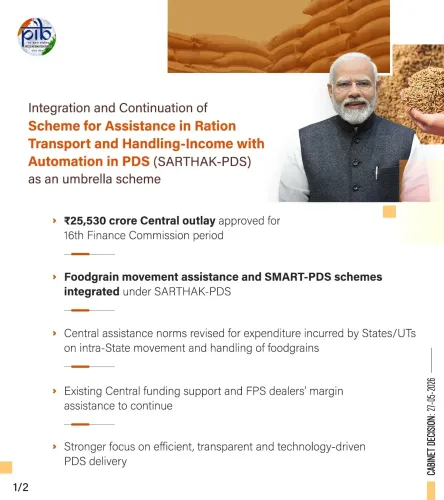
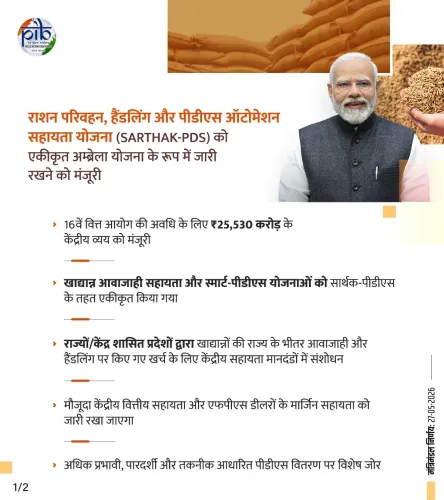
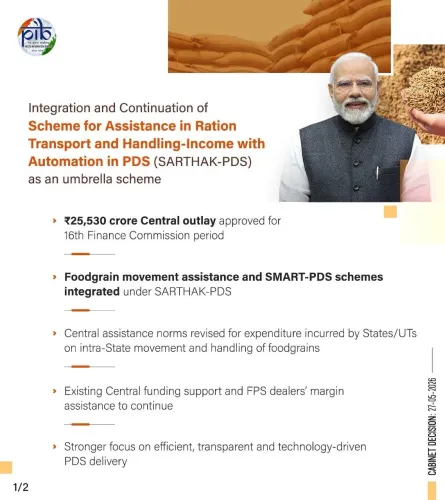
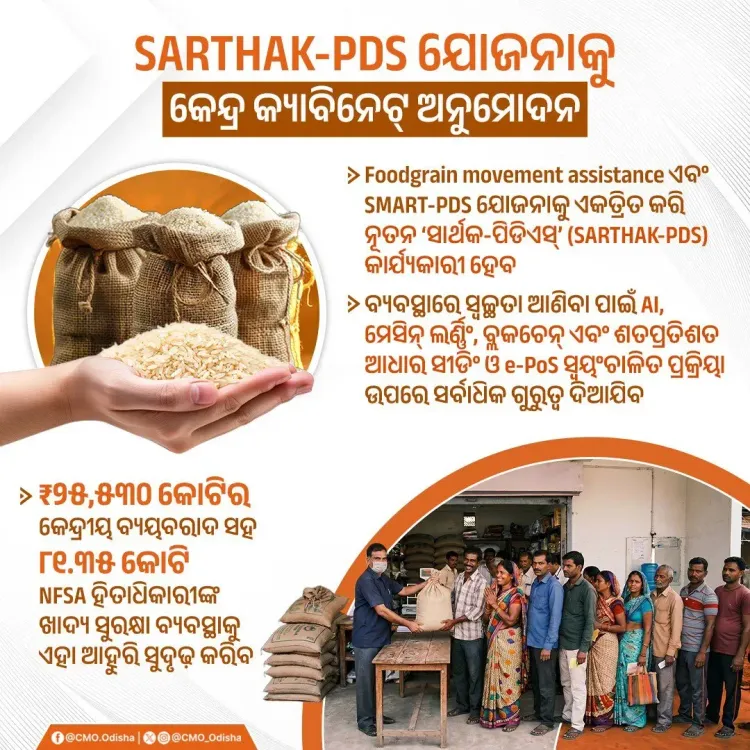
The Chief Minister's Office of Odisha has hailed the Union Cabinet's clearance of SARTHAK-PDS Phase-2 as a historic decision, saying the scheme will strengthen India's food security infrastructure and protect vulnerable citizens under the Garib Kalyan framework.
Key Takeaways
The Union Cabinet, chaired by Prime Minister Narendra Modi , approved SARTHAK-PDS Phase-2 on 29 May 2026 .
The Chief Minister's Office of Odisha called the decision 'historic' and a powerful step for socio-economic development.
The scheme is framed under the 'Garib Kalyan' (welfare of the poor) policy mandate to protect economically weaker sections.
India's PDS network, governed by the National Food Security Act, 2013 , covers up to 75% of rural and 50% of urban population.
The approval continues a policy lineage that includes Aadhaar linkage, One Nation One Ration Card, and PMGKAY extensions since 2020.
State-level implementation guidelines and budget allocations for Phase-2 are yet to be formally notified.
The Chief Minister's Office of Odisha on Friday, 29 May 2026, welcomed the Union Cabinet's approval of SARTHAK-PDS Phase-2, calling it a historic decision in India's food security architecture. The cabinet meeting was chaired by Prime Minister Narendra Modi and the Odisha government described the move as a powerful step toward protecting the country's most vulnerable citizens.
Posting in Odia, the Chief Minister's Office stated: 'SARTHAK-PDS Phase-2 ku milithiba manjuri eka aitihasika nirnaya' — 'The approval granted to SARTHAK-PDS Phase-2 is a historic decision.' The post further noted that the scheme would realise the 'Garib Kalyan' (welfare of the poor) resolve while making the country's food security infrastructure 'more expansive and robust.'
Context
The Union Cabinet's approval of SARTHAK-PDS Phase-2 marks the latest step in India's decades-long effort to modernise and expand its Public Distribution System (PDS). The PDS is the country's primary mechanism for distributing subsidised foodgrains to hundreds of millions of eligible households under the National Food Security Act, 2013, which extended legal entitlements to subsidised grain to up to 75 per cent of the rural population and 50 per cent of urban residents. The Odisha CMO's statement specifically invoked the 'Garib Kalyan' framework — a policy vocabulary that has anchored the Union government's welfare communication since the launch of the PM Garib Kalyan Anna Yojana (PMGKAY) in March 2020. That scheme initially provided free foodgrains to vulnerable families during the COVID-19 pandemic and was extended in multiple phases through 2024.Policy Backdrop
India's food security architecture has been built in layers. The National Food Security Act, 2013 created the statutory foundation. Successive cabinets then focused on plugging leakages through Aadhaar linkage and PDS digitisation, efforts that accelerated significantly from 2014 onward. The One Nation One Ration Card initiative extended portability of benefits across state borders, allowing migrant workers to access their entitlements anywhere in the country. SARTHAK-PDS sits within this lineage of phased modernisation. While Phase-1 laid groundwork for technology integration and supply-chain streamlining, Phase-2's cabinet clearance signals a deeper push to widen coverage and strengthen delivery infrastructure. The Odisha CMO's post described the scheme as strengthening the socio-economic development of the nation alongside protecting weaker sections.Stakeholders and Impact
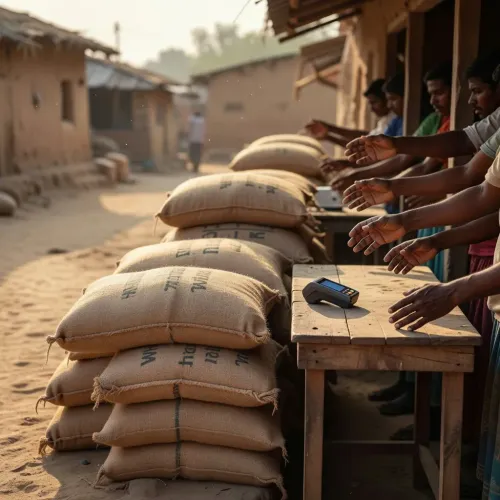
The primary beneficiaries of an expanded PDS are poor and low-income households — particularly in rural Odisha and other states with high concentrations of Below Poverty Line families. State governments, which operate the last-mile distribution network through fair-price shops, will be central to implementation. Odisha has historically been among the states with significant PDS dependence given its large tribal and rural population. For Odisha specifically, a more robust central food security framework translates directly into reduced fiscal pressure on the state's own welfare spending. The state government's public endorsement of the cabinet decision signals alignment with the Union government's welfare priorities and anticipates positive downstream impact for its own beneficiary base.What's Next
Attention will now turn to formal notification of SARTHAK-PDS Phase-2 guidelines, including state-level implementation timelines and budget allocations. Parliamentary scrutiny and audit assessments of Phase-1 outcomes are also expected to inform how Phase-2 is rolled out. The Odisha government's early and vocal support suggests the state will be an active participant in the scheme's execution once operational details are published by the Union Ministry of Consumer Affairs, Food and Public Distribution.Point of View
Which has a large tribal and rural beneficiary base, a stronger central food security framework reduces state fiscal exposure while delivering electoral goodwill. The broader pattern suggests the Union government continues to use PDS modernisation as a durable, cross-cycle welfare anchor — one that is difficult for any political opponent to oppose and easy to communicate to last-mile voters.
NationPress
12 Oct 2026
Frequently Asked Questions
What is SARTHAK-PDS Phase-2?
SARTHAK-PDS Phase-2 is a Union Cabinet-approved scheme aimed at expanding and modernising India's Public Distribution System to strengthen food security for vulnerable citizens. Specific operational details are yet to be formally notified by the Union government.
Why did the Odisha CMO welcome the SARTHAK-PDS Phase-2 approval?
The Chief Minister's Office of Odisha described the approval as a historic decision that will protect weaker sections of society and make India's food security infrastructure more expansive and robust, aligning with the 'Garib Kalyan' welfare mandate.
What is the Garib Kalyan scheme in India?
'Garib Kalyan' refers to a broader welfare policy framework and specifically to the PM Garib Kalyan Anna Yojana, launched in March 2020, which provided free foodgrains to vulnerable families during the COVID-19 pandemic and was extended in phases through 2024.
How does India's Public Distribution System work?
India's PDS distributes subsidised foodgrains to eligible households through a network of fair-price shops, governed by the National Food Security Act, 2013, which covers up to 75% of the rural and 50% of the urban population.
What comes next after the SARTHAK-PDS Phase-2 cabinet approval?
The next steps include formal notification of implementation guidelines, state-level rollout timelines, and budget allocations by the Union Ministry of Consumer Affairs, Food and Public Distribution, followed by state government execution.