Uttarakhand CM Office: Pithoragarh woman earns ₹25k/month via poultry
Synopsis
The Uttarakhand Chief Minister's Office spotlighted Neema Bohra of Bishkholi village in Pithoragarh, who earns ₹20,000–₹25,000 per month from a poultry business launched under the Gramotthan Pariyojana, showcasing rural women's self-reliance in a migration-prone hill district.
Key Takeaways
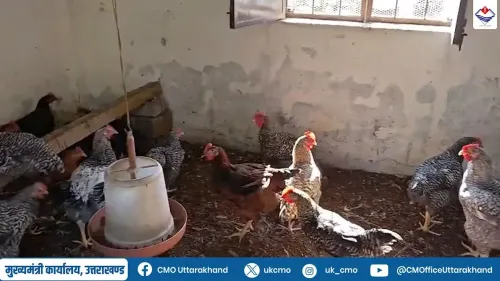
Neema Bohra of Bishkholi village, Pithoragarh started a poultry farming business with support from the Gramotthan Pariyojana .
She earns approximately ₹20,000–₹25,000 per month , achieving financial self-reliance.
Pithoragarh district borders Nepal and China and faces high male out-migration and limited non-farm income options.
Uttarakhand's rural livelihood programmes are aligned with the National Rural Livelihood Mission framework active since the early 2010s.
The Chief Minister's Office of Uttarakhand publicised the case on 18 November 2026 as a model of women's economic empowerment in hill districts.
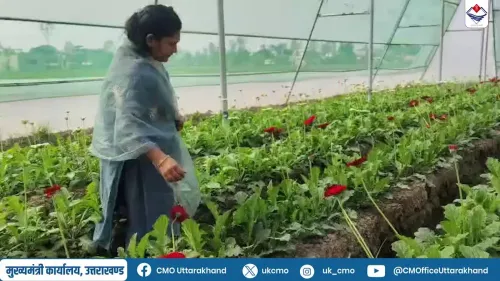
From a remote hillside village in Pithoragarh district to a steady monthly income of ₹20,000–₹25,000 — Neema Bohra of Bishkholi village turned a government rural-livelihood scheme into a working poultry business that now pays her bills and her pride. The Chief Minister's Office of Uttarakhand highlighted her journey on 18 November 2026, naming it as a direct outcome of the state's Gramotthan Pariyojana.
The post, in Hindi, reads: 'Janpad Pithoragarh ke Bishkholi gaon ki Neema Bohra ne Gramotthan Pariyojana ke sahyog se shuru kiya murgi palan vyavsay, pratimaah kareeb ₹20 se ₹25 hazar ki aay arjit kar bani aatmnirbhar' — 'Neema Bohra of Bishkholi village in Pithoragarh district launched a poultry farming business with the support of the Gramotthan Pariyojana and is now self-reliant, earning approximately ₹20,000 to ₹25,000 per month.'Bishkholi to business: what the Gramotthan Pariyojana enabled
The Gramotthan Pariyojana is a village-development initiative within Uttarakhand's broader rural self-employment ecosystem, which draws from the framework of the National Rural Livelihood Mission — a programme that has been directing resources toward hill-district women since the early 2010s. Pithoragarh, a high-altitude district bordering both Nepal and China, carries a particular development challenge: sparse non-farm income, significant male out-migration, and terrain that limits most commercial agriculture. Poultry farming fits that geography — low land requirement, quick production cycles, and a steady local demand for eggs and meat.
Neema Bohra's case fits a pattern the state government has deliberately cultivated: identify a willing beneficiary in a migration-prone district, provide scheme-backed support, and amplify the outcome as proof of concept. Whether that model scales depends on replication numbers the government has not yet published.
The ₹20k–₹25k number and what it signals
An income of ₹20,000–₹25,000 per month is not trivial for a rural household in a Himalayan district where wage-labour options are thin. It sits above the rural poverty line and, critically, it is non-remittance income — earned locally, by a woman, without a family member having to leave for the plains. That is precisely the narrative Uttarakhand's government needs as it works to slow the state's well-documented reverse-migration problem. One poultry unit in Bishkholi does not reverse that tide alone. But it documents that the tide can be pushed.
Stories like Neema Bohra's are the state's most visible argument that its hill-district welfare programmes are converting into real household income — and the Chief Minister's Office is making sure the argument is heard.
Point of View
A district hollowed by decades of out-migration. Spotlighting a woman earning a stable income locally addresses two political imperatives at once: women's empowerment and the reversal of demographic drain from the hills. The ₹20,000–₹25,000 monthly income figure, if replicable, would represent meaningful progress against rural poverty benchmarks — but the absence of aggregate data on scheme coverage means the story, for now, is a showcase rather than a scorecard. The real policy test will come when the government publishes district-level numbers on sustained beneficiary income.
NationPress
18 Nov 2026
Frequently Asked Questions
Who is Neema Bohra and where is she from?
Neema Bohra is a resident of Bishkholi village in Pithoragarh district, Uttarakhand, who became self-reliant by starting a poultry farming business with support from the Gramotthan Pariyojana.
What is the Gramotthan Pariyojana in Uttarakhand?
The Gramotthan Pariyojana is a village-development and rural self-employment initiative in Uttarakhand that supports micro-enterprises like poultry farming, broadly aligned with the National Rural Livelihood Mission framework.
How much does Neema Bohra earn from poultry farming?
She earns approximately ₹20,000 to ₹25,000 per month from her poultry business in Bishkholi village, Pithoragarh.
Why is poultry farming promoted in Pithoragarh district?
Pithoragarh is a high-altitude hill district with limited non-farm income and high out-migration; poultry farming requires little land, has quick production cycles, and meets steady local demand, making it well-suited to the terrain.
What is the Uttarakhand government's goal in publicising these success stories?
The state government uses individual beneficiary success stories to demonstrate that rural livelihood schemes are converting into real household income and to encourage self-employment among women in migration-prone hill districts.