Puri Links Toilets, Housing to Women's Dignity Under Modi
Synopsis
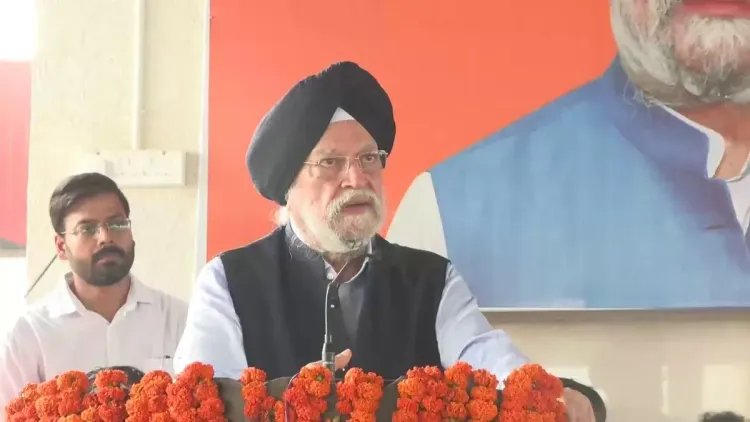
Union Petroleum Minister Hardeep Singh Puri on 1 August 2026 linked the Modi government's sanitation and housing schemes — over 10 crore toilets and 4 crore pucca homes — to women's empowerment, citing a pledge for 3 crore additional houses under PMAY.
Key Takeaways
Hardeep Singh Puri posted on 1 August 2026 framing women's empowerment as the 'core thinking' of the Modi government.
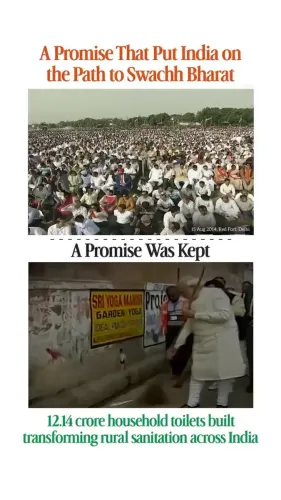
He cited the Swachh Bharat Abhiyan , launched from the Red Fort on 2 October 2014 , and its construction of more than 10 crore toilets as a dignity intervention for women.
The Pradhan Mantri Awas Yojana was credited with delivering more than 4 crore pucca homes to poor families, with women's stability cited as a key outcome.
Puri referenced a pledge to build 3 crore new homes under the next phase of PMAY.
Completion figures and the new housing pledge have not been independently verified against current official data.
A nation where women are safe, respected, and empowered moves faster — that is the argument Union Petroleum Minister Hardeep Singh Puri made on Saturday, 1 August 2026, invoking two of the Modi government's flagship welfare schemes to frame infrastructure spending as a direct investment in female dignity.
Posting in Hindi, Puri wrote: 'जिस राष्ट्र में नारी सुरक्षित, सम्मानित और सशक्त होती है, वही राष्ट्र तेज़ी से आगे बढ़ता है' — 'The nation in which women are safe, respected, and empowered is the nation that advances rapidly.' He described women's empowerment as 'the core thinking of the Modi government.'
From Red Fort to Rural Courtyards: The Sanitation Pledge
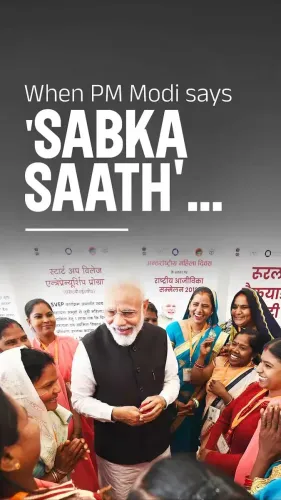
Puri anchored his argument in a moment now central to BJP welfare messaging: PM Narendra Modi's 2 October 2014 Independence Day address from the Red Fort, where the Swachh Bharat Abhiyan was formally launched with an explicit link between toilet construction and women's safety. The mission set out to eliminate open defecation — a practice that exposed women to assault and illness in disproportionate numbers. Puri cited the construction of more than 10 crore toilets under the programme, describing them not as infrastructure statistics but as 'a saga of transformation in the lives of crores of women.'Pucca Roofs and the Promise of Permanence
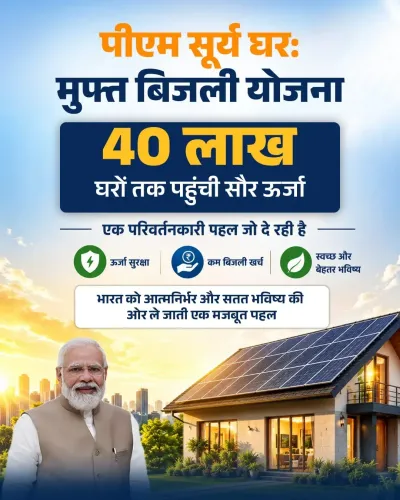
The second pillar of his post is the Pradhan Mantri Awas Yojana, the government's flagship housing scheme launched in its urban avatar in June 2015 and extended to rural India in 2016. Puri credited PMAY with delivering more than 4 crore pucca homes to poor families, arguing that a permanent roof gives women 'stability and self-confidence' — a framing that positions housing as a psychological and social good, not merely a physical one. He added a forward-looking number: a pledge to build 3 crore additional homes, which he described as the next chapter in the same story.Numbers as Narrative: The Empowerment Arithmetic
The post is structured as a cumulative ledger — toilets, homes, future homes — each line reinforcing the central claim that scale equals empowerment. This framing has been a consistent feature of BJP welfare communication since 2014, translating scheme outputs into female-dignity metrics to broaden the political resonance of what are, at their core, infrastructure programmes. The research notes that the 10 crore toilet and 4 crore house completion figures, along with the 3 crore new housing pledge, require official verification against current government data. The numbers may still be contested — but the political grammar they encode is unmistakable: every crore of homes or toilets is presented as a crore of women's lives changed. If the next phase of PMAY delivers on its targets, that arithmetic will only grow louder.Point of View
With women as the primary frame. By anchoring the argument in the 2014 Red Fort address, he connects a current welfare ledger to the government's founding moment, reinforcing continuity of intent. The addition of a 3 crore new housing pledge signals that PMAY remains a live political asset, not a completed chapter. The post also reflects a broader pattern in which senior ministers — not just the Prime Minister — are deployed to amplify welfare messaging, widening the party's outreach bandwidth.
NationPress
16 Sept 2026
Frequently Asked Questions
What did Hardeep Singh Puri say about women's empowerment?
On 1 August 2026, Puri posted in Hindi that a nation where women are safe, respected, and empowered advances rapidly, and argued that women's empowerment is the 'core thinking' of the Modi government, citing Swachh Bharat toilets and PMAY homes as evidence.
How many toilets were built under Swachh Bharat Abhiyan?
Puri cited more than 10 crore toilets built under the Swachh Bharat Abhiyan, though this figure requires verification against current official government data.
What is Pradhan Mantri Awas Yojana and how does it help women?
PMAY is the central government's housing scheme, launched in 2015 for urban areas and 2016 for rural India, that provides pucca homes to poor families. Puri argued it brings women 'stability and self-confidence' by ending homelessness.
What is the 3 crore new homes pledge under PMAY?
Puri referenced a government pledge to construct 3 crore additional homes under the next phase of PMAY. This target requires verification against official budgetary and parliamentary announcements.
When was Swachh Bharat Mission launched and why?
The Swachh Bharat Mission was launched on 2 October 2014 when PM Modi addressed the nation from the Red Fort, explicitly linking toilet construction to women's safety, dignity, and freedom from open defecation.