CM Bhajanlal Leads Rajasthan's Record Water Conservation Drive
Synopsis
Rajasthan's Chief Minister's Office announced that approximately 4.6 crore residents participated in the Vande Ganga Jal Sanrakshan Jan Abhiyan-2026, calling it a historic milestone in water conservation under CM Bhajanlal Sharma's leadership and the foundation of a water-secure state.
Key Takeaways
The Chief Minister's Office of Rajasthan announced the milestone on June 8, 2026 .
Approximately 4.6 crore Rajasthan residents participated in the Vande Ganga Jal Sanrakshan Jan Abhiyan-2026 .
The campaign focused on the rejuvenation of water sources through mass public participation.
CM Bhajanlal Sharma , in office since December 2023 , has made water management a stated priority of his administration.
The drive builds on earlier state and central campaigns including the Jal Swavalamban Abhiyan (2016) and Jal Shakti Abhiyan (2019) .
Groundwater recharge outcomes during the 2026-27 monsoon cycle will be the key indicator of on-ground impact.
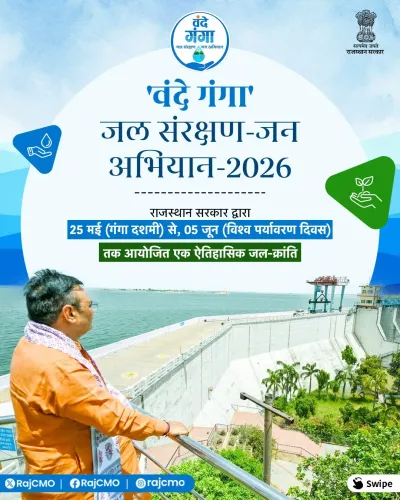
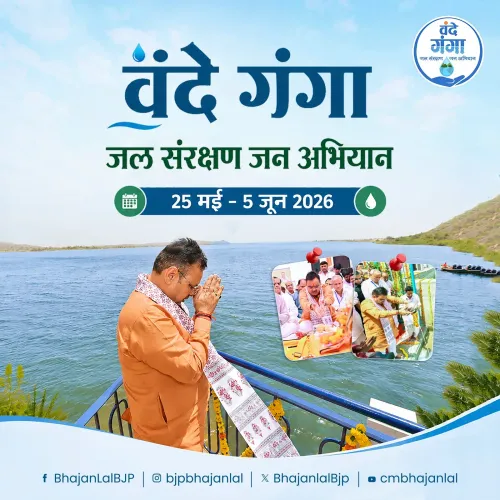
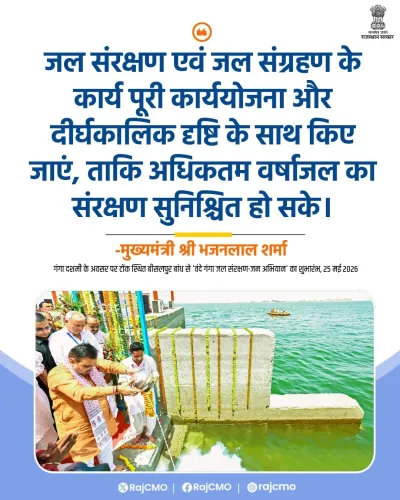
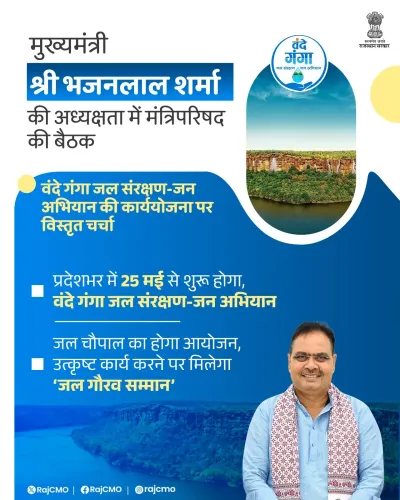
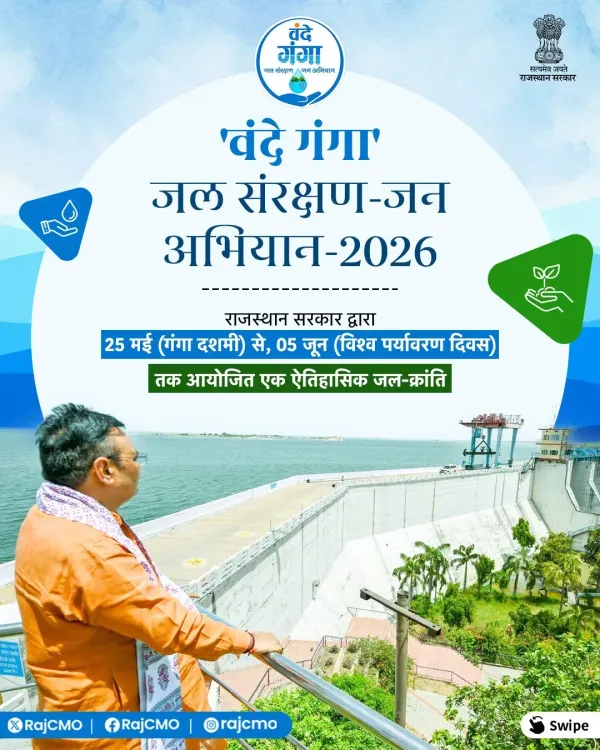
The Chief Minister's Office of Rajasthan announced on Monday, June 8, 2026, that the state has achieved a landmark milestone in water conservation under the leadership of Chief Minister Bhajanlal Sharma, with approximately 4.6 crore residents participating in the Vande Ganga Jal Sanrakshan Jan Abhiyan-2026 to rejuvenate water sources across the state.
Context
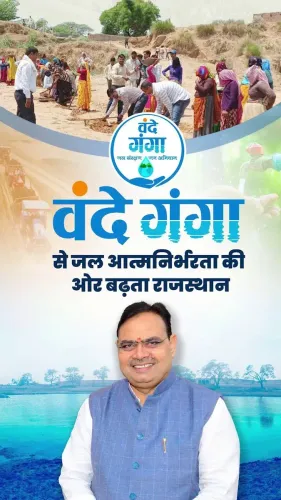
The official post declared, 'राजस्थान ने जल संरक्षण में रचा नया इतिहास' ('Rajasthan has scripted new history in water conservation'), crediting the mass public campaign for delivering what it called an unprecedented success. The Vande Ganga campaign mobilised citizens to collectively pledge and participate in the rejuvenation of local water sources — rivers, ponds, stepwells, and groundwater recharge structures — across the state. The government described this outcome as the foundation of a 'water-secure and prosperous Rajasthan.'Policy Backdrop
Rajasthan, India's largest state by area, has long grappled with acute water scarcity rooted in its arid and semi-arid geography. Successive administrations have turned to community-driven campaigns to address chronic groundwater depletion. The Jal Swavalamban Abhiyan, launched in 2016, was an earlier state-level initiative that promoted self-reliance in water management through grassroots participation. At the national level, the Jal Shakti Abhiyan, initiated in 2019, targeted water-stressed districts — many of them in Rajasthan — with a focus on conservation and rainwater harvesting. The Vande Ganga campaign continues this lineage, framing jan bhagidari (public participation) as the central instrument of water security. CM Bhajanlal Sharma, who took office in December 2023, has positioned water management as a priority of his administration. The Vande Ganga campaign-2026 represents the current government's flagship effort to build on earlier conservation frameworks while expanding the scale of citizen involvement.Stakeholders and Impact
The primary beneficiaries of source-rejuvenation drives in Rajasthan are farmers and rural households, who face the sharpest consequences of groundwater depletion and erratic monsoons. A participation figure of 4.6 crore — nearly half the state's population — signals an unusually wide mobilisation if borne out by independent assessments. Urban residents and local self-government bodies are also stakeholders, as revived water bodies can ease municipal water stress in towns dependent on surface and groundwater sources. The campaign's emphasis on jal srot kayakalp (rejuvenation of water sources) points to structural interventions — desilting, bunding, recharge pit construction — rather than awareness alone, though the operational details of activities undertaken remain to be fully documented.What's Next
The real test of the Vande Ganga campaign's impact will come during the 2026-27 monsoon cycle, when groundwater recharge data and the functional status of rejuvenated sources will offer measurable indicators. Observers will also watch whether the state formally integrates outcomes from this drive with the ongoing Jal Jeevan Mission, the central government's programme for universal household tap-water access. If the campaign's participation numbers translate into verifiable hydrological improvements, Rajasthan's model could inform similar jan abhiyans in other water-stressed states across India's arid belt.Point of View
Framing mass participation as proof of governance delivery ahead of any independent hydrological verification. Rajasthan has a well-established pattern of using jan abhiyans to address water stress, and the current administration is clearly positioning this drive within that legacy while adding scale as a differentiator. The 4.6 crore participation claim, if substantiated, would represent one of the largest state-level environmental mobilisations in India's recent history. The real political and policy test arrives with the monsoon data — outcomes will determine whether this becomes a replicable model or remains a well-publicised pledge drive.
NationPress
22 Oct 2026
Frequently Asked Questions
What is the Vande Ganga Jal Sanrakshan Jan Abhiyan-2026?
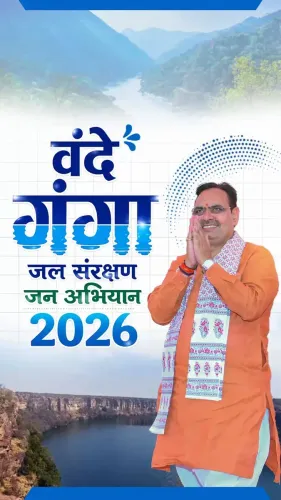
The Vande Ganga Jal Sanrakshan Jan Abhiyan-2026 is a Rajasthan government public campaign that mobilises citizens to rejuvenate local water sources such as ponds, rivers, and groundwater recharge structures through community participation.
How many people participated in Rajasthan's Vande Ganga water campaign?
According to the Chief Minister's Office of Rajasthan, approximately 4.6 crore residents of the state participated in the Vande Ganga campaign-2026.
Who launched the Vande Ganga campaign in Rajasthan?
The Vande Ganga Jal Sanrakshan Jan Abhiyan-2026 was launched under the leadership of Chief Minister Bhajanlal Sharma, who took office in December 2023.
What is Rajasthan's history with water conservation campaigns?
Rajasthan has a long history of community-driven water conservation drives, including the Jal Swavalamban Abhiyan launched in 2016 and alignment with the central government's Jal Shakti Abhiyan from 2019, both aimed at addressing the state's chronic water scarcity.
How will the success of Rajasthan's Vande Ganga campaign be measured?
The practical impact of the campaign will be assessed through groundwater recharge data and the functional status of rejuvenated water sources during the 2026-27 monsoon cycle.