Amit Shah recalls Bastar tribal girl's 'We survived' moment in X post
Synopsis
A young tribal girl's three words — 'Hum Bach Gaye' — moved Home Minister Amit Shah more than any political rally could. His Bastar visit, centred on inaugurating the Shaheed Gundadhur Seva Dera, captures the human dimension of a region finally emerging from decades of Naxal terror — and raises the question of whether development will now match the peace.
Key Takeaways
Amit Shah visited Bastar, Chhattisgarh and interacted with nearly 400 tribal people on 21 May 2025 .
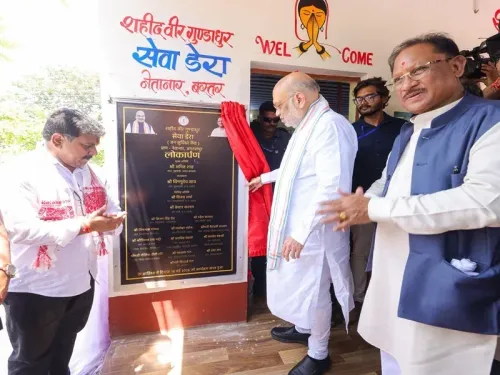
He inaugurated the 'Shaheed Gundadhur Seva Dera' in Netnar village , named after tribal martyr Gundadhur .
A young tribal girl's words — 'Hum Bach Gaye' (We survived) — were cited by Shah as the most moving moment of the visit.
Shah posted a video of the interaction on X , describing the fulfilment of direct tribal engagement as surpassing large political rallies.
The visit comes amid the Centre's push to extend governance to remote tribal areas following reduced Naxal activity in the region.
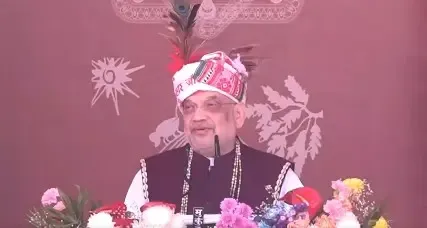
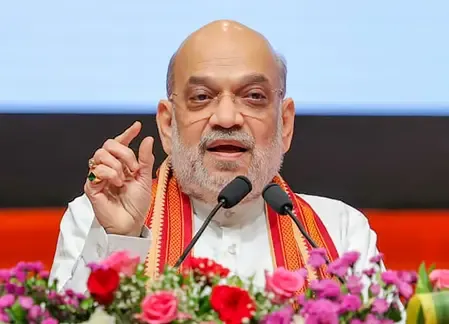
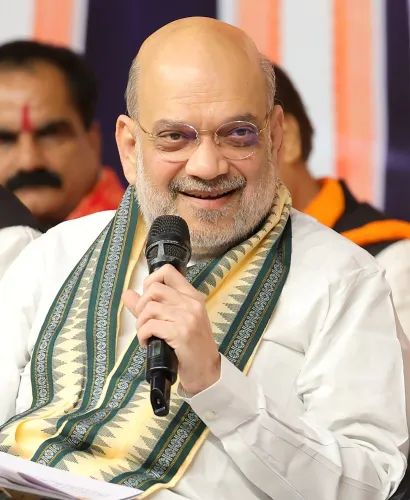
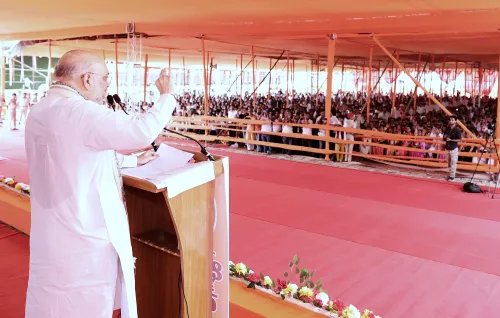
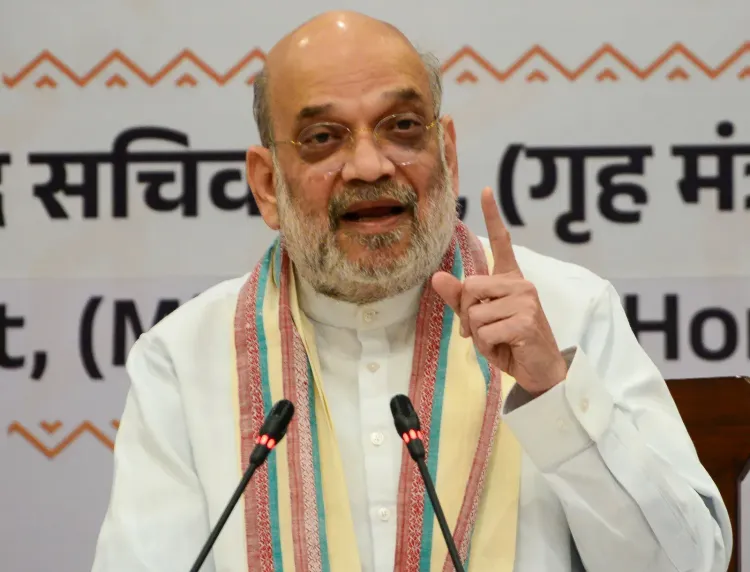
Union Home Minister Amit Shah on 21 May shared a deeply personal account of his visit to Bastar, Chhattisgarh, where he met nearly 400 tribal people, saying the experience brought him a sense of fulfilment that far outweighs the reception of large political rallies. The remarks, posted on his X handle alongside a video of the interaction, offer a rare window into the Home Minister's emotional engagement with communities that endured years of Naxal violence.
The moment that stood out
Shah singled out a conversation with a young girl from Bastar as the most affecting moment of the visit. 'When a little girl from Bastar tells me, after it has become free of Naxals, “We survived”, that joy surpasses millions of joys,' he wrote, reproducing her words — 'Hum Bach Gaye' — in his post. The video shared alongside shows Shah moving among tribal families, listening to their accounts and exchanging moments that he described as reflecting the region's transformation.
Why Shah was in Bastar
The visit centred on the inauguration of the 'Shaheed Gundadhur Seva Dera' in Netnar village, a service centre named in honour of tribal martyr Gundadhur. Shah described the faces of tribal men, women, and children as carrying a new ray of hope — one made possible, he said, by Bastar's liberation from the grip of Naxalism. He emphasised that for a sensitive political worker, direct engagement with tribal communities holds greater value than addressing mass gatherings.
The broader significance
The inauguration of service centres such as the Shaheed Gundadhur Seva Dera is part of the Centre's stated push to extend governance and development to the most remote tribal belts of central India. Bastar has for decades been among the worst-affected districts in what security forces call the Red Corridor — a swathe of forested terrain where Maoist insurgency claimed thousands of lives and displaced entire communities. This comes amid a period of intensified counter-insurgency operations that the government says have significantly degraded Naxal presence in the region.
Shah's message on tribal welfare
In his post, Shah articulated a view that direct, face-to-face engagement with marginalised communities carries a moral weight distinct from political optics. 'For an individual who works with sensitivity in the realm of politics, the sight of a glimmer of hope on the faces of our tribal brothers and sisters brings a sense of self-satisfaction that far exceeds the gratification derived from delivering a speech before hundreds of thousands,' he said. Critics and observers will note that the framing — personal satisfaction over political performance — is itself a form of political messaging, but the emotional register of the video and the specificity of the young girl's words lend it a texture rarely seen in ministerial communication.
What comes next
The establishment of Seva Deras in tribal areas signals an intent to institutionalise the post-conflict peace dividend in Bastar. Whether development infrastructure follows at the pace the Centre has promised remains the central question for communities that have waited long for normalcy. The Home Minister's visit, and the attention it draws, places that accountability in sharper relief.
Point of View
Long promised, has been uneven in delivery, and inaugurating a Seva Dera is a beginning, not an outcome. The Home Minister's emotional register is genuine by all appearances, but the harder measure is whether the Centre's post-conflict development pipeline in the Red Corridor matches the warmth of the optics. That question, largely absent from mainstream coverage of this visit, is the one Bastar's tribals are actually living.
NationPress
6 Oct 2026
Frequently Asked Questions
Why did Amit Shah visit Bastar in May 2025?
Amit Shah visited Bastar to inaugurate the 'Shaheed Gundadhur Seva Dera' in Netnar village, a service centre named after tribal martyr Gundadhur. During the visit he also interacted with nearly 400 tribal people from the region.
What did the tribal girl say to Amit Shah in Bastar?
A young tribal girl told Amit Shah 'Hum Bach Gaye' — meaning 'We survived' — referring to the end of Naxal terror in Bastar. Shah cited this moment in his X post as bringing him a joy that 'surpasses millions of joys.'
What is the Shaheed Gundadhur Seva Dera?
The Shaheed Gundadhur Seva Dera is a service centre inaugurated by Amit Shah in Netnar village, Bastar, named in honour of tribal martyr Gundadhur. It is part of the Centre's stated effort to bring governance and development to remote tribal areas in Chhattisgarh.
What did Amit Shah say about tribal communities versus political rallies?
Shah said that witnessing hope on the faces of tribal brothers and sisters gives him a self-satisfaction that 'far exceeds the gratification derived from delivering a speech before hundreds of thousands.' He described direct face-to-face engagement with tribal people as holding greater personal value than mass political gatherings.
What is the current situation of Naxalism in Bastar?
Bastar was for decades one of the worst-affected districts in India's Red Corridor, where Maoist insurgency claimed thousands of lives. The government says intensified counter-insurgency operations have significantly reduced Naxal presence, and Shah's visit was framed around the region's transition to peace and development.