Sitharaman Hails Digital India at 11 Years, Cites Global DPI Benchmark
Synopsis
Finance Minister Nirmala Sitharaman marked eleven years of Digital India on 1 July 2026, crediting the country's digital public infrastructure — built on Aadhaar, UPI and India Stack — with transforming financial innovation and setting a global benchmark for inclusion and scale.
Key Takeaways
Digital India completed 11 years on 1 July 2026 , having been launched on 1 July 2015.
Union Finance Minister Nirmala Sitharaman described India's digital public infrastructure as a 'new global benchmark for inclusion, scale and impact.' The programme's financial layer rests on Aadhaar , UPI (launched August 2016) and DigiLocker , collectively forming India Stack .
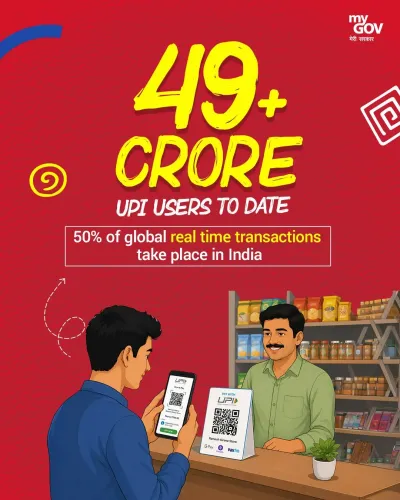
UPI , managed by the National Payments Corporation of India , enabled real-time mobile payments and expanded access for unbanked households and small merchants.
India presented its digital public infrastructure model as replicable during its G20 presidency , positioning itself as an exporter of governance technology.
Upcoming policy focus areas include cross-border UPI linkages and amendments to the Data Protection Act affecting DPI data usage.
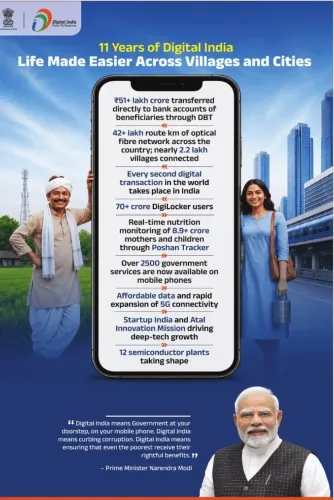
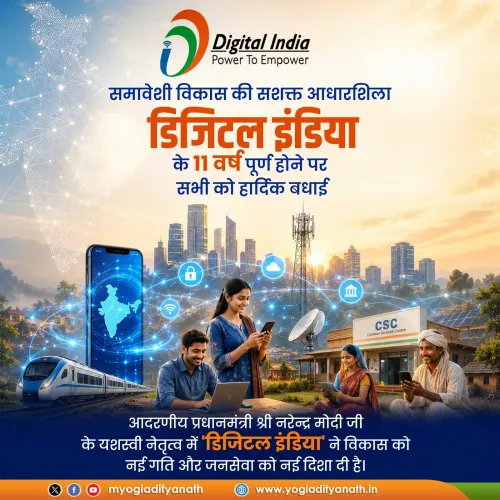
Union Finance Minister Nirmala Sitharaman on Wednesday, 1 July 2026 marked eleven years of the Digital India programme, saying the country's digital public infrastructure has transformed financial innovation and set a new global benchmark for inclusion, scale and impact.
Context
The Digital India programme was launched on 1 July 2015 by the central government with the stated goal of delivering broadband connectivity, digital identity and mobile-based services to every citizen. Its eleventh anniversary on 1 July 2026 has prompted senior ministers across departments to reflect on the programme's trajectory and outcomes.
Sitharaman, who oversees financial-sector digital policy and fintech regulation as Union Minister of Finance and Corporate Affairs, framed the milestone in terms of economic transformation rather than mere technological adoption, describing the infrastructure as having 'transformed financial innovation.'
Policy Backdrop
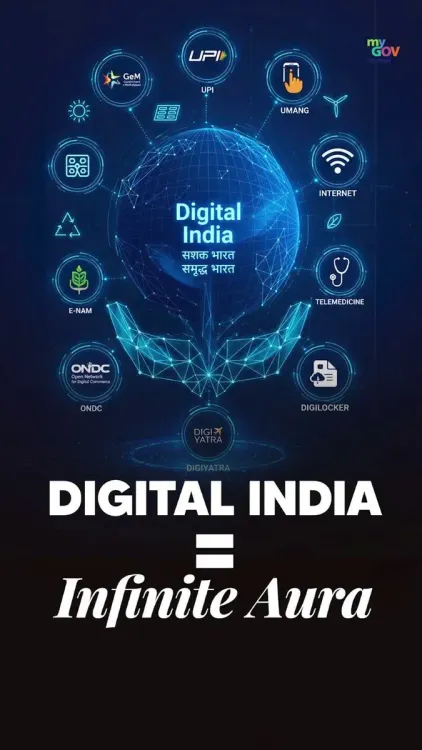
The architecture underpinning Digital India rests on three interlocking layers collectively known as India Stack: Aadhaar, the biometric digital identity system; the Unified Payments Interface (UPI), the real-time inter-bank payment network launched in August 2016 by the National Payments Corporation of India (NPCI); and DigiLocker, the cloud-based document repository.
Together these systems have enabled targeted subsidy delivery, cashless merchant transactions and paperless identity verification at population scale. UPI in particular has been progressively linked with bank accounts and Aadhaar credentials, dramatically expanding access for previously unbanked households and small merchants in rural and semi-urban India.
During India's G20 presidency, the government actively presented this interoperable digital public infrastructure model as a replicable framework for other emerging economies, positioning India as an exporter of governance technology.
Stakeholders and Impact
The primary beneficiaries of the Digital India ecosystem span a wide spectrum: unbanked and underbanked households who gained formal financial identities through Aadhaar-linked accounts; small merchants who adopted UPI-based point-of-sale systems; fintech companies that built products on open application programming interfaces; and rural citizens accessing government welfare directly into verified bank accounts.
The Finance Ministry's role has been central to the financial layer of this stack, setting regulatory frameworks for payment aggregators, digital lenders and account-aggregator networks that sit atop the public infrastructure. Sitharaman's post signals continued political ownership of the Digital India narrative at the highest levels of economic governance.
What's Next
Analysts and policymakers are watching two near-term developments: the expansion of UPI linkages with foreign payment networks, which would extend the reach of India's payment rails across borders; and parliamentary deliberations on proposed amendments to the Data Protection Act that govern how personal data flowing through digital public infrastructure may be used by private entities.
With the programme now entering its second decade, the policy debate is expected to shift from access and adoption toward questions of data sovereignty, algorithmic accountability and the monetisation boundaries of publicly built infrastructure — areas where the Finance Ministry's regulatory posture will be closely watched.
Point of View
' the messaging aligns the BJP government's economic record with a tangible, internationally recognised achievement. The timing also serves a forward-looking purpose: as debates over data protection and cross-border payment linkages intensify, the government is reinforcing the legitimacy of the DPI architecture before those harder regulatory conversations unfold. It reflects a broader pattern in which India's digital public goods are simultaneously a domestic governance tool and a foreign-policy asset.
NationPress
1 Jul 2026
Frequently Asked Questions
What is Digital India and when was it launched?
Digital India is a flagship government programme launched on 1 July 2015 to provide broadband connectivity, digital identity through Aadhaar, and mobile-based services to all citizens, aiming to transform India into a digitally empowered society.
What did Nirmala Sitharaman say about Digital India's 11th anniversary?
On 1 July 2026 , Finance Minister Nirmala Sitharaman posted that India's digital public infrastructure has 'transformed financial innovation, setting a new global benchmark for inclusion, scale and impact,' marking eleven years of the programme.
What is India Stack and how does it relate to Digital India?
India Stack is the layered framework of open digital public goods — comprising Aadhaar (identity), UPI (payments) and DigiLocker (documents) — that forms the technological backbone of the Digital India programme.
How has UPI contributed to financial inclusion in India?
UPI , launched in August 2016 by the National Payments Corporation of India , enabled real-time mobile-based inter-bank transfers, bringing cashless payments to unbanked households, rural citizens and small merchants across India.
Why is India's digital public infrastructure considered a global model?
During its G20 presidency , India presented its interoperable DPI architecture — linking identity, payments and data sharing at population scale — as a replicable model for other emerging economies seeking cost-effective financial inclusion solutions.