How Does the Somnath Temple Symbolize India’s Eternal Spirit Revived Under PM Modi, According to Swami Chidanand?
Synopsis
Swami Chidanand Saraswati reflects on the profound significance of the Somnath Temple, marking 1,000 years since its destruction. He highlights India's resilience, faith, and the pivotal role of modern leaders in restoring its glory. Discover how this temple embodies not just a rich history, but also the undying spirit of a nation.
Key Takeaways
Somnath Temple embodies India's eternal spirit.
It symbolizes resilience against repeated invasions.
Leaders have played crucial roles in its restoration.
It serves as a beacon of truth and cultural identity.
1,000 years marks a journey of faith and revival.
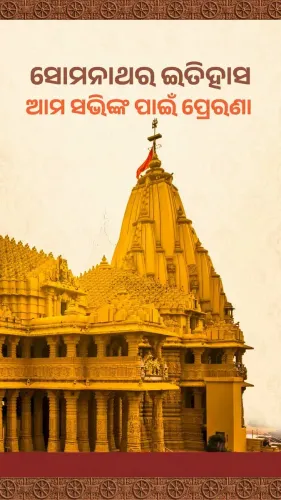
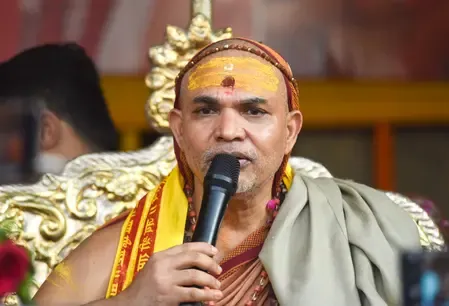
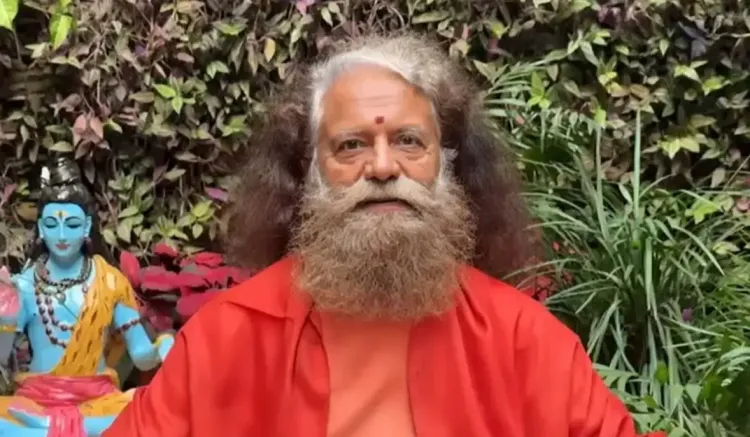
Rishikesh, Jan 5 (NationPress) Swami Chidanand Saraswati, the leader of Parmarth Niketan, shared profound and heartfelt thoughts on the milestone of 1,000 years since the Somnath Temple's destruction.
He emphasized that the story of Somnath is far more than a tale of destruction; it is a timeless narrative of resilience, triumph, and national pride.
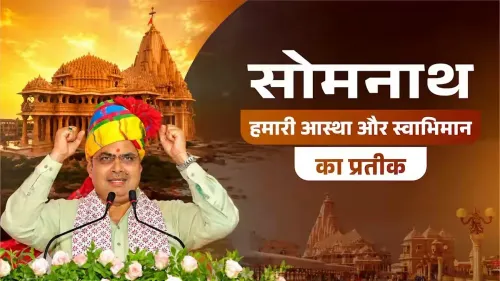
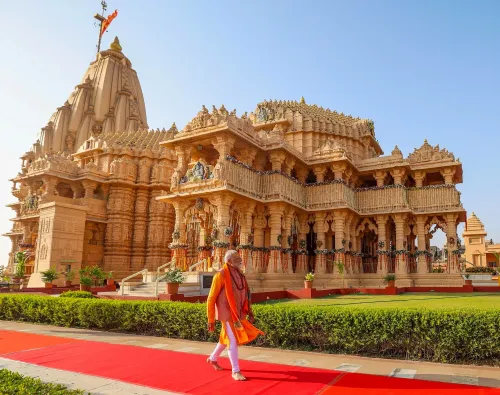
In his view, Somnath transcends being a mere temple; it embodies the essence of India, symbolizing an eternal call to truth and justice.
Swami Chidanand noted that throughout history, Somnath faced repeated invasions and desecration. Yet, with each attack, India's spirit emerged even more robust. Though the stones were shattered and the towers fell, the faith and resolve remained unbroken.
During an interview with IANS, Swami Chidanand remarked on the numerous invaders who attempted to obliterate the temple driven by hubris and violence. However, history shows that it is they who faded away, while Somnath stands today, radiating with glory, peace, and steadfastness.
He asserted that Somnath continues to convey the message that “truth prevails”, as truth can never be obliterated. Time may have altered empires, but every challenge has yielded to the steadfastness of truth.
Reflecting on the millennium journey from 1026 to 2026, Swami Chidanand characterized this era as a testament to India’s enduring faith, perseverance, and revival.
He acknowledged the reconstruction efforts by Maharani Ahilyabai Holkar, the pivotal role of Sardar Vallabhbhai Patel, and, in modern times, Prime Minister Narendra Modi’s initiatives to restore Somnath’s global significance as key milestones in the narrative of India’s triumph.
In this regard, saints in Vrindavan and Mathura conducted Rudrabhishek to honor the memories of the attacks on the Somnath Temple. They asserted that Mahmud of Ghazni’s objective was not merely to destroy the temple but to eliminate the Sanatan tradition from the nation.
Marking the 1,000-year anniversary of Mahmud’s attack in 1026, the saints emphasized that despite ongoing assaults, Somnath remains steadfast.
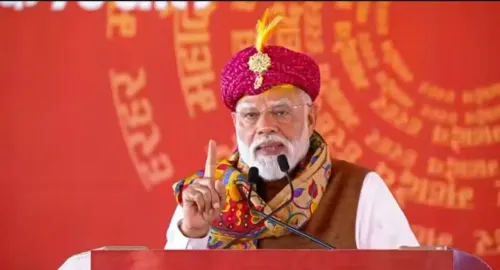
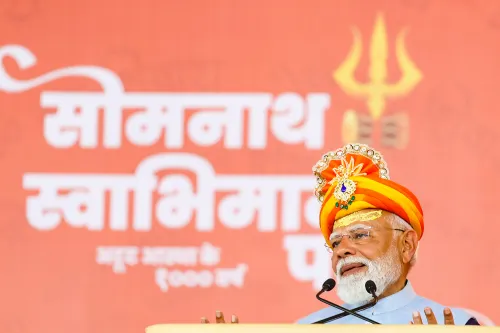
Referencing an article by Prime Minister Modi, the saints remarked that Somnath serves as a living monument to the courage and pride of countless Indian heroes who preserved the nation’s spirit amidst adversity.
Saint Saurabh Gaur from Dharm Raksha Manch informed IANS that a millennium ago, Mahmud Ghaznavi invaded India, plundered the temple, and aimed to annihilate Sanatan Dharma.
Although the temple endured damage, the strength of Sanatan Dharma and Lord Shiva ensured that Somnath continues to thrive, representing an inspiring moment for believers.
He further noted that just as Prime Minister Modi oversaw the magnificent construction of the Ram Temple, Sardar Patel played a crucial role in the remarkable restoration of the Somnath Temple.
Meanwhile, Acharya Badrish highlighted that India has always embraced the principle of “May all be happy” (Sarve Bhavantu Sukhinah), while invaders sought to instigate violence. Nevertheless, India has remained true to its traditions and culture. He expressed gratitude that leaders like Prime Minister Modi and Uttar Pradesh Chief Minister Yogi Adityanath are committed to safeguarding Dharma, marking this as a moment of celebration and pride.
Dharmguru Mohini Bihari Sharan stated that Mahmud of Ghazni intended to undermine India’s unity and sovereignty, but ultimately he failed. He concluded that the Somnath Temple stands today as a symbol of India’s rich tradition, civilization, and culture, echoing the nation’s spirit and eternal consciousness.
Point of View
It is imperative to recognize the enduring significance of the Somnath Temple within India's cultural framework. This reflection by Swami Chidanand not only emphasizes the resilience of Indian heritage but also highlights the contemporary leadership that aligns with the nation's commitment to preserving its spiritual legacy. The collective memory and resolve surrounding Somnath serve as a powerful reminder of India's historical and cultural identity.
NationPress
26 Sept 2026
Frequently Asked Questions
What is the significance of the Somnath Temple?
The Somnath Temple represents India’s resilience, spiritual heritage, and the enduring pursuit of truth, symbolizing the nation’s cultural identity.
Who played a role in the reconstruction of Somnath Temple?
Key figures include Maharani Ahilyabai Holkar, Sardar Vallabhbhai Patel, and Prime Minister Narendra Modi, each contributing to the temple's revival.
What historical events are associated with Somnath Temple?
The temple has faced multiple attacks and destruction throughout history, notably by Mahmud of Ghazni in 1026, yet it has remained a symbol of India's spirit.
How does Somnath Temple reflect India's culture?
Somnath embodies the principles of truth and faith, representing India's unyielding cultural and spiritual legacy.
Why is the 1,000-year anniversary significant?
This milestone highlights a millennium of resilience, faith, and cultural continuity despite historical challenges faced by the temple.