Uttarakhand CMO Pushes 'Jan-Jan ke Dwar' Outreach Drive
Synopsis
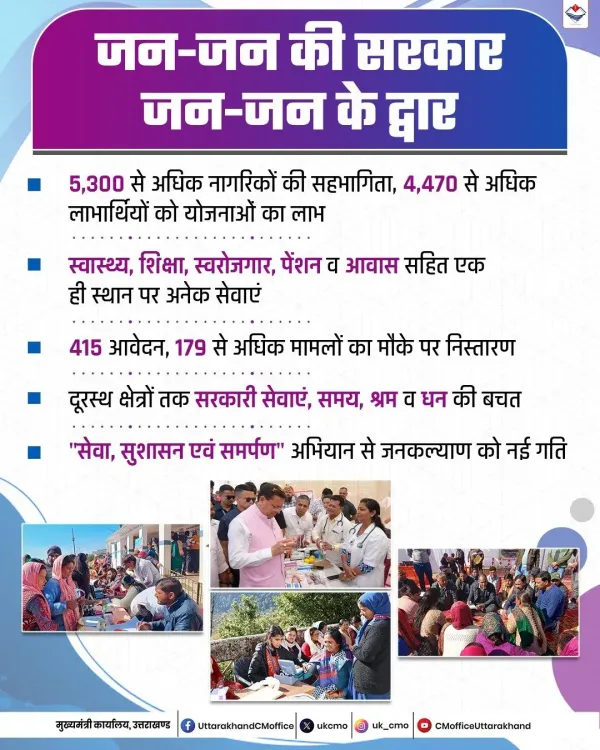
The Chief Minister's Office of Uttarakhand on 11 July 2026 promoted the 'Jan-Jan ki Sarkar, Jan-Jan ke Dwar' campaign, a state-level drive to deliver government services directly to citizens in remote and rural areas of the Himalayan state under CM Pushkar Singh Dhami.
Key Takeaways
The Chief Minister's Office of Uttarakhand shared a post on 11 July 2026 highlighting the ongoing 'Jan-Jan ki Sarkar, Jan-Jan ke Dwar' Abhiyan .
The campaign aims to bring government services directly to citizens across Uttarakhand , including in remote hill districts.
The initiative is part of CM Pushkar Singh Dhami 's broader push for citizen-centric, accessible administration.
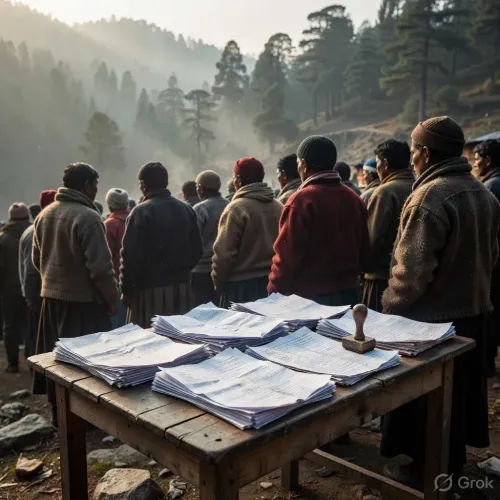
Uttarakhand's difficult terrain — spanning the Garhwal and Kumaon divisions — makes doorstep delivery a significant logistical and governance priority.
The campaign may also serve as a platform for delivering central schemes such as Digital India and Direct Benefit Transfer (DBT) at the grassroots level.
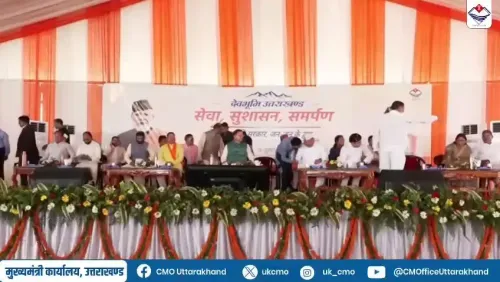
The Chief Minister's Office of Uttarakhand on Saturday, 11 July 2026, highlighted the state government's ongoing campaign to bring administration directly to every citizen's doorstep, underscoring Chief Minister Pushkar Singh Dhami's push for accessible governance across the Himalayan state.
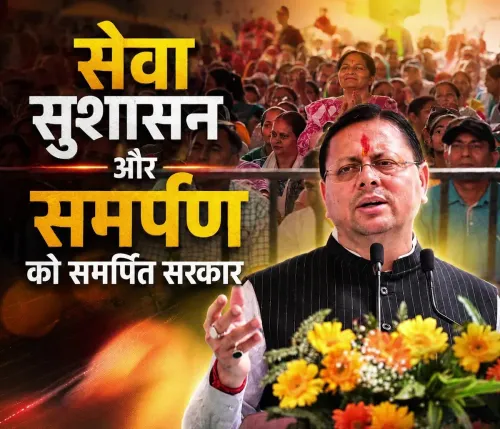
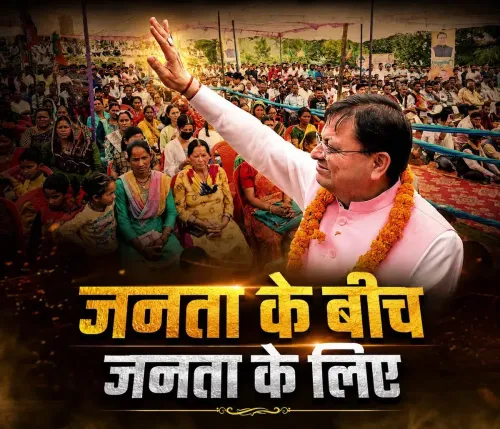
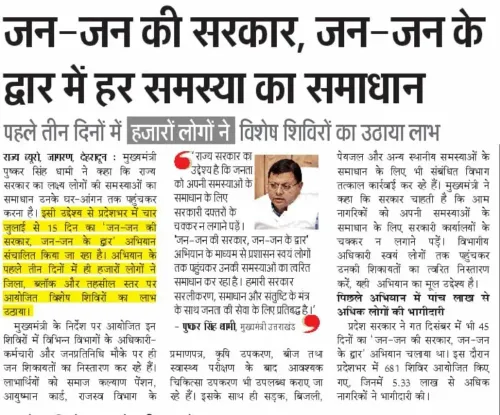
The post, shared from the official CMO handle, declared: 'Jan-Jan ki Sarkar, Jan-Jan ke Dwar' ('A government for every person, at every person's door') — the tagline of an outreach campaign aimed at ensuring that state services reach residents in even the most remote corners of Uttarakhand.
Context
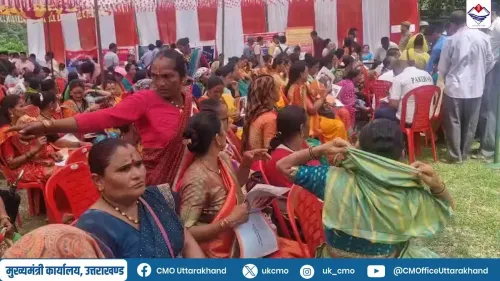
The 'Jan-Jan ki Sarkar, Jan-Jan ke Dwar' Abhiyan is a citizen-centric initiative under which the state government deploys officials and service delivery mechanisms at the community level, reducing the need for residents to travel long distances to access administration. The campaign's messaging signals a deliberate effort by the Dhami government to position itself as a responsive, ground-level administration. Uttarakhand's geography presents persistent governance challenges. With a large share of the population living in hill districts — many of them poorly connected by road and cut off seasonally — successive governments since the state's formation in November 2000 have struggled to bridge the gap between citizens and officials.Policy Backdrop
Doorstep delivery of government services has become a recurring theme in Indian state politics, particularly in geographically difficult regions. Across the country, state administrations have since the 2010s used grievance redressal camps, mobile service units, and e-governance portals to reduce the distance citizens must travel to interact with officials. In Uttarakhand, this imperative is especially acute: the state has a significant rural and tribal population spread across the Garhwal and Kumaon divisions, where terrain, altitude, and seasonal connectivity make conventional administrative outreach difficult. Campaigns of this nature also frequently serve as platforms for publicising central government schemes such as Digital India and Direct Benefit Transfer (DBT), integrating state-level delivery with national programme architecture.Stakeholders and Impact
The primary beneficiaries of the Jan-Jan ke Dwar Abhiyan are Uttarakhand's rural and remote populations — particularly residents of hill districts who have historically faced barriers in accessing government offices, grievance mechanisms, and welfare entitlements. For these communities, doorstep outreach can translate directly into faster access to pensions, land records, health services, and identity documentation. For the Dhami government, the campaign carries political weight as well: proactive governance messaging strengthens the ruling party's narrative ahead of future electoral cycles, and visible outreach in underserved areas can address long-standing perceptions of administrative neglect in the hills.What's Next
The effectiveness of the Jan-Jan ke Dwar Abhiyan will be measured by concrete outputs: the number of grievance redressal camps held, the volume of applications processed at the doorstep, and the extent to which the campaign integrates with central scheme delivery. Progress reports from the districts, along with any allocations in the next Uttarakhand state budget, will indicate whether the initiative moves beyond messaging into measurable administrative reform. If the campaign demonstrates quantifiable impact — particularly in remote hill talukas — it could serve as a model for other Himalayan states grappling with similar terrain-driven governance deficits.Point of View
Where difficult terrain has long been cited as a barrier to equitable service delivery, such campaigns carry both administrative and political logic. The Dhami government is effectively converting a structural governance challenge into a narrative of proactive leadership. Whether the campaign produces verifiable, district-level outcomes or remains largely a communication exercise will be the real test of its policy substance.
NationPress
10 Oct 2026
Frequently Asked Questions
What is the 'Jan-Jan ke Dwar' campaign in Uttarakhand?
The 'Jan-Jan ki Sarkar, Jan-Jan ke Dwar' Abhiyan is a state government outreach initiative in Uttarakhand that aims to deliver government services and administration directly to citizens at the community level, particularly in remote and rural areas.
Who launched the Jan-Jan ke Dwar Abhiyan in Uttarakhand?
The campaign is being promoted by the Chief Minister's Office of Uttarakhand under Chief Minister Pushkar Singh Dhami, who has positioned accessible governance as a priority of his administration.
Why is doorstep governance important in Uttarakhand?
Uttarakhand's hilly terrain and seasonal road connectivity make it difficult for residents of remote districts to access government offices. Doorstep delivery of services helps bridge this gap for rural and tribal populations in the Garhwal and Kumaon divisions.
How does the Jan-Jan ke Dwar campaign connect to central government schemes?
Campaigns of this kind in Indian states often serve as platforms to deliver central programmes such as Digital India and Direct Benefit Transfer (DBT), integrating state outreach with national scheme architecture.
What will determine the success of the Jan-Jan ke Dwar Abhiyan?
Key indicators will include the number of grievance redressal camps conducted, applications processed at the doorstep, and any budgetary allocations in the next Uttarakhand state budget that support the campaign's expansion.