China scientists find world's oldest amber in Xinjiang, aged 385 million years
Synopsis
Chinese scientists have found amber dating back 385 million years in Xinjiang — 65 million years older than any previously confirmed specimen — suggesting plants evolved resin production before herbivores even existed, upending a core assumption in evolutionary biology.
Key Takeaways
Luo Cihang and colleagues at the Chinese Academy of Sciences' Nanjing Institute of Geology and Palaeontology identified the world's oldest verified amber in West Junggar, Xinjiang .
The amber dates to the Middle Devonian period (393–383 million years ago) , pushing the fossil resin record back by approximately 65 million years .
Previous record-holder dated to the Late Carboniferous, around 320 million years ago , coinciding with the first known herbivores.
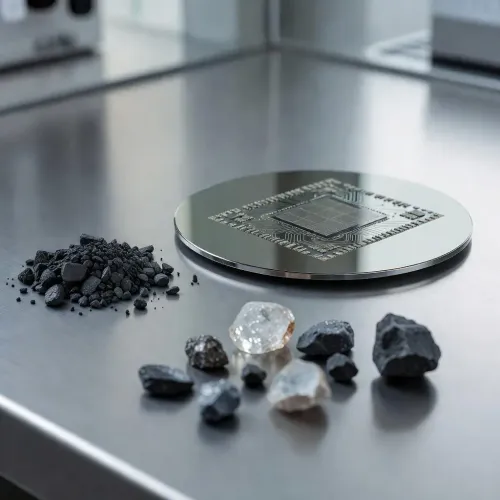
Hundreds of microscopic amber fragments were recovered from a coal seam in a zone formed by ancient tectonic plate collisions.
Findings were published in peer-reviewed journal Science Advances on July 15 , nearly seven years after the 2019 field expedition to Xinjiang.
The discovery challenges the assumption that plant resin evolved primarily as a defence against herbivory.
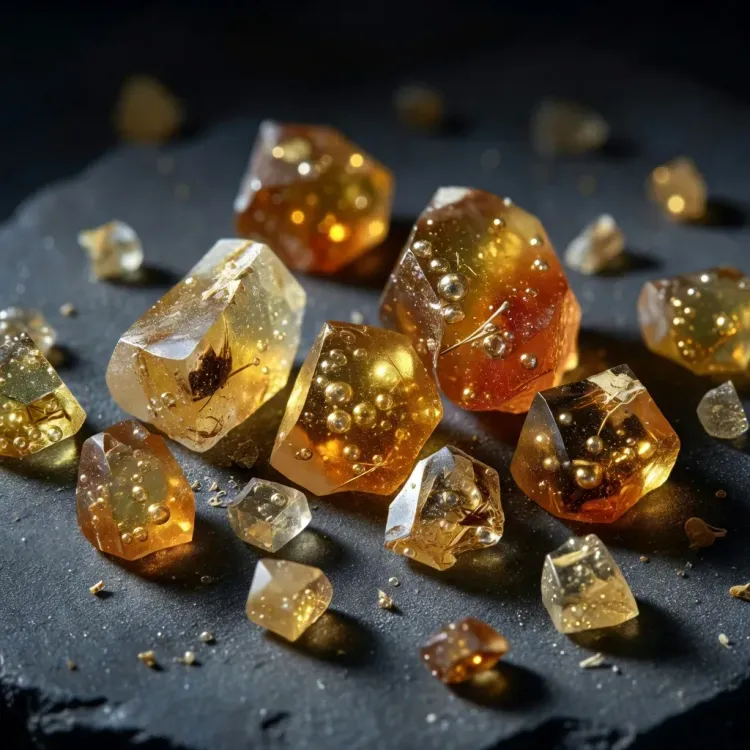
Chinese palaeontologists have identified the world's oldest verified amber, recovered from coal seams in West Junggar, Xinjiang, pushing back the known record of plant resin production to approximately 385 million years ago — long before most animal groups had evolved to damage vegetation. The discovery, led by Luo Cihang of the Chinese Academy of Sciences' Nanjing Institute of Geology and Palaeontology, was published in the peer-reviewed journal Science Advances on July 15.
A Record Pushed Back by 65 Million Years
Prior to this find, the oldest amber confirmed through chemical analysis and isolated from rock dated to the Late Carboniferous period, around 320 million years ago — a time that also coincided with the emergence of the first herbivores. The newly dated specimens predate that benchmark by roughly 65 million years, placing resin production firmly in the Middle Devonian period, estimated between 393 million and 383 million years ago.
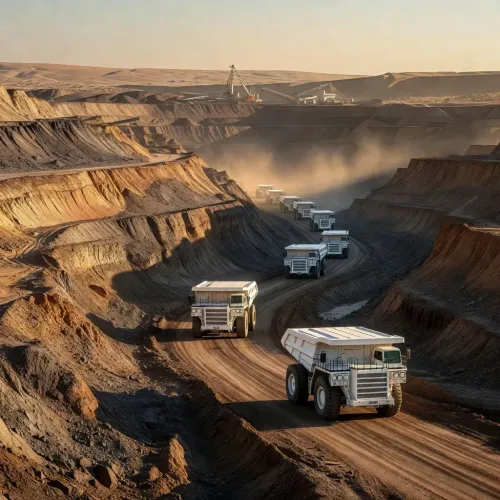
The amber was found in a geologically significant zone where ancient tectonic plates collided, grew, and merged — making West Junggar an unusually rich repository of prehistoric material. Hundreds of microscopic amber pieces were preserved within the coal seam, a quantity that initially made the researchers sceptical of their own findings.
Why It Matters
The discovery challenges established assumptions about why plants evolved the ability to produce resin in the first place. The conventional view held that resin production was a defensive response to herbivory — yet this amber predates the earliest known herbivores, suggesting plants may have developed the trait for other biological reasons, such as wound sealing or antimicrobial protection.
According to the paper, the find fundamentally reframes the evolutionary timeline of plant biochemistry and opens new questions about the ecological pressures acting on early land plants during the Devonian era.
The 2019 Field Expedition
When Luo Cihang and his team travelled to Xinjiang in 2019, they were not expecting to encounter record-setting material. The team had set out to examine and collect fossil samples from the region's distinctive coal seam, according to the paper. The discovery of hundreds of amber fragments — microscopic in scale but chemically intact — only became clear after rigorous laboratory analysis confirmed their age and composition.
The peer review process culminated in formal publication nearly seven years after the field expedition, underscoring the depth of verification required before the claim could be made public.
Competitive Context and Broader Significance
China has steadily expanded its footprint in palaeontological research over the past two decades, with institutions such as the Nanjing Institute of Geology and Palaeontology producing a series of landmark fossil discoveries. This finding adds to a growing body of work that positions Chinese geological sites — particularly in Xinjiang and Yunnan — as globally significant windows into deep evolutionary history.
The research also highlights the scientific value of coal seams, which are not traditionally associated with amber preservation, potentially directing future prospecting efforts toward similar geological formations worldwide.
What's Next
Researchers are expected to conduct further chemical and microscopic analysis of the amber fragments to identify the plant species responsible for the resin and to better understand the environmental conditions of the Middle Devonian ecosystem in West Junggar. Whether similar deposits exist in other ancient tectonic collision zones remains an open question that could reshape the amber fossil record further.
Point of View
The field must now interrogate what selective pressure actually drove that biochemical innovation. What mainstream coverage underplays is the geopolitical dimension: China's systematic investment in deep-time palaeontology, concentrated in frontier regions like Xinjiang, is quietly producing a disproportionate share of global record-breaking fossil discoveries. The coal-seam context is also scientifically underappreciated — it signals that amber may be preserved in geological formations that researchers have historically overlooked, potentially triggering a new wave of prospecting in analogous tectonic settings worldwide.
NationPress
28 Jul 2026
Frequently Asked Questions
Where was the world's oldest amber found?
The world's oldest amber was found in coal seams in West Junggar, Xinjiang , northwestern China — a region formed by ancient tectonic plate collisions. The site yielded hundreds of microscopic amber fragments preserved within Middle Devonian-era coal.
How old is the newly discovered amber?
The amber dates to approximately 385 million years ago , within the Middle Devonian period (393–383 million years ago) . This makes it roughly 65 million years older than the previous record-holder, which dated to the Late Carboniferous period around 320 million years ago.
Who led the amber discovery research?
Luo Cihang of the Chinese Academy of Sciences' Nanjing Institute of Geology and Palaeontology led the research team. The findings were published in the peer-reviewed journal Science Advances on July 15 , following a field expedition to Xinjiang in 2019 .
Why does this amber discovery matter scientifically?
It challenges the long-held assumption that plants evolved resin production as a defence against herbivores, since this amber predates the earliest known herbivores by tens of millions of years. The find suggests plants had other biological motivations — such as wound sealing or antimicrobial defence — for producing resin.
What is the significance of finding amber in a coal seam?
Coal seams are not traditionally associated with amber preservation, making this discovery scientifically unexpected. It suggests that ancient amber may be hiding in geological formations that researchers have historically not prospected, potentially opening new avenues for fossil resin discovery globally.