PowerBank-50: India's first flight-proven satellite battery hailed by FM Sitharaman

Synopsis
India's satellite sector just crossed a quiet but consequential threshold. TakeMe2Space's PowerBank-50 — a homegrown lithium-ion battery for CubeSats — has returned from orbit with flight heritage status after powering a payload on Skyroot's Vikram-1. For a country that has long imported this critical component at premium cost, this is the kind of unglamorous infrastructure win that could reshape the economics of domestic satellite development.
Key Takeaways
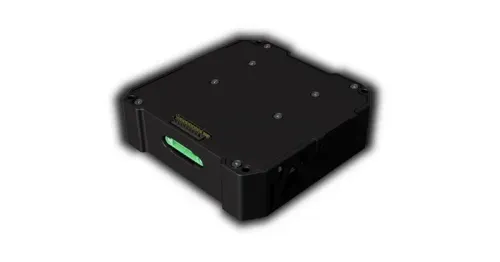
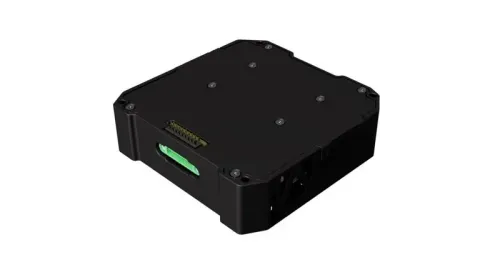
TakeMe2Space's PowerBank-50 has become India's first indigenously developed satellite battery to earn flight heritage status .
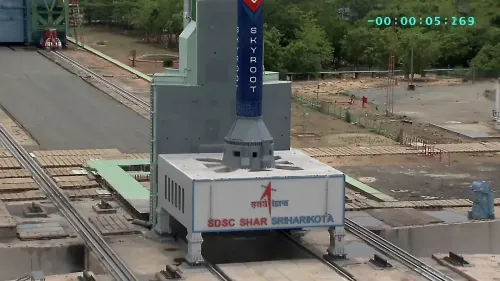
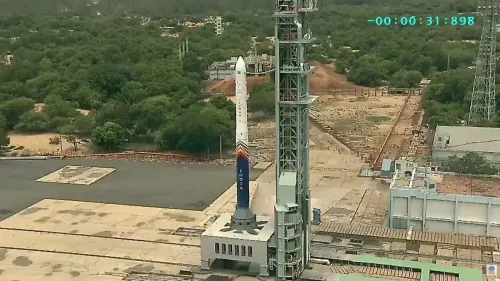
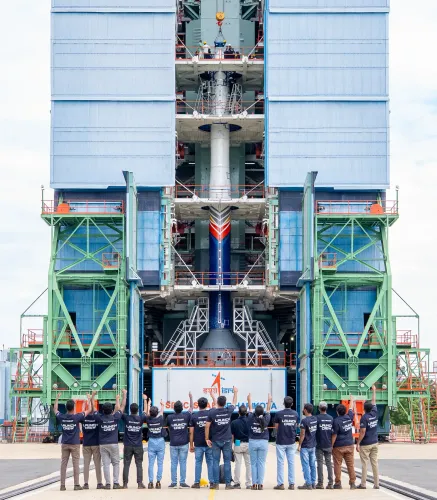
The battery flew aboard Skyroot Aerospace's Vikram-1 rocket during the 'Aagaman' mission launched on 18 July , powering a Cosmoserve Space payload at 450 km altitude.
Finance Minister Nirmala Sitharaman hailed the achievement on X , noting that Indian satellite builders previously had to import this component at high cost and with long lead times.
The PowerBank-50 stores more than 50 watt-hours , weighs about 380 grams , and is rated for missions of up to five years in low-Earth orbit.
The milestone is expected to reduce India's dependence on imported satellite batteries and lower costs for startups, universities, and research institutions.
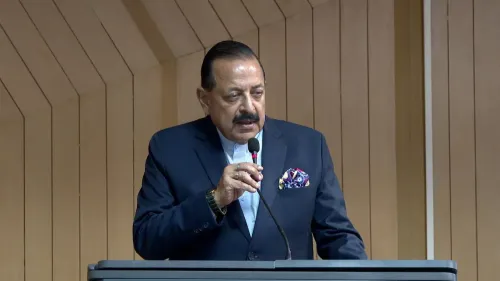
Union Finance Minister Nirmala Sitharaman on Friday, 31 July praised Hyderabad-based space startup TakeMe2Space after its indigenously developed PowerBank-50 became India's first satellite battery to earn flight heritage status — a critical qualification that validates a component's real-world performance in orbit.
Reacting on social media platform X, Sitharaman wrote: 'Brilliant! Until now, Indian satellite builders mostly had to import this critical component at high cost and long waiting times.'
The Mission That Made History
The milestone was achieved following the successful deployment of the PowerBank-50 aboard Skyroot Aerospace's Vikram-1 rocket during its maiden mission, 'Aagaman', launched on 18 July. The battery powered Cosmoserve Space's experimental payload on the launch vehicle's Orbital Adjustment Module at an altitude of 450 km, performing without fault throughout the mission.
According to TakeMe2Space, the successful flight has now earned the battery the flight heritage tag — a designation that carries substantial weight with satellite manufacturers, launch providers, and space insurers, all of whom typically prefer hardware with proven spaceflight experience.
What Makes the PowerBank-50 Significant
The battery pack is engineered for the demands of space: it uses high-energy-density lithium-ion cells, an intelligent battery management system, integrated cell heaters, and a lightweight aluminium enclosure designed to withstand launch vibrations, radiation, vacuum, and extreme temperature swings. The compact unit stores more than 50 watt-hours of energy, weighs approximately 380 grams, and is built to power CubeSats and microsatellites for missions of up to five years in low-Earth orbit.
Impact on India's Space Ecosystem
Until now, Indian satellite developers were largely dependent on imported batteries — procurement that reportedly involved high costs and extended waiting periods. A domestically developed, flight-proven power system is expected to significantly lower the barrier to entry for startups, research institutions, and universities looking to build and launch satellites.
Notably, this development arrives at a moment when India's small satellite sector is expanding rapidly, with a growing number of private players entering the market following the liberalisation of the space industry. A reliable, affordable domestic power solution could become a foundational component for the next generation of Indian space missions.
What Comes Next
The flight heritage certification positions TakeMe2Space to supply the PowerBank-50 at scale to the domestic satellite ecosystem. Industry observers note that the milestone could also attract interest from international small satellite developers seeking cost-competitive, flight-proven components. The broader implication is a potential reduction in India's import bill for space-grade hardware — a goal aligned with the government's push for self-reliance in strategic sectors.
Point of View
Even well-engineered hardware struggles to win contracts from risk-averse satellite operators and insurers. TakeMe2Space has cleared that bar on the first attempt, which is notable. What mainstream coverage underplays is the supply-chain implication: India's small satellite pipeline has been quietly bottlenecked by import dependency on power systems, not just launch vehicles. If the PowerBank-50 scales reliably, it could compress satellite development timelines and costs in ways that no single launch success can. The Finance Minister's public endorsement also signals that homegrown deep-tech in space is now politically visible — a shift that tends to accelerate policy support and procurement preference.
NationPress
14 Sept 2026
Frequently Asked Questions
What is the PowerBank-50 and why is it significant?
The PowerBank-50 is an indigenously developed satellite battery by Hyderabad-based startup TakeMe2Space. It has become India's first such battery to earn flight heritage status, meaning it has been validated through an actual spaceflight — a key qualification required by satellite manufacturers, launch providers, and insurers.
What mission gave the PowerBank-50 its flight heritage?
The battery earned flight heritage after powering Cosmoserve Space's experimental payload aboard Skyroot Aerospace's Vikram-1 rocket during the 'Aagaman' mission, launched on 18 July. It operated successfully at an altitude of 450 km throughout the mission.
What did Finance Minister Nirmala Sitharaman say about the achievement?
Sitharaman praised the milestone on social media platform X, writing: 'Brilliant! Until now, Indian satellite builders mostly had to import this critical component at high cost and long waiting times.' Her post highlighted the strategic importance of a domestically developed, flight-proven power system.
What are the technical specifications of the PowerBank-50?
The PowerBank-50 stores more than 50 watt-hours of energy, weighs approximately 380 grams, and uses high-energy-density lithium-ion cells with an intelligent battery management system. It is designed to power CubeSats and microsatellites for missions of up to five years in low-Earth orbit.
How does this development affect India's satellite industry?
The flight heritage certification is expected to reduce India's dependence on expensive, slow-to-procure imported satellite batteries. A domestically available, proven power system could lower costs and shorten development timelines for startups, research institutions, and universities building small satellites.