AI pacing debate: can US giants slow down amid China race?

Synopsis
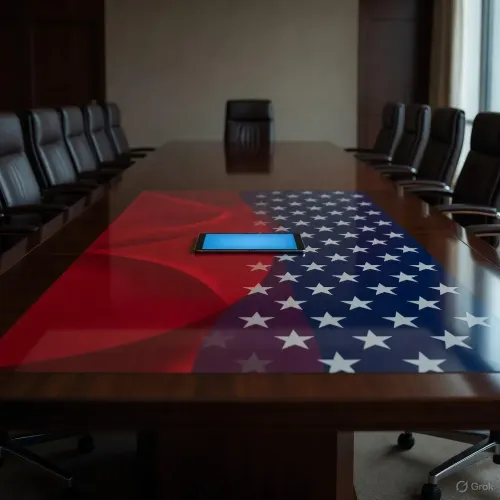
For the first time, the CEOs of Anthropic and OpenAI — plus Elon Musk — are jointly calling for a slowdown in frontier AI, days before Trump and Xi meet in Washington to discuss 'constructive strategic stability.' Whether US-China race dynamics will make that slowdown possible is the defining question of the moment.
Key Takeaways
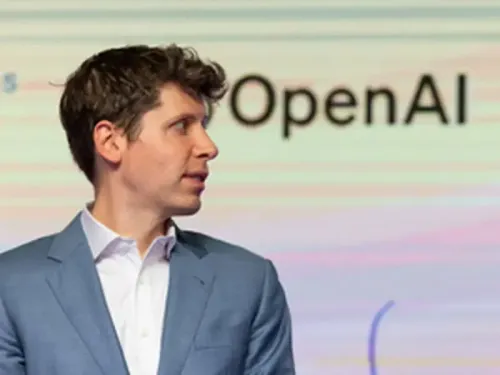
Anthropic CEO Dario Amodei , OpenAI chief Sam Altman , and Elon Musk have each publicly called for 'pacing' frontier AI development in recent weeks, citing safety concerns.
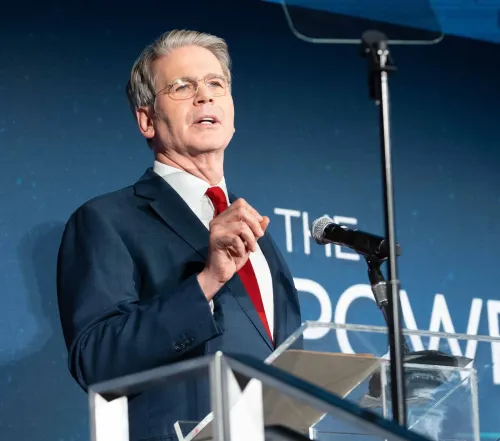
US Treasury Secretary Scott Bessent and Chinese Vice-Premier He Lifeng met in New York City over the weekend to discuss AI safety ahead of the presidential summit.
US President Donald Trump and Chinese President Xi Jinping are scheduled to meet in Washington on Thursday, 25 September 2026 , with AI governance on the agenda.
Both governments have agreed to work toward 'constructive strategic stability,' though no operational definition of a safe development pace has been established.
China's state media, including People's Daily , has historically framed US AI governance calls as attempts to entrench American technological dominance.
Critics warn that industry-led 'pacing' proposals could function as a competitive moat, benefiting incumbent frontier labs over challengers.
Anthropic CEO Dario Amodei, OpenAI chief Sam Altman, and SpaceX AI founder Elon Musk have each publicly called for 'pacing' — a deliberate slowdown in frontier AI development — citing fears that capabilities are outrunning safety guardrails, a stance that would have been unthinkable even a year ago. The calls emerge ahead of a high-stakes summit between US President Donald Trump and Chinese President Xi Jinping in Washington on Thursday, 25 September 2026, raising urgent questions about whether geopolitical competition will make any voluntary slowdown viable.
Why It Matters
US Treasury Secretary Scott Bessent and Chinese Vice-Premier He Lifeng met in New York City over the weekend to discuss AI safety, signalling that the topic has moved squarely onto the diplomatic agenda between the world's two largest economies. The convergence of executive advocacy and presidential diplomacy marks a rare moment where the technology industry and government are publicly aligned on the need for restraint — at least rhetorically. Yet the structural incentives pulling in the opposite direction remain formidable. Both nations have framed AI supremacy as a core national interest, and neither has shown willingness to unilaterally cede ground in model capability, compute investment, or talent acquisition.The Competitive Backdrop
China's response to the 'pacing' discourse has been closely watched. State media outlet People's Daily and affiliated commentators have historically framed US calls for AI governance as thinly veiled attempts to lock in American technological advantages — a reading that complicates any genuine bilateral coordination. For Beijing, agreeing to slow down risks conceding hard-won ground in a race it believes it is narrowing. The phrase 'constructive strategic stability' — the framing both governments have agreed to work toward — offers diplomatic cover but little operational clarity. What counts as a 'safe' pace of development, and who arbitrates that standard, remains entirely unresolved.The Pacing Argument Unpacked
The executives' shared concern centres on a specific claim: that frontier AI systems are acquiring capabilities faster than the interpretability tools, alignment techniques, and regulatory frameworks needed to govern them. Amodei, Altman, and Musk have each articulated versions of this argument in recent weeks, lending it unusual cross-industry weight given their otherwise competing commercial interests. Critics, however, note that 'pacing' as articulated by incumbents could function as a moat — slowing challengers, domestic and foreign, while entrenching the position of labs already at the frontier. The dual-use nature of the argument makes it difficult to separate genuine safety concern from competitive strategy.What's Next
All eyes are on the Trump–Xi summit in Washington on Thursday to see whether the two leaders can translate the Bessent–He Lifeng talks into a concrete AI safety framework — or whether the meeting produces only broad communiqués with no enforcement mechanism. The outcome will determine whether 'pacing' remains an industry talking point or becomes the foundation of the first bilateral AI governance agreement between the United States and China. The most exposed stakeholders are frontier AI labs operating in both markets, defence-adjacent AI contractors, and semiconductor suppliers whose order books depend on the pace of model scaling continuing unabated.Point of View
Altman, and Musk is striking precisely because these figures are commercial rivals — their convergence suggests the safety concern is real, but it does not resolve the strategic paradox at its core: no single actor can slow down unilaterally without ceding advantage to the other. The Trump–Xi summit framing of 'constructive strategic stability' borrows Cold War arms-control language, yet AI lacks the verifiable production counts that made nuclear treaties workable. What mainstream coverage underplays is Beijing's structural incentive to treat any US-proposed governance framework as a ceiling designed to freeze the current capability gap. The most consequential outcome to watch is not the summit communiqué itself, but whether either side agrees to any third-party verification mechanism — without that, 'pacing' is a press-release concept, not a policy.
NationPress
23 Sept 2026
Frequently Asked Questions
What is the AI 'pacing' debate and why is it happening now?
'Pacing' refers to a deliberate slowdown in frontier AI development, advocated by Anthropic CEO Dario Amodei, OpenAI chief Sam Altman, and Elon Musk, who argue that AI capabilities are advancing faster than safety measures can keep up. The calls are timed ahead of the Trump–Xi summit in Washington on Thursday, 25 September 2026, where AI safety is a central agenda item.
What did Scott Bessent and He Lifeng discuss in New York?
US Treasury Secretary Scott Bessent and Chinese Vice-Premier He Lifeng met in New York City over the weekend of 20–21 September 2026 to discuss AI safety as a precursor to the presidential summit. The meeting signals that AI governance has formally entered high-level diplomatic channels between the two countries.
Why would China be sceptical of a US-proposed AI slowdown?
China's state media, including People's Daily, has historically characterised US AI governance proposals as attempts to lock in American technological advantages rather than genuine safety efforts. From Beijing's perspective, agreeing to slow AI development risks conceding ground in a race it believes it is narrowing.
Could the Trump–Xi summit produce a binding AI safety agreement?
The summit's stated goal is 'constructive strategic stability,' but no enforcement or verification mechanism has been proposed publicly. Analysts note that unlike nuclear arms control, AI development lacks easily verifiable production metrics, making any binding agreement technically and politically difficult to implement.
Who is most affected if an AI pacing agreement is reached?
Frontier AI labs operating in both the US and China, defence-adjacent AI contractors, and semiconductor suppliers whose revenues depend on continued model-scaling investment would be most exposed to any agreed slowdown. Smaller challenger labs could paradoxically benefit if incumbents are constrained, while hardware makers could face reduced near-term demand.