US takes FORGE chair from South Korea to secure critical minerals
Synopsis
Washington has taken the wheel of FORGE, the allied critical minerals coalition it launched just months ago — a move that signals the US is done letting partners lead on an issue it now treats as a core national security priority. With China controlling vast stretches of the global minerals supply chain, the chairmanship shift is less a ceremonial handover and more a declaration of strategic intent.
Key Takeaways
The United States assumed chairmanship of FORGE on 11 July , taking over from South Korea .
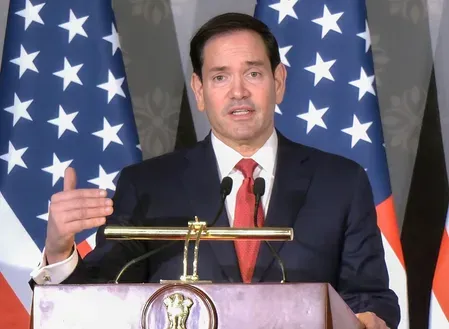
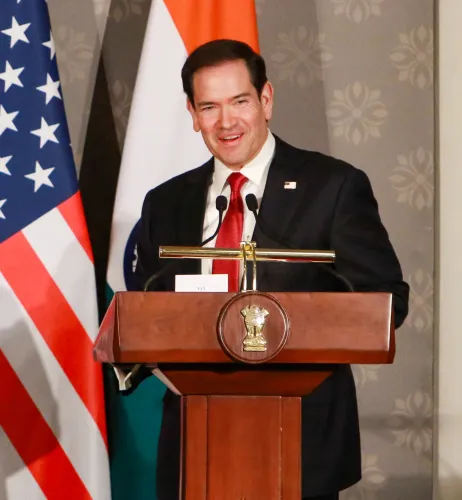
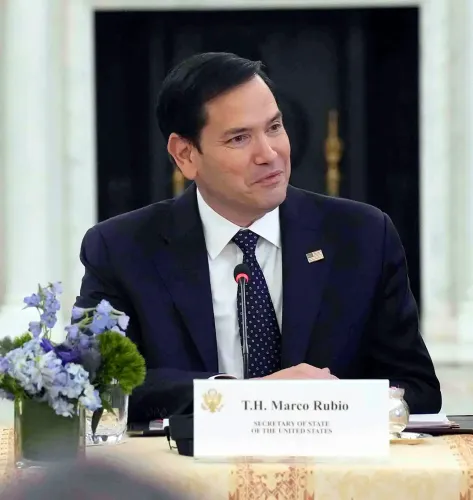
FORGE (Forum on Resource Geostrategic Engagement) was launched by Secretary of State Marco Rubio in February in Washington .
The coalition aims to build secure, diversified and resilient critical mineral supply chains among like-minded nations.
South Korea had previously also chaired the Minerals Security Partnership , FORGE's precursor body.
President Trump separately declared the US-Iran ceasefire 'over' while agreeing to continue diplomatic talks, adding geopolitical pressure to global supply chain stability.
The United States has assumed the chairmanship of the Forum on Resource Geostrategic Engagement (FORGE), a coalition of like-minded nations working to build secure, diversified and resilient critical mineral supply chains, the State Department announced on 11 July. The handover follows South Korea's tenure as chair, which Washington described as 'successful'.
What FORGE Is and Why It Matters
FORGE was launched by Secretary of State Marco Rubio during a ministerial meeting in Washington in February, as part of broader US efforts to strengthen and diversify supply chains for critical minerals — resources over which China has wielded formidable strategic influence. The coalition brings together allied nations committed to reducing dependence on single-source mineral supply.
Notably, South Korea had previously also chaired the Minerals Security Partnership, a precursor body to FORGE, giving Seoul a significant role in shaping the architecture of allied mineral cooperation before the transition.
What the US Has Pledged as Chair
In its statement, the State Department said: 'During its chairmanship, the United States will continue championing efforts to safeguard the national and economic security of the United States by working alongside FORGE partners to accelerate critical mineral projects that power our economy and underpin our security.'
Washington added that it 'looks forward to a productive tenure as chair and remains committed to working with our partners to create secure supply chains of some of the key critical minerals.' The language signals continuity with the coalition's founding mandate while placing US national security interests at the centre of its agenda.
The China Factor
The push to consolidate FORGE's membership and accelerate project timelines comes amid growing concern among Western governments about China's dominance across the critical minerals value chain — from mining to processing to manufacturing of batteries and semiconductors. Control over minerals such as lithium, cobalt, and rare earth elements is increasingly viewed as a front in the broader geopolitical competition between Washington and Beijing.
This is the latest in a series of moves by the US and its allies to build alternative supply architectures, following export controls, bilateral mineral agreements, and investment frameworks rolled out over the past two years.
US-Iran Tensions Add to the Backdrop
Separately, President Donald Trump stated that a ceasefire between the United States and Iran is 'over', even as Washington agreed to continue diplomatic talks with Tehran. Trump made the remarks in a post on Truth Social, writing: 'The Islamic Republic of Iran has asked us to continue 'talks'. We have agreed to do so, but the United States has stated to them, in no uncertain terms, that the Cease Fire is OVER!'
The remarks follow an exchange of strikes between the two sides this week, raising concerns that escalating tensions could derail negotiations aimed at fully reopening the Strait of Hormuz, ending Iran's disputed nuclear programme, and securing a permanent end to their months-long conflict.
What Comes Next
With the US now at FORGE's helm, analysts will watch whether Washington can translate the coalition's framework into binding project commitments and accelerated timelines. The dual pressure of securing mineral supply chains and managing a volatile situation with Iran underscores how resource geopolitics and conventional security risks are increasingly intertwined for the Trump administration.
Point of View
Shovel-ready projects remains the central test.
NationPress
11 Jul 2026
Frequently Asked Questions
What is FORGE and who are its members?
FORGE — the Forum on Resource Geostrategic Engagement — is a coalition of like-minded nations established to build secure, diversified and resilient critical mineral supply chains. It was launched by US Secretary of State Marco Rubio at a ministerial meeting in Washington in February 2025, and grew out of an earlier body called the Minerals Security Partnership.
Why has the US taken over as FORGE chair from South Korea?
The US assumed the chairmanship following what it described as South Korea's 'successful' tenure. The State Department framed the move as part of Washington's effort to accelerate critical mineral projects that underpin US economic and national security, particularly as China holds dominant influence over global mineral supply chains.
Why are critical minerals considered a national security issue?
Critical minerals — including lithium, cobalt, and rare earth elements — are essential for batteries, semiconductors, and defence systems. China controls a large share of global mining and processing capacity, giving it significant leverage over allied economies. FORGE is designed to reduce that dependence by coordinating allied investment and supply diversification.
What did President Trump say about the US-Iran ceasefire?
President Donald Trump posted on Truth Social that the ceasefire between the US and Iran is 'over', even as Washington agreed to continue talks with Tehran. The statement followed an exchange of strikes between the two sides, raising concerns about the Strait of Hormuz and Iran's nuclear negotiations.
What is the connection between the Iran situation and critical minerals?
Escalating US-Iran tensions threaten stability in the Strait of Hormuz, a key global shipping route. While the strait is primarily associated with oil transit, broader Middle East instability can affect commodity markets and supply chain confidence — adding pressure to Washington's push for diversified, ally-secured mineral sourcing through frameworks like FORGE.