Iran's IRGC reveals underground missile, drone production sites amid US strikes
Synopsis
Iran's IRGC has publicly revealed it moved missile and drone production underground — a direct deterrence signal to Washington — even as US forces struck Qeshm Island for the second time in a week. Trump calls it 'minor' and claims the US has 'beaten Iran,' yet simultaneously confirms diplomatic talks are ongoing. The gap between those two positions is where the real story lies.
Key Takeaways
IRGC spokesman Hossein Mohebbi confirmed on 7 November that Iran has relocated missile and drone production to underground facilities.
Iran warned it will 'unveil military surprises' if enemy strikes are renewed, with no geographical limitation on its defence posture.
US forces reportedly struck Qeshm Island on Saturday — the second attack on the island this week, following a reported strike on Monday .
Two missiles hit Qeshm Island according to Iran's semi-official Tasnim News Agency ; damage details were not disclosed.
President Trump described the strikes as 'minor' and confirmed: 'We're talking to Iran.
We have been.' The Trump administration also sanctioned eight Canadian businesses accused of helping Tehran move funds via cryptocurrency networks.
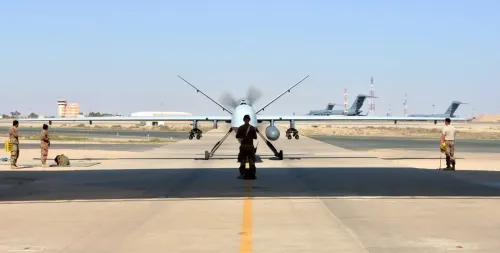
Iran's Islamic Revolutionary Guard Corps (IRGC) announced on Saturday, 7 November that its aerospace division has successfully established underground missile and drone production facilities, with the organisation declaring it will continuously extend the range of its missiles. The disclosure came as US President Donald Trump confirmed American forces had carried out fresh strikes on Iranian territory, raising fears of a significant military escalation in the Middle East.
What the IRGC Said
IRGC spokesman Hossein Mohebbi made the announcement at a press conference in Tehran, stating: 'We managed to rapidly relocate the production of missiles and drones from the surface to underground (facilities).' He added that Iran was 'constantly enhancing the range of our missiles, and we will not stop in this regard,' warning that all tangible and intangible assets of a 'hostile country' are within Iran's reach. Mohebbi further cautioned that if the enemy 'renews strikes, Iran will unveil its military surprises,' asserting the country is 'prepared without any geographical limitation to defend the country's existence, identity, and territorial integrity.'
US Strikes on Qeshm Island
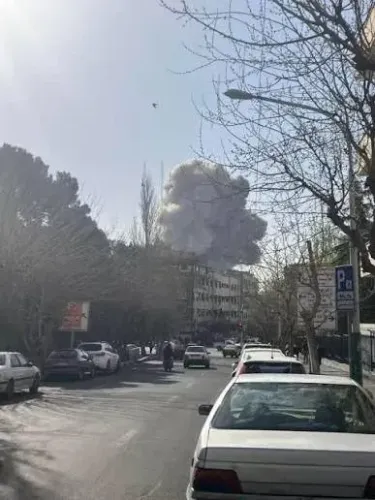
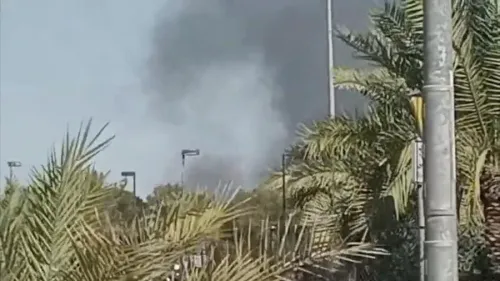
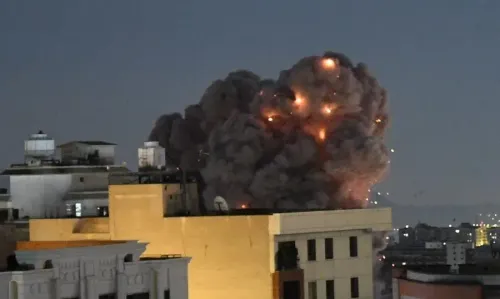
The IRGC's announcement came hours after US forces reportedly carried out strikes targeting Iran's southern Qeshm Island in the early hours of Saturday. Iran's semi-official Tasnim News Agency reported that two missiles struck the island, though no details of the damage were immediately provided. According to reports, this was the second such strike on the island within the same week — The Wall Street Journal, citing US officials, had earlier reported that the United States attacked Qeshm Island on Monday.
Trump's Remarks and US Position
President Trump described Friday's strikes as targeting Iran's air defence systems, characterising the military action as 'minor.' He portrayed the overall situation as favourable to Washington, telling reporters: 'We've beaten Iran. We are doing very well with Iran.' Trump also indicated that diplomatic channels remained open, saying: 'We're talking to Iran. We have been.' The president separately noted that the Strait of Hormuz was 'opening,' a reference closely watched by global energy markets given the waterway's role in crude oil transit.
Sanctions and Diplomatic Pressure
Alongside military action, the Trump administration imposed fresh sanctions on eight Canadian businesses accused of helping Tehran move money through cryptocurrency networks. The dual-track approach — military pressure combined with economic sanctions and back-channel diplomacy — mirrors a strategy seen in earlier phases of US-Iran tensions. Notably, this escalation comes against a backdrop of already strained relations following years of failed nuclear negotiations and proxy conflicts across the region.
What Happens Next
The IRGC's public disclosure of underground production capabilities is widely seen as a deterrence signal directed at both the United States and Israel. Analysts note that moving production underground significantly complicates aerial targeting, a lesson Iran reportedly drew from previous strikes on its surface infrastructure. With both sides signalling readiness for further action while simultaneously maintaining diplomatic contact, the situation remains highly volatile. Global energy markets, particularly crude oil prices, are expected to remain sensitive to any further developments around the Strait of Hormuz.
Point of View
Not an operational slip — Iran rarely reveals military capabilities unless it wants adversaries to factor them into strike calculus. Trump's simultaneous claim of victory and confirmation of diplomatic talks reveals a contradictory US posture: the rhetoric is maximalist, but the strategy appears to be coercive bargaining rather than regime change. The Qeshm Island strikes, described as 'minor,' suggest Washington is calibrating pressure rather than escalating toward full conflict. For India, which depends on the Strait of Hormuz for a significant share of its crude imports, the trajectory of this standoff carries direct economic consequence that deserves closer policy attention than it is currently receiving.
NationPress
7 Nov 2026
Frequently Asked Questions
What did Iran's IRGC announce about its missile and drone production?
The IRGC announced on 7 November that its aerospace division has relocated missile and drone production from surface facilities to underground sites, and that it is continuously extending the range of its missiles. Spokesman Hossein Mohebbi said Iran would 'not stop' enhancing missile capabilities and warned of 'military surprises' if enemy strikes resume.
What happened at Qeshm Island?
US forces reportedly struck Iran's southern Qeshm Island on Saturday, 7 November — the second such attack this week. Iran's semi-official Tasnim News Agency reported two missiles hit the island, though no damage details were provided. The Wall Street Journal had earlier reported a Monday strike on the same location.
What did President Trump say about the US strikes on Iran?
President Trump described the strikes as targeting Iran's air defence systems and characterised them as 'minor.' He told reporters 'We've beaten Iran' and 'We are doing very well with Iran,' while also confirming that diplomatic talks with Tehran were ongoing.
Why does the Strait of Hormuz matter in this context?
The Strait of Hormuz is one of the world's most critical oil transit chokepoints, through which a significant share of global crude exports pass. Trump's claim that the strait was 'opening' suggests US concern about Iranian threats to disrupt shipping, and any escalation in the region risks driving up global oil prices.
What sanctions did the US impose alongside the military strikes?
The Trump administration sanctioned eight Canadian businesses accused of helping Iran move money through cryptocurrency networks. The move is part of a dual-track strategy combining military pressure with economic measures to constrain Tehran's financial reach.