Bangladesh energy crisis to take two years to resolve, says minister
Synopsis
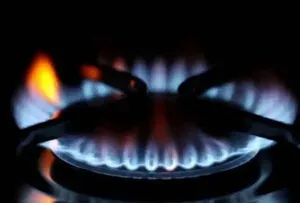
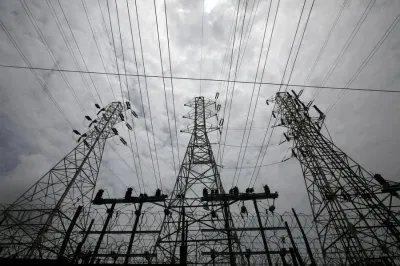
Bangladesh's finance minister has put a stark two-year timeline on resolving the country's energy crisis, with the government unable to import sufficient LNG without a floating terminal that doesn't yet exist. Rolling blackouts, restricted shop hours, and billboard shutdowns are already in effect — and officials say there is little else they can do in the interim.
Key Takeaways
Finance Minister Amir Khasru Mahmud Chowdhury said on 16 August that Bangladesh's energy crisis will take at least two years to resolve.
The key bottleneck is the absence of a Floating Storage and Regasification Unit (FSRU) , which takes one and a half to two years to build.
Power Minister Iqbal Hassan Mahmud acknowledged the government has limited options, citing the inability to import gas without FSRU infrastructure.
Emergency measures include load shedding, restricted shop hours ( 11:00 am–8:00 pm ), billboard blackouts by 7:00 pm , and a ban on decorative lighting.
Power distribution offices in multiple districts have sought additional police security amid rising public frustration.
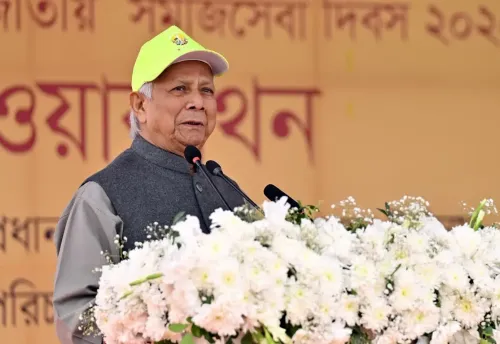
Bangladesh's ongoing energy crisis will take a minimum of two years to fully resolve, Finance and Planning Minister Amir Khasru Mahmud Chowdhury said on Sunday, 16 August, according to local media reports. The minister's remarks, made at an event hosted by the American Chamber of Commerce in Bangladesh (AmCham), signal that relief from widespread power shortages remains a distant prospect for citizens and businesses alike.
Minister's Assessment
Speaking as Chief Guest at the AmCham event in Dhaka, Chowdhury said the electricity and gas shortfalls could not be addressed within six months or even a year. He pointed specifically to infrastructure timelines, noting that constructing a Floating Storage and Regasification Unit (FSRU) — commonly referred to as a floating LNG terminal — takes approximately one and a half to two years, making any earlier resolution structurally impossible.
Power Minister Acknowledges Limited Options
Power, Energy and Mineral Resources Minister Iqbal Hassan Mahmud echoed the sense of constraint, telling Bangladeshi daily Prothom Alo on Thursday that the government's hands are tied in the near term. 'All I want to say is, we are working... In this time of crisis, I have nothing to do. Because now I will not be able to extract gas or, without a Floating Storage and Regasification Unit (FSRU), I will not be able to extract the gas that I have,' he was quoted as saying.
Emergency Measures Already in Effect
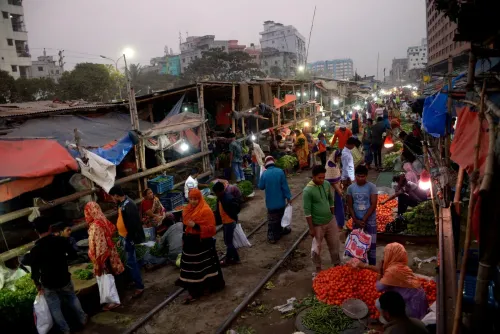
With power generation running below demand, the government has ordered rolling load shedding across the country, drawing public frustration. A series of conservation measures took effect on Wednesday, including restricting the operating hours of shopping malls, markets, and shops to 11:00 am–8:00 pm. Illuminated billboards must now be switched off by 7:00 pm, and decorative lighting has been banned entirely.
Notably, the offices of power distribution companies have reportedly sought additional security from police headquarters and law-enforcement agencies in multiple districts, reflecting the scale of public discontent the crisis has generated.
Why the Crisis Runs Deep
Bangladesh's energy shortfall is rooted in its heavy dependence on imported liquefied natural gas (LNG) and ageing domestic gas infrastructure. Without an operational FSRU, the country lacks the regasification capacity to import sufficient LNG volumes to meet industrial and domestic demand. This comes amid a broader foreign-exchange squeeze that has complicated fuel import financing — a structural vulnerability that the two-year timeline is designed to address through new terminal infrastructure.
What Comes Next
The government's immediate priority is the procurement and commissioning of a floating LNG terminal, which both ministers have identified as the critical bottleneck. Until that infrastructure is in place, load shedding and consumption restrictions are expected to continue. Businesses operating in Bangladesh — including foreign investors represented at the AmCham event — will need to factor in an extended period of energy uncertainty as they plan operations through 2026 and into 2027.
Point of View
'two years' is a floor estimate, not a deadline. The foreign-exchange constraints that have complicated fuel imports go unaddressed in both ministerial statements, suggesting the energy crisis is a symptom of a deeper macroeconomic bind that load-shedding schedules and billboard shutdowns cannot solve.
NationPress
1 Oct 2026
Frequently Asked Questions
How long will Bangladesh's energy crisis last?
According to Finance and Planning Minister Amir Khasru Mahmud Chowdhury, the energy crisis will take at least two years to resolve. He cited the time required to construct a floating LNG terminal as the primary reason an earlier resolution is not feasible.
Why can't Bangladesh resolve its energy crisis sooner?
Bangladesh currently lacks a Floating Storage and Regasification Unit (FSRU), which is essential for importing liquefied natural gas at scale. Building such a terminal takes approximately one and a half to two years, making any faster resolution structurally impossible, according to the ministers.
What emergency measures has the Bangladesh government introduced?
The government has ordered rolling load shedding and restricted shop and mall operating hours to 11:00 am–8:00 pm. Illuminated billboards must be turned off by 7:00 pm, and all decorative lighting has been banned entirely. These measures took effect on Wednesday.
What did Power Minister Iqbal Hassan Mahmud say about the crisis?
Minister Mahmud acknowledged that the government has very limited options in the short term. He was quoted as saying he cannot extract gas or import it without an FSRU, and that the government is working within those constraints.
Who is most affected by Bangladesh's energy shortage?
The crisis affects households facing rolling blackouts, businesses operating under restricted hours, and foreign investors assessing operational risks. Power distribution offices in multiple districts have also sought additional police security, reflecting widespread public frustration.