India-UAE partnership deepens trade, energy and logistics ties in 2026
Synopsis
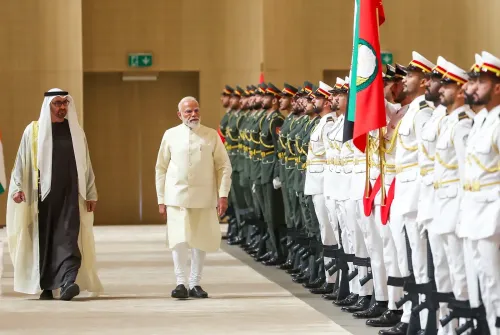
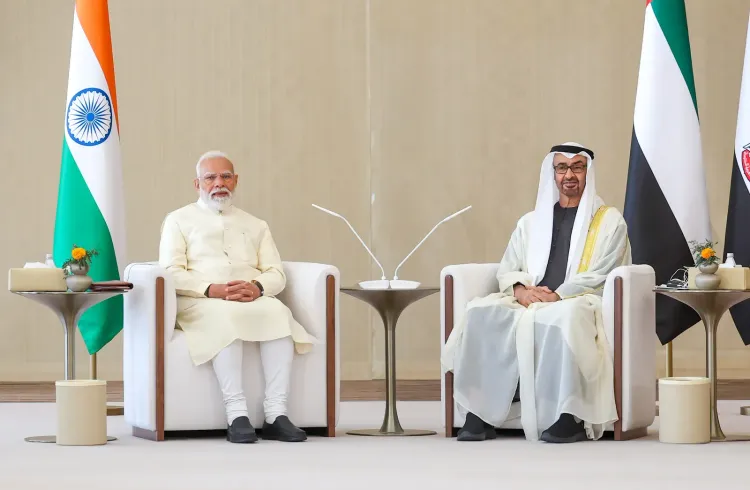
India and the UAE signed a strategic partnership agreement in May 2026 covering technology, maritime security, and industrial development — and the Fujairah energy hub outside the Strait of Hormuz is quietly becoming one of India's most important energy resilience assets. The relationship is less a formal alliance and more a pragmatic economic architecture, one that now spans IMEC, I2U2, and bilateral investment corridors.
Key Takeaways
India and the UAE signed a strategic partnership agreement in May 2026 covering advanced technology, innovation, industrial development, maritime security, and information exchange.
The Fujairah energy hub — located outside the Strait of Hormuz — strengthens India's energy security by diversifying petroleum storage and supply-chain options.
The India-Middle East-Europe Corridor (IMEC) positions the UAE as a key transit node linking South Asia to Europe.
The I2U2 grouping (India, UAE, Israel, United States) provides a broader multilateral framework for technology, logistics, and food security cooperation.
The Middle East is a critical source of energy, investment, and remittances for India, underpinned by a large Indian expatriate community in the region.
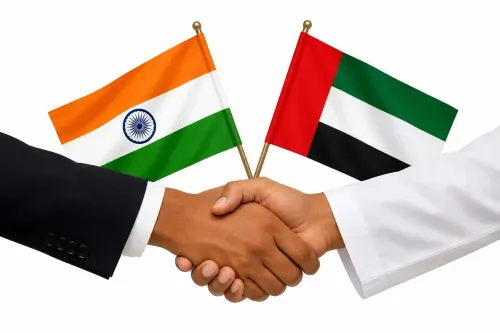
India and the United Arab Emirates are expanding a sector-focused strategic partnership built on economic pragmatism, with cooperation spanning trade, energy security, logistics, and technology, according to a new report. The partnership, which avoids formal alliance structures, is increasingly anchored by integrated economic corridors and commercial linkages across multiple regions.
Strategic Agreement Signed in May 2026
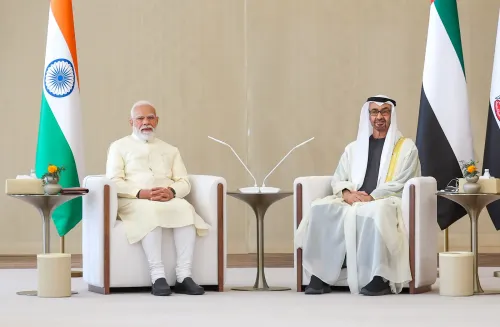
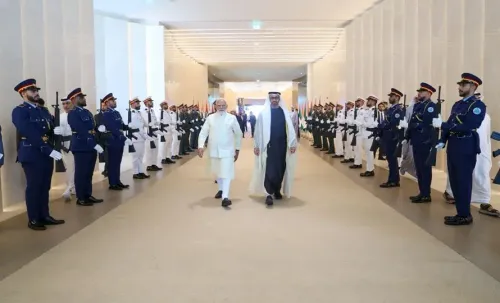
In May 2026, New Delhi and Abu Dhabi formalised a strategic partnership agreement covering advanced technology, innovation, industrial development, maritime security, and information exchange. According to the report, the agreement is expected to 'create new opportunities for collaboration in high-value sectors, support technology transfer and enhance the capabilities of both countries in areas critical to future economic growth.'
Though not a formal alliance in the traditional sense, the framework signals growing intent to build integrated economic corridors and deepen commercial ties across multiple regions.
Energy Security and the Fujairah Advantage
A key pillar of the partnership is the UAE's Fujairah energy hub, which holds strategic value for India owing to its location outside the Strait of Hormuz. The hub offers petroleum storage that diversifies India's energy logistics and reduces supply-chain exposure during periods of geopolitical uncertainty or market volatility. The report notes the arrangement 'strengthens India's energy security by diversifying storage options and improving supply-chain resilience.'
This comes amid broader efforts by India to reduce dependence on any single energy corridor, a priority that has sharpened following repeated disruptions in global energy markets since 2022.
IMEC and Broader Regional Frameworks
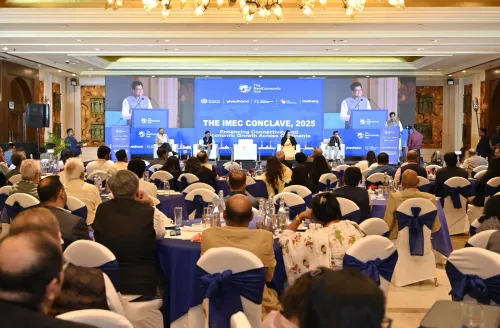
The partnership has gained additional momentum through the India-Middle East-Europe Corridor (IMEC), a multimodal connectivity initiative that positions the UAE as a critical transit node between South Asia and Europe. The corridor complements India's wider trade diversification strategy.
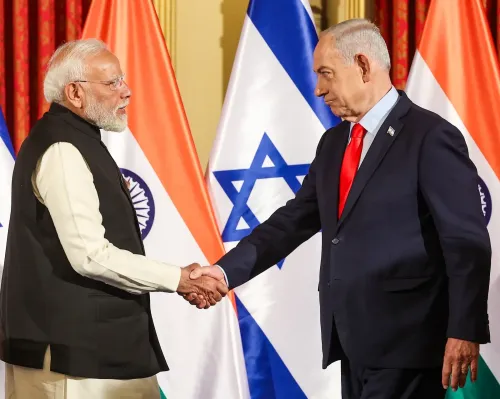
The bilateral framework also feeds into the I2U2 grouping — comprising India, the UAE, Israel, and the United States — which promotes cooperation in technology, infrastructure, logistics, food security, and investment. Notably, I2U2 represents one of the few minilateral formats that directly links South Asian and Gulf economic interests with Western capital.
The Middle East in India's Economic Calculus
The Middle East remains central to India's economic outlook as a vital source of energy supplies, foreign investment, and trade connectivity. The region also hosts a large Indian expatriate community whose remittances and business networks contribute significantly to bilateral economic ties.
The report characterises the India-UAE relationship as driven by 'mutual investment opportunities,' allowing both countries to pursue shared economic objectives while retaining flexibility in their broader foreign policy postures. As both nations deepen institutional linkages, the next phase of the partnership is likely to test whether high-value sector agreements translate into measurable trade and investment outcomes.
Point of View
But the more consequential detail is structural: India is quietly building energy storage and logistics redundancy outside the Strait of Hormuz, a chokepoint that has historically exposed it to supply shocks. The Fujairah arrangement is less a bilateral favour and more a risk-management hedge. Meanwhile, the I2U2 format — largely underreported — is the only minilateral that directly connects Gulf capital with South Asian demand and Western technology. Whether the May 2026 agreement produces measurable technology transfer or remains a framework document is the real question mainstream coverage is not asking.
NationPress
26 Oct 2026
Frequently Asked Questions
What did India and UAE agree to in May 2026?
In May 2026, New Delhi and Abu Dhabi signed a strategic partnership agreement to deepen collaboration in advanced technology, innovation, industrial development, maritime security, and information exchange. The agreement is expected to open new avenues for technology transfer and high-value sector cooperation.
Why is the UAE's Fujairah hub important for India's energy security?
The Fujairah energy hub is located outside the Strait of Hormuz, a critical and often congested maritime chokepoint. It allows India to store petroleum in a strategically safer location, diversifying its energy logistics and improving supply-chain resilience during periods of geopolitical uncertainty or market volatility.
What is the India-Middle East-Europe Corridor (IMEC)?
IMEC is a multimodal connectivity initiative that links India to Europe via the Middle East, with the UAE serving as a key transit node. It is one of the flagship frameworks through which India-UAE economic cooperation is being institutionalised.
What is I2U2 and how does it relate to India-UAE ties?
I2U2 is a minilateral grouping comprising India, the UAE, Israel, and the United States, focused on cooperation in technology, infrastructure, logistics, food security, and investment. The India-UAE bilateral partnership feeds directly into this broader framework, linking Gulf economic interests with South Asian demand and Western capital.
How significant is the Middle East to India's overall economic strategy?
The Middle East is a vital source of energy supplies, foreign investment, and trade connectivity for India. It also hosts a large Indian expatriate community whose remittances and business networks form a significant component of bilateral economic ties across the region.