Iran-US nuclear talks: Progress made but deal not imminent, Tehran says
Synopsis
Iran's Foreign Ministry says progress has been made in US-Iran talks, but no deal is imminent — and Tehran is pointing squarely at Washington's internal disorder as the main obstacle. With the Strait of Hormuz, a 14-article memorandum, and nuclear rights all in play, this is the most detailed public readout yet from either side.
Key Takeaways
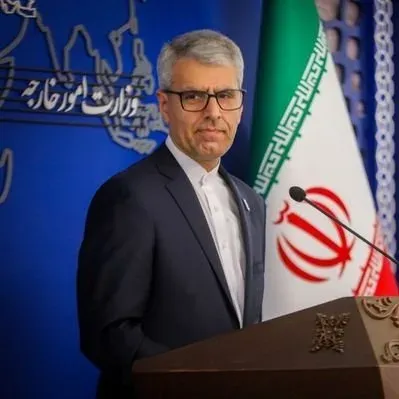
Esmaeil Baqaei said on 25 May that conclusions have been reached on a large portion of US-Iran negotiation issues, but no agreement is imminent.
Iran has set no specific deadline for finalising any understanding; outcomes will only be announced after they are achieved.
Tehran cited US internal contradictions , congressional opposition, and Israeli influence as complicating factors.
A 14-article memorandum focused on ending the war is under discussion within a 60-day framework ; Iran says nuclear details are not on the table at this stage.
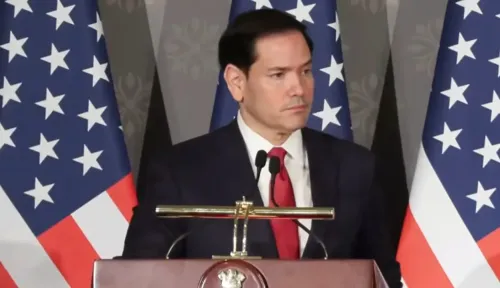
Secretary of State Marco Rubio signalled 'significant progress' and hinted at imminent 'good news' on the Strait of Hormuz during a joint press conference with EAM S.
Jaishankar in New Delhi .
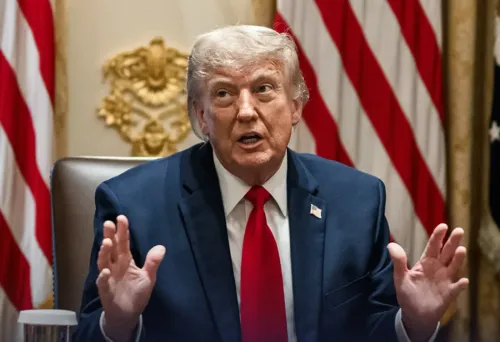
President Donald Trump's position — that Iran can never possess a nuclear weapon — was reiterated by Rubio as the non-negotiable US baseline.
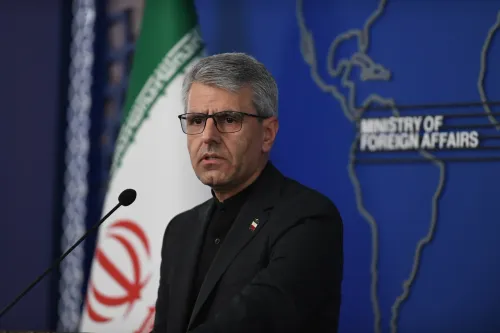
Iran's Foreign Ministry spokesperson Esmaeil Baqaei on Monday, 25 May said that conclusions have been reached on a large portion of issues under negotiation with the United States, but cautioned that no agreement is imminent and no deadline has been set for finalising any understanding. The remarks, made at a press conference in Tehran, offer the clearest signal yet of where the two sides stand ahead of any potential deal.
Baqaei's Key Assessments
Baqaei said that US political behaviour has been 'somewhat inconsistent,' with Washington's contradictory stances — sometimes shifting within hours — complicating the negotiation process. He pointed to several resignations, congressional opposition, public opinion pressures, and internal contradictions in the US as factors that have created space for outside influence, including, he alleged, actors from Israel.
He stressed that decision-making in Washington is 'disorganised,' and that Iran will only announce any outcome after it has been achieved — not before. 'No one can claim that the signing of an agreement is imminent,' Baqaei said, according to Iran's semi-official Tasnim News Agency.
The 60-Day Framework and Nuclear Talks
On the question of a 60-day discussion framework, Baqaei confirmed that the plan is to work through certain details regarding a memorandum within that period. He clarified that one of the topics is connected to nuclear matters, but emphasised that Iran is not discussing nuclear details at this stage. The 14-article memorandum under discussion, he said, is focused primarily on ending the war rather than nuclear specifics.
Rubio's 'Good News' Signal on the Strait of Hormuz
The Iranian statement came a day after US Secretary of State Marco Rubio signalled 'significant progress' in US-Iran diplomatic efforts. Speaking at a joint press conference with External Affairs Minister S. Jaishankar in New Delhi on Sunday, Rubio suggested that 'good news' regarding the Strait of Hormuz could emerge soon.
'I do think perhaps there is the possibility that over the next few hours the world will get some good news, at least with regards to the straits and with regards to a process that can ultimately leave us where the President wants us to be,' Rubio said, while cautioning that the situation was 'not final news' and that 'we still have some work to do.'
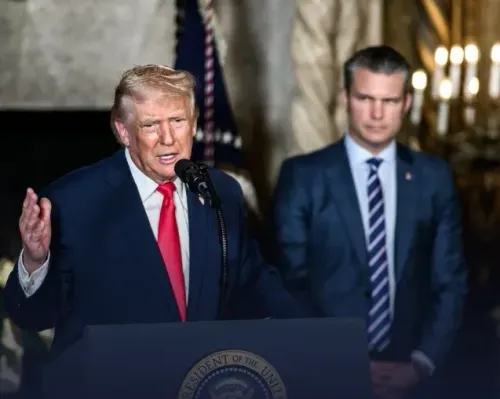
Rubio reiterated US President Donald Trump's firm position that Iran can never possess a nuclear weapon. 'The President has been clear about that — they will never possess a nuclear weapon, certainly not as long as Donald Trump is President of the United States,' he said.
Strait of Hormuz: A Central Flashpoint
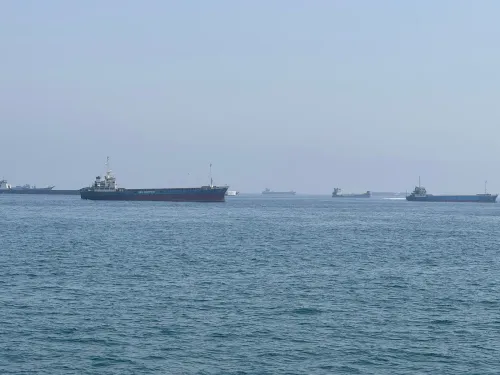
Rubio described the Strait of Hormuz as an international waterway that Iran does not own, and said Tehran's threats against commercial vessels using it are 'illegal under any concept of international law.' He said the US and its Gulf partners have been working on an outline for a completely open Strait without tolls, but that it requires Iran's full acceptance and implementation.
'His preference is to find a diplomatic way that these problems can be solved — that's always the President's preference. He would have much rather have me and the Department of State solve this problem than the Department of War having to solve this problem, but the problem is going to be solved one way or the other,' Rubio added.
Where Negotiations Stand
The gap between Rubio's cautious optimism and Baqaei's more measured assessment reflects the fragile state of US-Iran diplomacy. Both sides acknowledge movement on several issues, but Tehran's insistence on protecting its 'national interests' and Washington's domestic political turbulence continue to shadow any final agreement. The next few weeks of the 60-day framework will be critical in determining whether the two sides can convert partial progress into a binding understanding.
Point of View
Nuclear later — which is a structurally fragile approach. If Washington's internal disorder, which Tehran has now publicly catalogued, produces another policy reversal, the partial progress already made could unravel quickly. The Strait of Hormuz framing is also notable: by calling it an international law violation, Rubio is building a legal and rhetorical scaffold for military options, even as he insists diplomacy is the preference.
NationPress
9 Oct 2026
Frequently Asked Questions
What progress has been made in US-Iran nuclear talks?
Iran's Foreign Ministry spokesperson Esmaeil Baqaei said on 25 May that conclusions have been reached on a large portion of issues under negotiation with the US, but no specific timeframe has been set and no agreement is imminent. Both sides are working through a 14-article memorandum within a 60-day discussion framework.
Why does Iran say a deal is not imminent?
Tehran cited inconsistent and contradictory US political behaviour, internal Washington disorder, congressional opposition, and the influence of outside actors — including from Israel — as factors complicating finalisation. Baqaei said any outcome will only be announced after it is achieved.
What is the 14-article memorandum in US-Iran talks?
The 14-article memorandum is a document under discussion between the US and Iran, focused primarily on ending the war rather than nuclear specifics, according to Baqaei. Iran has clarified it is not discussing nuclear details at this stage, though one topic within the 60-day framework is connected to nuclear matters.
What did US Secretary of State Rubio say about Iran talks?
Speaking in New Delhi on Sunday alongside External Affairs Minister S. Jaishankar, Rubio said 'significant progress' had been made and hinted that 'good news' on the Strait of Hormuz could emerge soon. He reiterated that Iran can never possess a nuclear weapon as a non-negotiable US position.
Why is the Strait of Hormuz central to US-Iran negotiations?
The Strait of Hormuz is a critical international shipping lane, and Iran has reportedly threatened commercial vessels using it. Rubio described such threats as illegal under international law and said the US and Gulf partners are working on a framework for a fully open Strait, contingent on Iran's full acceptance and implementation.