Trump declares Hormuz open, slaps full blockade on Iran cargo
Synopsis
Trump has split the Strait of Hormuz in two: open to the world, shut to Iran. By simultaneously declaring the waterway restored and slapping a full cargo blockade on Tehran, the US has weaponised the world's most critical oil chokepoint — while trading a cash reimbursement fee from Gulf states for investment pledges. The legal, diplomatic, and energy-market fallout is only beginning.
Key Takeaways
US President Donald Trump declared the Strait of Hormuz reopened for global shipping under US military protection on 14 July .
Trump announced a 'FULL Blockade' on all vessels travelling to or from Iranian ports or carrying Iranian cargo .
A proposed 20 per cent reimbursement fee on Gulf states for US security services has been dropped in favour of trade and investment deals .
Secretary of War Pete Hegseth , General Dan Caine , and Admiral Brad Cooper were credited with leading the operation.
Trump reiterated that Iran will not be permitted to develop a nuclear weapon and accused its leadership of killing 52,000 protesters — a figure not independently verified.
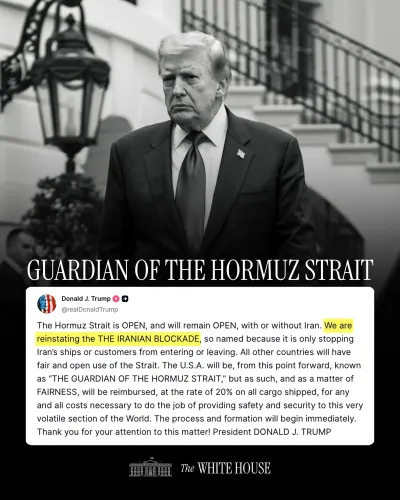
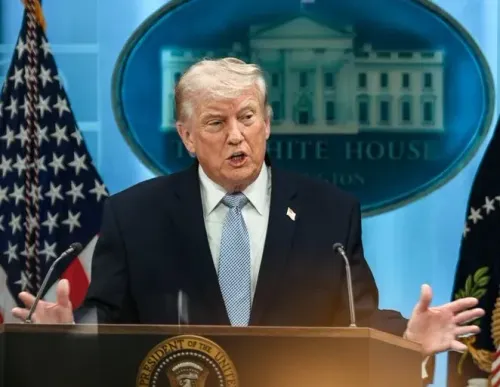
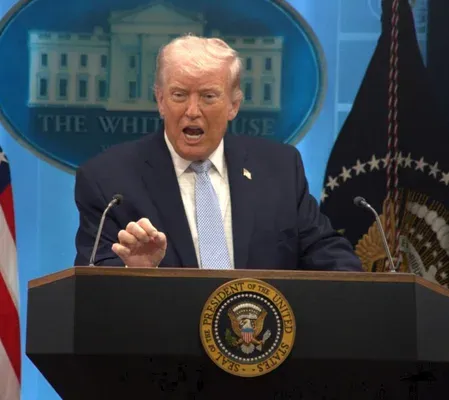
US President Donald Trump on Tuesday, 14 July declared the Strait of Hormuz reopened for international shipping under US military protection, while simultaneously announcing a 'FULL Blockade' on all vessels bound for Iranian ports or carrying Iranian cargo. In the same statement, Trump scrapped a proposed 20 per cent reimbursement fee on Gulf states for US security services, replacing it with trade and investment commitments from Gulf nations into the United States.
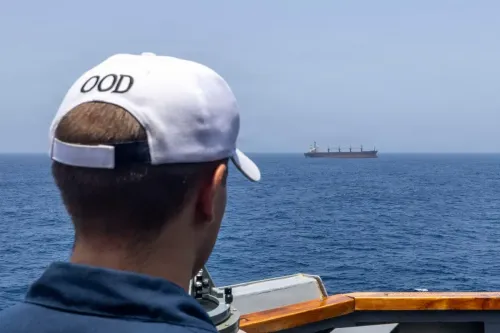
Hormuz Reopened Under US Military Watch
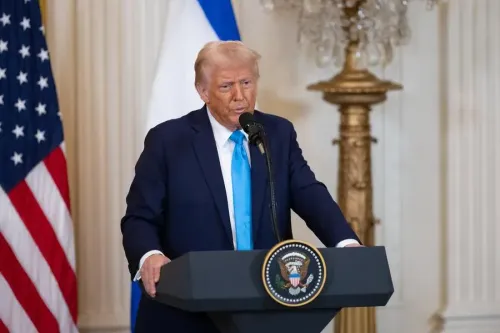
Trump made the announcement via a post on Truth Social, crediting the US armed forces with restoring maritime traffic through one of the world's most critical energy corridors. 'Oil is flowing like never before, thanks to the awesome Power of the United States Military,' he wrote.
Trump specifically praised Secretary of War Pete Hegseth, Chairman of the Joint Chiefs of Staff Dan Caine, and Commander of the United States Central Command Admiral Brad Cooper for overseeing the operation. He described the strait as now open to 'ALL Ship traffic except for Iran.'
Full Blockade Announced on Iranian Maritime Trade
While declaring the strait open to the world, Trump drew a sharp distinction for Iran. 'We will therefore have a FULL Blockade, but only on Ships coming to and from Iranian ports, or carrying anything have to do with Iranian cargo,' he stated. The move effectively isolates Iranian maritime commerce while preserving passage for all other nations — a dual-track approach that significantly escalates economic pressure on Tehran.
This comes amid longstanding US-Iran tensions over Iran's nuclear programme, which Trump addressed directly, stating: 'IRAN WILL NEVER HAVE A NUCLEAR WEAPON.' He also accused Iran's leadership of pursuing a path of destruction, describing them as 'lying, violent, malicious leadership.' Trump further claimed that 52,000 protesters had been killed under Iran's current leadership — a figure that could not be independently verified at the time of publication.
Reimbursement Fee Dropped, Gulf Investment Deals Substituted
In a notable policy reversal, Trump confirmed he had abandoned an earlier proposal requiring Gulf states to reimburse the US at a rate of 20 per cent for providing security in the Strait of Hormuz. He said the decision followed 'highly productive conversations with Middle East leadership.'
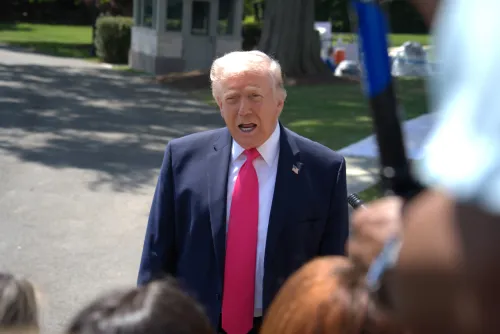
'I have decided to replace the 20 per cent United States Reimbursement Fee with Trade and Investment Deals that the various Gulf States will be making into the United States,' Trump wrote. He described the planned investments as 'MASSIVE' and predicted they would drive factory construction, equipment imports, and the creation of 'additional millions of High Paying AMERICAN Jobs.'
Strategic and Global Implications
The Strait of Hormuz is the world's most critical oil chokepoint, with roughly 20 per cent of global petroleum trade transiting its waters daily. Any disruption — or credible threat of disruption — sends immediate shockwaves through global energy markets. The US military's declared role as guarantor of passage marks a significant expansion of its operational posture in the Persian Gulf.
Notably, the simultaneous blockade of Iranian cargo creates a legally complex situation under international maritime law, and analysts are expected to scrutinise whether the measures constitute a formal naval blockade — which carries distinct obligations and risks under the United Nations Convention on the Law of the Sea (UNCLOS). The full diplomatic and market response from Iran, China — a major buyer of Iranian oil — and European partners remains to be seen in the hours and days ahead.
Point of View
The legal exposure is real: a unilaterally declared blockade on a sovereign state's cargo, enforced in international waters, invites challenge under UNCLOS and could draw in China, which absorbs a significant share of Iranian oil exports. What mainstream coverage is underplaying is the precedent: if the US can selectively open or close the world's most critical energy chokepoint by executive post, every Gulf state — ally or not — just learned something new about the cost of US protection.
NationPress
14 Jul 2026
Frequently Asked Questions
What did Trump announce about the Strait of Hormuz?
Trump declared on 14 July that the Strait of Hormuz had been reopened for all international shipping under US military protection, while simultaneously announcing a full blockade on ships travelling to or from Iranian ports or carrying Iranian cargo.
What is the 'FULL Blockade' Trump announced on Iran?
Trump stated that all vessels bound for Iranian ports or transporting Iranian cargo would be subject to a full blockade enforced by the US military. The measure targets Iranian maritime trade specifically, while leaving the strait open to all other nations.
Why did Trump drop the 20 per cent reimbursement fee on Gulf states?
Trump said he replaced the proposed 20 per cent US reimbursement fee — which would have required Gulf states to pay for US security in the Strait of Hormuz — with trade and investment deals following what he described as 'highly productive conversations with Middle East leadership.'
Who led the US military operation in the Strait of Hormuz?
Trump credited Secretary of War Pete Hegseth, Chairman of the Joint Chiefs of Staff Dan Caine, and Commander of US Central Command Admiral Brad Cooper with overseeing the operation that restored maritime traffic through the strait.
What is the significance of the Strait of Hormuz?
The Strait of Hormuz is the world's most critical oil chokepoint, through which roughly 20 per cent of global petroleum trade passes daily. Any disruption to traffic through the strait has immediate consequences for global energy prices and supply chains.