Trump says US-Iran talks underway, warns of 'last chance' before action
Synopsis
Trump confirmed live from the Oval Office that US-Iran talks are active — and framed them as the final diplomatic off-ramp before drastic action. With the Strait of Hormuz potentially reopening within hours as 'phase one' and full denuclearization as 'phase two,' the stakes could not be higher. Tehran, meanwhile, publicly denies any direct talks are happening — a contradiction that defines just how volatile this moment is.
Key Takeaways
President Donald Trump confirmed on 4 August that US-Iran talks are 'going on right now,' describing them as a 'last chance.' Trump said talks are at Iran's request , backed by Saudi Arabia , UAE , and Qatar .
Phase one of the framework targets reopening the Strait of Hormuz , potentially 'by tomorrow'; phase two addresses Iran's denuclearization .
Trump accused Iranian leadership on Truth Social of being 'unbelievably duplicitous' for publicly denying talks while privately engaging.
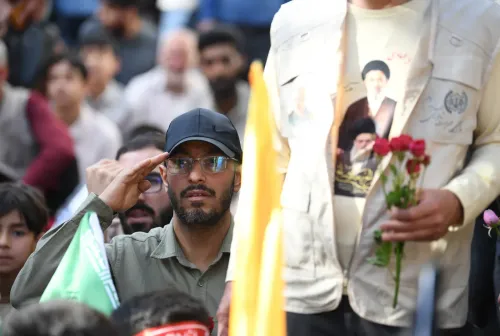
Iranian Foreign Ministry spokesman Esmaeil Baghaei said in Tehran that Iran is not in direct negotiations with the US, only with Oman over the Strait.
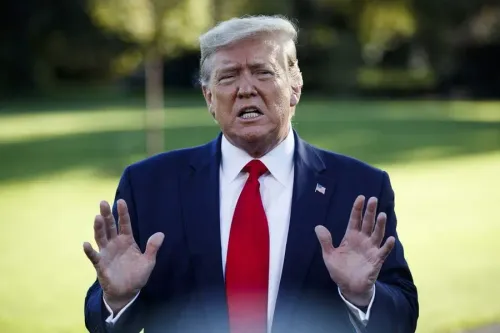
US President Donald Trump confirmed on 4 August that diplomatic talks with Iran are 'going on right now,' framing the negotiations as a final opportunity for Tehran to reach an agreement — or face severe consequences. Speaking to reporters at the White House Oval Office, Trump said the discussions are taking place at Iran's request and are backed by Saudi Arabia, the UAE, and Qatar.
What Trump Said
'We're talking and we're talking at the request of Iran, backed by Saudi Arabia, backed by UAE and backed by Qatar in particular, but others also,' Trump told reporters. He was speaking after signing an executive order on military spouse benefits.
'This is a last chance for them to sign a good document,' Trump said, adding: 'I think we're going to maybe get something, but I want to give them every last chance before decapitation.'
On the question of progress, Trump told reporters: 'you find out today or tomorrow ... they're going to go quickly one way or the other.'
The Strait of Hormuz and Nuclear Demands
Trump outlined a two-phase framework for the negotiations. Phase one centres on the reopening of the Strait of Hormuz — the critical waterway through which a significant share of global oil supplies passes — which he said could happen 'literally by tomorrow, completely open.' Phase two would address Iran's nuclear programme. 'The denuclearization of Iran has to happen,' Trump said, acknowledging that 'that'll take a little while.'
Trump's Social Media Broadside Against Tehran
Earlier the same day, Trump posted on Truth Social accusing Iranian leadership of being 'unbelievably duplicitous.' He wrote that Iran had requested meetings, talks had begun with more scheduled, yet Tehran was publicly claiming no discussions were taking place and that it was 'only dealing with Oman.' The post marked a sharp escalation in tone even as diplomacy reportedly continued behind the scenes.
Iran's Contradicting Position
The Iranian side offered a starkly different account. Iranian Foreign Ministry spokesman Esmaeil Baghaei said in Tehran on Monday that Iran is currently not engaged in any negotiations with the United States. Baghaei acknowledged that talks with Oman over the Strait of Hormuz are underway, but stopped short of confirming any direct US-Iran channel. The contradiction between Washington's and Tehran's public statements underscores the fragile and opaque nature of the diplomatic process.
What Happens Next
Trump's framing — 'last chance' and a reference to 'decapitation' — signals that Washington is operating on a compressed timeline. The outcome of the Strait of Hormuz discussions, which Trump suggested could resolve within a day, will likely set the tone for whether broader nuclear talks gain traction. Global energy markets and regional Gulf states, which are reportedly backing the process, will be watching closely.
Point of View
And both sides know it. Trump's 'last chance before decapitation' language is calibrated pressure, not a diplomatic slip; it is meant to be heard in Tehran and Riyadh simultaneously. What is striking is the Gulf states' visible role as guarantors — Saudi Arabia, UAE, and Qatar backing the same process signals a rare regional consensus that a nuclear Iran is a shared threat. The real test is whether phase one, the Strait of Hormuz, actually delivers by Trump's self-imposed deadline. If it does not, the credibility of the entire framework collapses, and the escalation ladder becomes very short.
NationPress
4 Aug 2026
Frequently Asked Questions
What did Trump say about US-Iran talks on 4 August?
Trump confirmed from the White House Oval Office that talks with Iran are 'going on right now,' describing them as a 'last chance' for Tehran to sign an agreement. He said the discussions are taking place at Iran's request and are backed by Saudi Arabia, the UAE, and Qatar.
What is the two-phase framework Trump outlined?
Phase one focuses on reopening the Strait of Hormuz, which Trump said could happen 'literally by tomorrow.' Phase two would address the denuclearization of Iran, which Trump acknowledged 'will take a little while.'
Why did Trump accuse Iran of being 'duplicitous'?
Trump posted on Truth Social that Iran had requested meetings and talks had begun, yet Iranian officials were publicly claiming no negotiations with the US were taking place and that Tehran was only dealing with Oman. He called this behaviour 'unbelievably duplicitous.'
What is Iran's official position on the talks?
Iranian Foreign Ministry spokesman Esmaeil Baghaei said in Tehran on Monday that Iran is not engaged in any direct negotiations with the United States. He confirmed only that talks with Oman over the Strait of Hormuz are underway.
Why does the Strait of Hormuz matter in these negotiations?
The Strait of Hormuz is a critical global oil transit route, and its status is central to phase one of the framework Trump described. Its reopening — or continued closure — has direct implications for global energy prices and regional stability.