India's economic rise to anchor global leadership as Trump policies push US allies away: US lawmaker
Synopsis
A sitting US congressman has said America is 'AWOL' on global leadership — and that Trump's own policies are pushing India, Brazil, and Egypt closer to Russia, China, and Iran. With India chairing the BRICS summit in New Delhi, a Cornell scholar warns BRICS is no longer an emerging bloc but 'the core of the emerging international order, with China at its center.' Washington's strategic retreat may be doing Beijing's work for it.
Key Takeaways
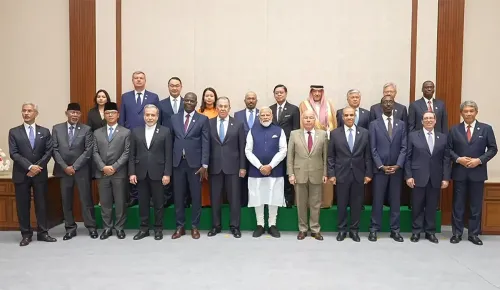
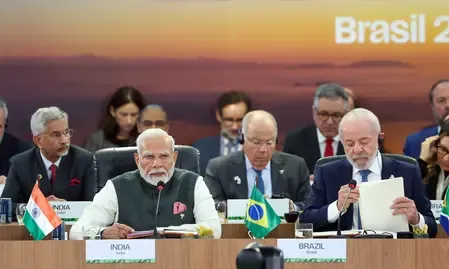
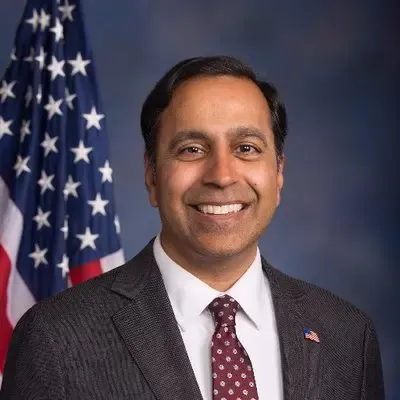
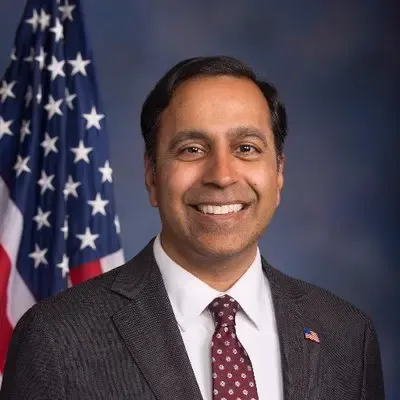
Congressman Raja Krishnamoorthi said India's economic strength will sustain its global leadership, as India hosted the BRICS summit in New Delhi on 13 September 2026 .
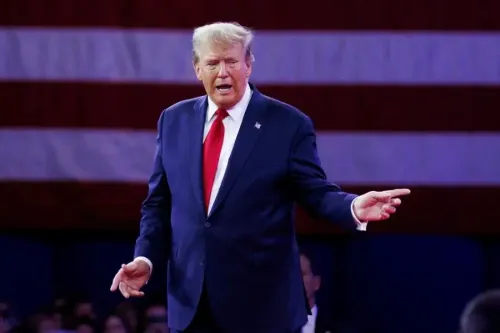
Krishnamoorthi warned that Trump's trade and foreign policies are pushing countries like India , Egypt , and Brazil closer to Russia , China , and Iran .
He said the US is 'right now AWOL' on climate change, economic development, and global trade stability.
Cornell University scholar Allen Carlson said BRICS is 'no longer an incipient power bloc but the core of the emerging international order, with China at its center.' Carlson noted that India's profile has risen over the past 10 to 20 years , partly due to PM Modi's more assertive foreign policy — but that China carries greater weight within BRICS.
India-China territorial disputes and the Tibetan government in exile issue remain constraints on deeper bilateral cooperation.
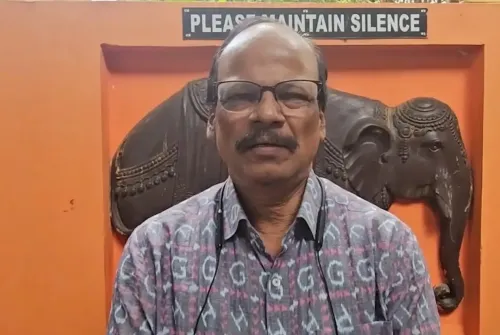
Congressman Raja Krishnamoorthi said on 13 September 2026 that India's economic strength will sustain its global leadership well into the future, while warning that President Donald Trump's trade and foreign policies were driving US partners toward rival powers and eroding Washington's international influence. His remarks came as India hosted the BRICS summit in New Delhi, an event he described as unsurprising given India's growing stature.
Krishnamoorthi's Warning on US Retreat
Speaking to reporters, Krishnamoorthi expressed concern that American policies were inadvertently drawing Washington's friends and adversaries closer together. 'The question is where is America going?' he said. He argued that the United States was absent on critical global issues, stating bluntly, 'We are right now AWOL.'
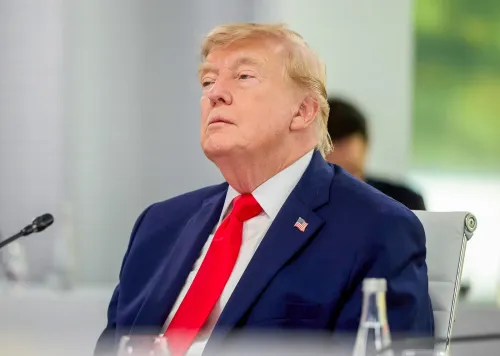
The congressman squarely blamed Trump's trade, economic, and foreign policy decisions for encouraging countries such as India, Egypt, and Brazil to deepen engagement with Russia, China, and Iran. He noted that nations across Europe, Asia, and Canada were also looking for alternative partners. 'And that is a very dangerous long-term trend for America,' he warned.
While acknowledging visible drift, Krishnamoorthi stopped short of declaring a permanent global realignment. 'I don't think there's necessarily a fundamental realignment, although there is drift that is occurring with regard to our friends, partners, and allies,' he said. He added that those partners were 'eagerly waiting for America to reassert its leadership.'
Scholars Weigh India's Rising Global Profile
Allen Carlson, associate professor of government at Cornell University and an expert on Chinese foreign policy, separately assessed that India's international profile had risen significantly over the past 10 to 20 years. He attributed part of that ascent to Prime Minister Narendra Modi's more assertive approach to foreign policy.
Carlson said India's hosting and chairing of the BRICS summit illustrated its growing stature. However, he cautioned that China continued to carry greater weight within the grouping, given its larger economy and more extensive military capabilities.
In a statement issued by Cornell on 11 September, Carlson framed the implications in stark terms: 'BRICS is no longer an incipient power bloc but the core of the emerging international order, with China at its center. The implications for the US are profound.' In a subsequent interview, he tempered that assessment by noting the world had not changed overnight and that the participating powers faced their own domestic challenges.
BRICS Agenda and India-China Tensions
The expanded BRICS gathering in New Delhi addressed a wide-ranging agenda including conflicts in the Middle East and Ukraine, trade, energy security, and global governance. Carlson noted that the grouping was actively seeking to deepen institutions and mechanisms that could offer an alternative to the US-led international order.
Carlson also flagged persistent bilateral constraints: India and China's unresolved territorial dispute remains a longstanding friction point, and India's relationship with the Tibetan government in exile continues to complicate efforts to strengthen cooperation between the two Asian giants.
Krishnamoorthi's Call for US-India Partnership
Despite his criticism of current US policy, Krishnamoorthi said he wanted Washington to work closely with India and other partners to counter what he described as Chinese economic, technological, and military aggression. He argued that Trump's handling of foreign economic and trade policy had weakened America's capacity to rally countries around shared objectives — a strategic liability, he suggested, that would take time to repair.
As the BRICS grouping continues to expand its institutional footprint, the question of whether Washington can rebuild multilateral trust under its current leadership posture will define global alignments in the years ahead.
Point of View
Not contingent on US goodwill. Carlson's framing is sharper still; calling BRICS 'the core of the emerging international order' is a significant departure from the hedged language most Western analysts use. What mainstream coverage misses is the compounding effect: every US policy misstep doesn't just push one country away — it lowers the cost for all countries to diversify their alignments simultaneously. India is not choosing BRICS over Washington; it is playing both, and Trump's retreat is making that hedge cheaper and less politically costly by the day.
NationPress
13 Sept 2026
Frequently Asked Questions
What did Congressman Raja Krishnamoorthi say about India at the BRICS summit?
Krishnamoorthi said India's economic size and growth would ensure it remains a world leader, calling its hosting of the BRICS summit in New Delhi unsurprising. He was more alarmed by the US posture, saying America was 'AWOL' on key global issues including climate change and trade stability.
How is Trump's foreign policy affecting US global influence, according to the congressman?
Krishnamoorthi argued that Trump's trade, economic, and foreign policy decisions were encouraging countries like India, Egypt, and Brazil to engage more deeply with Russia, China, and Iran, while nations across Europe, Asia, and Canada were also looking for alternatives to US partnership. He called this 'a very dangerous long-term trend for America.'
What did Cornell scholar Allen Carlson say about BRICS and India's rise?
Carlson said India's international profile had risen significantly over the past 10 to 20 years, partly due to PM Modi's more assertive foreign policy. In a Cornell statement issued on 11 September, he described BRICS as 'no longer an incipient power bloc but the core of the emerging international order, with China at its center,' calling the implications for the US 'profound.'
Is BRICS causing a permanent realignment of global power?
Krishnamoorthi stopped short of declaring a permanent realignment, saying there was 'drift' occurring among US friends, partners, and allies rather than a fundamental shift. Carlson similarly cautioned that the world had not changed overnight and that BRICS powers faced their own domestic challenges.
What constraints exist on India-China cooperation within BRICS?
India and China's longstanding unresolved territorial dispute remains a key friction point in bilateral ties. Carlson also identified India's relationship with the Tibetan government in exile as an underlying issue complicating efforts to deepen cooperation between the two countries within the BRICS framework.