US targets China's $40 billion propaganda machine in global info war
Synopsis
The numbers say it all: China spends an estimated $40 billion a year on propaganda while the entire US Agency for Global Media runs on $1 billion — most of it on salaries. USAGM nominee Sarah Rogers used her Senate confirmation hearing to lay out a modernisation blueprint, but Democratic senators are already asking whether recent cuts have left America fighting an information war with one hand tied behind its back.
Key Takeaways
China reportedly spends an estimated $40 billion annually on propaganda and influence operations, against USAGM's total budget of $1 billion .
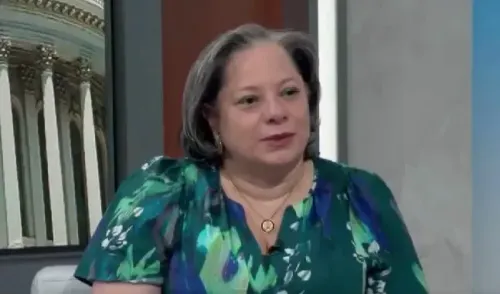
Sarah Rogers appeared before the Senate Foreign Relations Committee on 31 July for her nomination to lead the USAGM .
Rogers alleged China and Iran promote similar ideological themes — including anti-Semitic narratives — while Russia focuses on exploiting divisions within democracies.
Priority regions identified: Asia , Middle East , Iran , Afghanistan , Cuba , and an expanding Russian and Chinese footprint in Africa .
USAGM plans to shift toward short-form video , diaspora group chats, and podcasts alongside legacy broadcasting platforms.
Democratic senators raised concerns that recent cuts to Voice of America programming and staffing have already weakened US global reach.
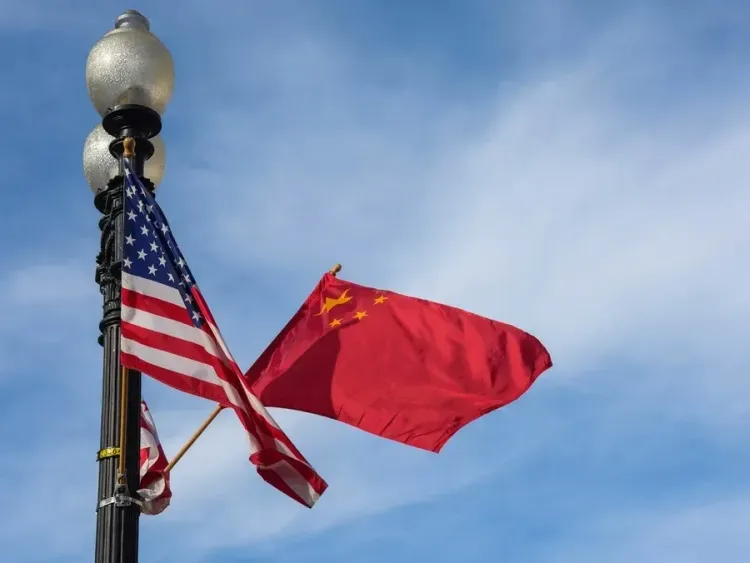
The Trump administration has signalled a sweeping overhaul of America's global information strategy, naming China, Russia, and Iran as its primary adversaries in an intensifying contest over global narratives. At the centre of the push is a stark financial imbalance: Beijing alone reportedly spends an estimated $40 billion annually on propaganda and influence operations, dwarfing the $1 billion budget of the US Agency for Global Media (USAGM).
The Confirmation Hearing That Set the Tone
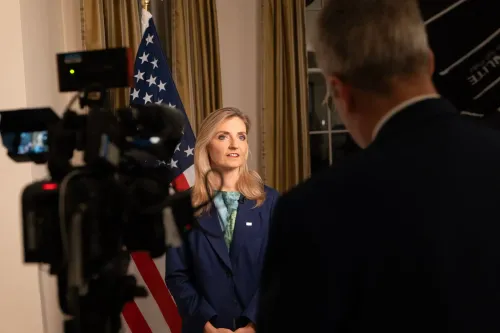
The strategy came into sharp focus during a Senate Foreign Relations Committee hearing on 31 July, where Sarah Rogers appeared before lawmakers for her nomination to lead the USAGM — the federal body that oversees Voice of America, Radio Free Europe/Radio Liberty, Radio Free Asia, and other US-funded international broadcasters.
Rogers told senators the agency must modernise rapidly to counter what she described as increasingly sophisticated influence campaigns by authoritarian governments. 'China alone spends about $40 billion on propaganda and influence operations,' she said. 'I have $1 billion, and most of that goes to salaries and keeping the lights on. But America keeps winning the information war in the sense that people who can choose would choose to come to America over China pretty much any day.'
The Threat Landscape: Bots, Disinformation, and University Networks
Rogers outlined a multi-front challenge, alleging that China, Russia, and Iran were exploiting both traditional media and digital platforms to spread disinformation. She specifically flagged 'coordinated bot hives' and 'foreign influence' networks that she said had penetrated universities and online public debates.
Responding to a question from Senator Ted Cruz, Rogers argued that Chinese and Iranian influence operations often promoted similar ideological themes, while Russia employed more opportunistic tactics. She alleged that China and Iran devoted significant effort to amplifying anti-Semitic narratives, while Russian campaigns focused on recruiting support for Moscow's war efforts and exploiting fault lines within democratic societies.
Rogers further alleged that Chinese-linked entities had funded activities designed to shape public opinion on strategic issues, including artificial intelligence, with such campaigns increasingly amplified through social media platforms.
Priority Regions and a New Delivery Model
Rogers identified Asia, the Middle East, Iran, Afghanistan, and Cuba as USAGM's priority regions, stressing that the agency's statutory mission was to reach audiences 'where a free media ecosystem is not possible.' She also called for a stronger US presence in Africa, where both Russia and China have expanded their footprint in recent years.
Rather than relying primarily on legacy radio and television, Rogers said the agency would pivot toward 'short-form video, diaspora group chats, podcasts and other timely forms of engagement' while retaining traditional platforms where necessary. She cited encounters with North Korean defectors during her tenure as Undersecretary of State for Public Diplomacy, recalling that they had described American broadcasts as their first window into life beyond their country's tightly controlled information environment. 'These defectors risked torture and risked death, fleeing toward a freedom they'd only heard existed here,' she said. 'They heard it from us.'
Democratic Pushback and the Road Ahead
Democratic senators raised concerns that recent administration cuts to US international broadcasting — including reductions in Voice of America programming and staffing — had already weakened America's competitive position. Rogers acknowledged the need for reform but said she intended to comply with congressional funding decisions while rebuilding operational capacity.
'My first priority will be to stabilise the agency, strengthen its leadership, modernise its operations, and restore research capacity so we can actually measure reach and viewership,' she said. Whether the Senate confirms Rogers — and how quickly USAGM can execute the proposed overhaul — will determine the credibility of Washington's renewed push in the global information contest.
Point of View
But the more revealing detail is that most of that $1 billion goes to salaries and overhead — leaving the actual content budget razor-thin. Rogers' modernisation pitch is directionally sound, but it sidesteps the harder question: how much of USAGM's current weakness is structural, and how much was self-inflicted by the very administration now promising a stronger push? Democratic senators are right to press on the Voice of America cuts — credibility, once eroded, is not rebuilt by a confirmation hearing alone. The pivot to short-form video and diaspora chat groups is overdue, but without a significant budget reallocation, it risks being a rebrand rather than a genuine strategic upgrade.
NationPress
14 Sept 2026
Frequently Asked Questions
How much does China spend on propaganda compared to the US?
China reportedly spends an estimated $40 billion annually on propaganda and influence operations, according to USAGM nominee Sarah Rogers. By contrast, the entire USAGM budget stands at $1 billion, with most of it consumed by salaries and operational costs.
What is the US Agency for Global Media (USAGM)?
USAGM is the US federal agency that oversees government-funded international broadcasters including Voice of America, Radio Free Europe/Radio Liberty, and Radio Free Asia. Its statutory mission is to reach audiences in countries where a free media ecosystem does not exist.
Who is Sarah Rogers and why is her nomination significant?
Sarah Rogers is the Trump administration's nominee to lead USAGM. Her confirmation hearing before the Senate Foreign Relations Committee on 31 July became a platform for the administration to outline a broader overhaul of America's global information strategy, with China, Russia, and Iran named as principal adversaries.
What tactics are China, Russia, and Iran allegedly using?
According to Rogers, all three countries use traditional media and digital platforms to spread disinformation. She alleged China and Iran promote similar ideological themes including anti-Semitic narratives, while Russia focuses on recruiting support for its war efforts and exploiting divisions within democratic societies. Rogers also flagged coordinated bot networks and influence operations reaching into universities.
What changes is the Trump administration proposing for US international broadcasting?
Rogers outlined a shift away from legacy radio and television toward short-form video, diaspora group chats, and podcasts, while retaining traditional platforms where needed. She also pledged to stabilise the agency, modernise operations, and restore research capacity to measure reach and viewership, subject to congressional funding decisions.