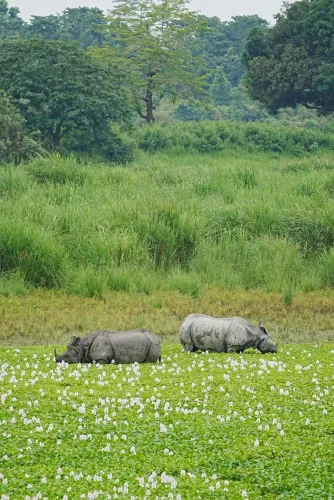
Assam holds 80% of world's one-horned rhinos, zero poaching in 2025: Himanta Sarma
Synopsis
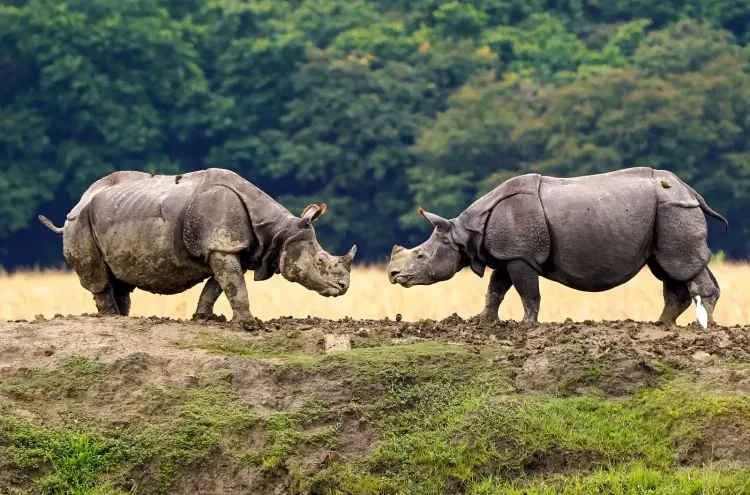
Assam now hosts nearly 80 per cent of the world's greater one-horned rhinos and logged zero poaching in 2025 — only the second such year since the 1970s. With Kaziranga sheltering over 2,600 rhinos and the IRF confirming global population growth to 4,075, Assam's enforcement-and-community model is emerging as a global benchmark, even as habitat pressure mounts.
Key Takeaways
Assam is home to approximately 3,260 greater one-horned rhinos — nearly 80 per cent of the global population of 4,075 .
Kaziranga National Park alone shelters more than 2,600 rhinos, the largest single-species habitat globally.
Assam recorded zero known rhino poaching incidents in 2025 — only the second such year since the 1970s , after 2022 .
The International Rhino Foundation 's 2026 State of the Rhino report confirmed the global greater one-horned rhino count rose from 4,014 in 2022 to 4,075 .
Conservation gains are credited to intelligence-led enforcement, drones, hundreds of anti-poaching camps, and community participation.
Habitat fragmentation, invasive vegetation, water stress, and human encroachment remain active threats despite the poaching decline.
Assam Chief Minister Himanta Biswa Sarma on 22 September 2026 — World Rhino Day — spotlighted the state's twin conservation milestones: nearly 80 per cent of the world's greater one-horned rhinoceros population now resides in Assam, and the state recorded zero known rhino poaching incidents in 2025. The announcement came as the latest global data confirmed Assam's standing as the single most critical stronghold of the species.
The Numbers Behind the Milestone
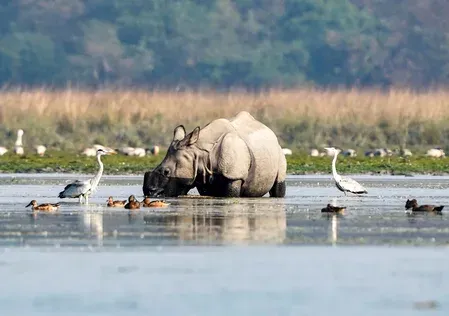
According to the International Rhino Foundation (IRF)'s '2026 State of the Rhino' report, the global population of greater one-horned rhinos has grown to an estimated 4,075, up from 4,014 in 2022. Of these, approximately 3,260 — close to 80 per cent — are found in Assam. Kaziranga National Park alone shelters more than 2,600 of these animals, making it the largest single-population habitat for the species anywhere on earth.
Zero Poaching: A Historic Benchmark
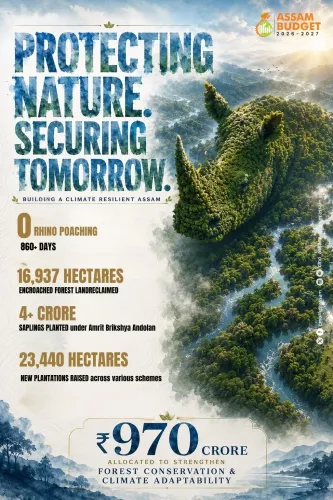
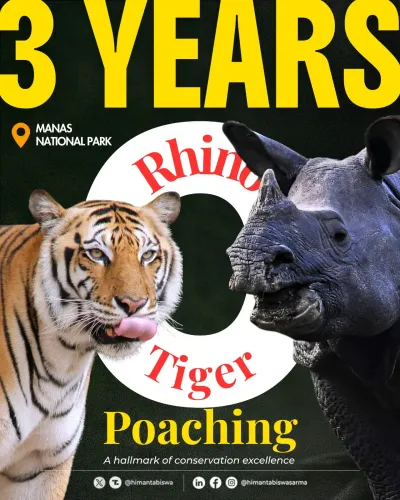
The zero-poaching figure for 2025 carries exceptional weight given the state's historical record. According to the IRF report, this marks only the second such year since the 1970s that Assam has recorded no known poaching incident — the previous instance was 2022. The decline has been attributed to stronger intelligence gathering, coordinated enforcement, drone-assisted surveillance, and structured community participation. A dedicated anti-poaching network at Kaziranga — comprising hundreds of camps and specialised frontline teams — has been cited as a key operational factor.
What Chief Minister Sarma Said
'On this World Rhino Day, we let the numbers do the talking!' Sarma wrote in a post on X, underscoring Assam's role as the dominant global habitat of the greater one-horned rhinoceros. Conservation efforts have also extended beyond Kaziranga to other landscapes, including Manas National Park, as part of a broader strategy to rebuild rhino populations across multiple habitats.
Challenges That Remain
Despite the progress, conservationists have cautioned that halting poaching addresses only part of the problem. Habitat fragmentation, invasive vegetation, water shortages, and encroaching human activity continue to pose threats as Assam's rhino population expands. The growing numbers, while a conservation success, also intensify pressure on existing habitats, making landscape management and corridor protection equally critical to long-term survival of the species.
With two consecutive zero-poaching years now on record and the global population trending upward, Assam's conservation model is drawing attention as a potential template — though experts stress that sustained funding and political will remain non-negotiable for the gains to hold.
Point of View
Where headline targets rarely survive ground scrutiny. Yet the IRF data also surfaces a structural risk: concentrating 80 per cent of a globally endangered species in a single state, and more than 60 per cent in a single park, creates catastrophic vulnerability to disease, flooding, or a single enforcement failure. The real conservation challenge is no longer just stopping poachers — it is expanding viable habitat fast enough to match population growth. Manas and corridor connectivity programmes are a start, but they need funding and inter-agency coordination at a scale that political speeches on World Rhino Day cannot substitute for.
NationPress
22 Sept 2026
Frequently Asked Questions
How many greater one-horned rhinos are there in Assam?
Assam is home to approximately 3,260 greater one-horned rhinos, accounting for close to 80 per cent of the global population of an estimated 4,075, according to the IRF's 2026 State of the Rhino report. Kaziranga National Park alone shelters more than 2,600 of them.
When did Assam last record zero rhino poaching before 2025?
Assam previously recorded zero known rhino poaching incidents in 2022, making 2025 only the second such year since the 1970s, according to the International Rhino Foundation report.
What is World Rhino Day and why is it observed?
World Rhino Day is observed annually on 22 September to raise global awareness about rhino conservation and the threats the species faces, including poaching and habitat loss. It is used to highlight both progress and remaining challenges in protecting all five rhino species worldwide.
What factors have driven the decline in rhino poaching in Assam?
The decline has been linked to stronger intelligence gathering, coordinated enforcement, drone-assisted surveillance, specialised frontline teams, and structured community participation. Kaziranga National Park operates an extensive anti-poaching network including hundreds of camps.
What challenges remain for Assam's rhino conservation despite the progress?
Conservationists warn that habitat fragmentation, invasive vegetation, water shortages, and growing human activity continue to threaten rhino habitats even as poaching falls. The expanding rhino population increases pressure on existing landscapes, making corridor creation and habitat management critical next steps.