Bengal joins all Jal Shakti central water projects, CM Adhikari announces
Synopsis
West Bengal's BJP government has reversed the state's long-standing non-participation in central water schemes, with CM Suvendu Adhikari pledging to join the Jal Jeevan Mission, Namami Gange, and Jal Shakti Abhiyan. The move — announced after a direct meeting with Union Jal Shakti Minister C.R. Paatil — is as much a political signal as a policy shift, with Adhikari explicitly blaming the previous TMC government for years of deliberate obstruction.
Key Takeaways
West Bengal CM Suvendu Adhikari announced on 18 June that the state will join all central water projects under the Union Ministry of Jal Shakti .
The decision follows a meeting between Adhikari and Union Jal Shakti Minister C.R.
Paatil at Nabanna , Kolkata.
West Bengal will now participate in the Jal Jeevan Mission , Namami Gange Programme , and Jal Shakti Abhiyan .
The Jal Jeevan Mission was launched in 2019 and extended until 2028 to achieve universal rural tap water coverage.
Adhikari alleged the previous TMC government under Mamata Banerjee deliberately obstructed central water projects.
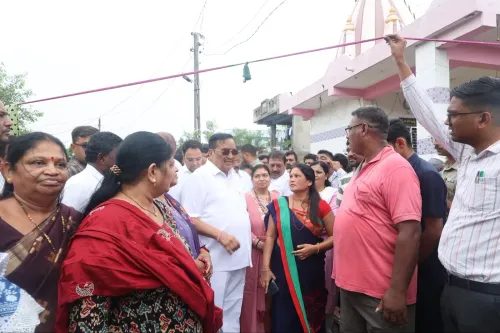
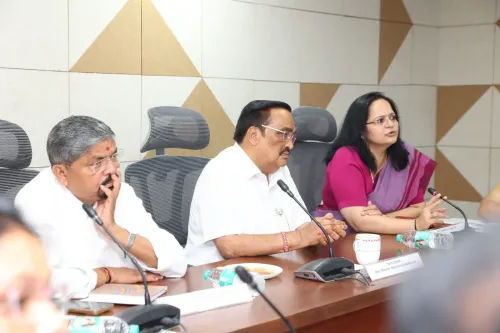
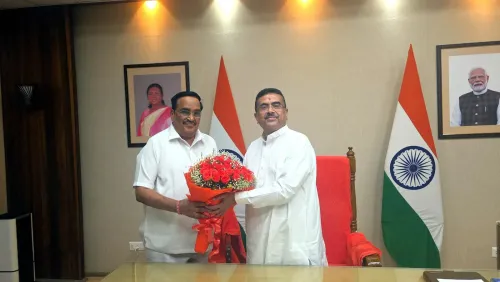
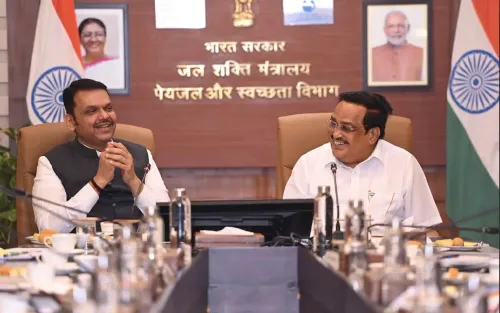
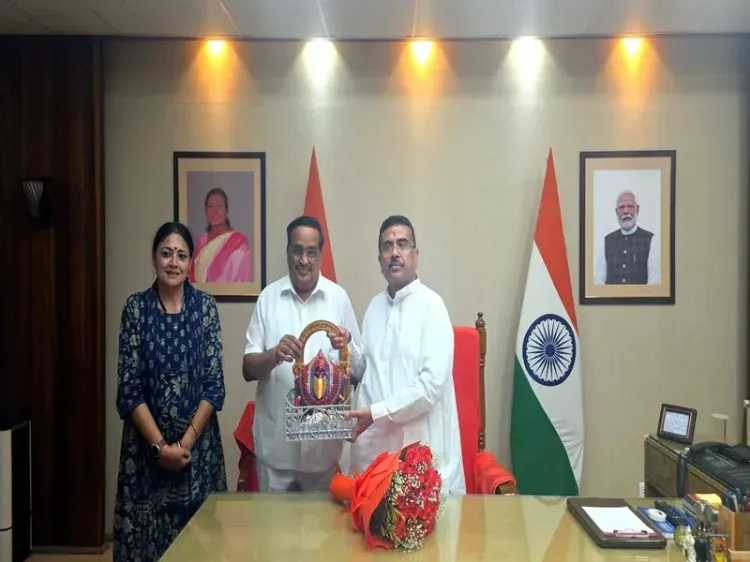
West Bengal will now participate in all central water-related projects under the Union Ministry of Jal Shakti, Chief Minister Suvendu Adhikari announced on Thursday, 18 June, marking a significant policy shift for the state. The announcement came after Adhikari met Union Jal Shakti Minister C.R. Paatil at the state secretariat, Nabanna, in Kolkata.
Key Developments
Adhikari confirmed the decision through a post on social media platform X, stating that the Jal Jeevan Mission — the Union government's flagship programme to deliver safe, potable tap water to every rural household — is now set to gain momentum across West Bengal. The mission, launched in 2019 and extended until 2028, aims to provide individual household tap connections to all rural homes in the country.
'This mission is the realisation of Hon'ble PM Shri Narendra Modi Ji's vision to deliver safe, potable tap water to every single household, even in the remotest corners of our state,' Adhikari wrote in his post.
Programmes West Bengal Will Now Join
Beyond the Jal Jeevan Mission, the state government has committed to participating in the Namami Gange Programme — the Centre's flagship river rejuvenation initiative — and the Jal Shakti Abhiyan, a campaign focused on water conservation and management. Adhikari said the collaboration is intended to ensure timely completion of projects of national importance and direct benefits to the state's residents.
Attack on Previous Administration
Adhikari used the announcement to launch a sharp critique of the preceding Trinamool Congress (TMC)-led government under former Chief Minister Mamata Banerjee, alleging deliberate obstruction of central water projects. 'For too long, the previous State Govt deliberately tried to obstruct, stall and hijack such crucial projects and also tried to claim undue credit. But those days of deprivation are over. The BJP Government is committed to ensuring smooth, unhindered implementation on the ground,' he claimed in his social media post.
The allegations reflect a pattern of Centre-state friction that has long characterised relations between the Bharatiya Janata Party (BJP) at the Centre and the TMC in West Bengal, particularly over the uptake of Union government schemes. Notably, West Bengal had been among the states flagged for lagging progress under the Jal Jeevan Mission in earlier assessments.
What This Means for West Bengal
The policy reversal, if implemented, could unlock significant central funding and infrastructure support for a state where access to clean drinking water remains uneven, particularly in rural and remote districts. The Jal Jeevan Mission alone carries a national outlay of over ₹3.60 lakh crore. With the extension to 2028, states that accelerate enrolment stand to benefit from a larger share of remaining disbursements.
Observers will now watch whether the administrative machinery in West Bengal aligns with the political commitment made at Nabanna, and whether project execution on the ground matches the pace of the announcement.
Point of View
And a social media announcement — however emphatic — is not a project pipeline. The real question is whether the state bureaucracy, which operated under a different political direction for over a decade, can pivot quickly enough to absorb central funds before the 2028 deadline. Adhikari's framing of this as a liberation from TMC obstruction is useful politics, but the accountability test will come in the execution data, not the press cycle.
NationPress
19 Sept 2026
Frequently Asked Questions
What did West Bengal CM Suvendu Adhikari announce on 18 June?
Chief Minister Suvendu Adhikari announced that West Bengal will participate in all central water-related projects under the Union Ministry of Jal Shakti, including the Jal Jeevan Mission, Namami Gange Programme, and Jal Shakti Abhiyan. The announcement was made after a meeting with Union Minister C.R. Paatil at Nabanna, Kolkata.
What is the Jal Jeevan Mission and how does it affect West Bengal?
The Jal Jeevan Mission is a Union government flagship programme launched in 2019 and extended to 2028, aimed at providing safe tap water connections to every rural household in India. West Bengal's renewed participation could unlock significant central funding and accelerate drinking water access in the state's rural and remote areas.
Which central water programmes will West Bengal now join?
West Bengal has committed to participating in the Jal Jeevan Mission, the Namami Gange Programme for river rejuvenation, and the Jal Shakti Abhiyan for water conservation — all under the Union Ministry of Jal Shakti.
What did CM Adhikari say about the previous TMC government?
Adhikari alleged that the previous Trinamool Congress-led government under Mamata Banerjee deliberately obstructed, stalled, and sought to claim undue credit for central water projects. He said those 'days of deprivation are over' under the current BJP administration.
Why does West Bengal's participation in Jal Shakti projects matter?
West Bengal had previously lagged in uptake of several central water schemes, leaving rural communities without the tap water access and river clean-up benefits available in other states. Full participation could bring a share of the Jal Jeevan Mission's national outlay of over ₹3.60 lakh crore to the state before the 2028 deadline.