CJP launches 'Kya Bolti Public?' campaign to fight education costs, unemployment
Synopsis
A party that refuses to contest elections is now betting on street-level outreach to shake up the system. CJP's 'Kya Bolti Public?' campaign — launching September — targets the twin crises of unaffordable education (first-grade fees up to ₹2 lakh) and mass unemployment, riding the momentum of the NEET protest wave at Jantar Mantar.
Key Takeaways
CJP founder Abhijit Dipke announced the 'Kya Bolti Public?' nationwide campaign, launching September 2025 , from Chhatrapati Sambhajinagar .
The campaign centres on the rising cost of education, with first-grade school fees reportedly ranging from ₹1 to ₹2 lakh annually, plus separate donation charges.
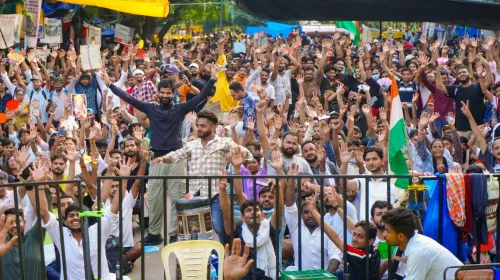
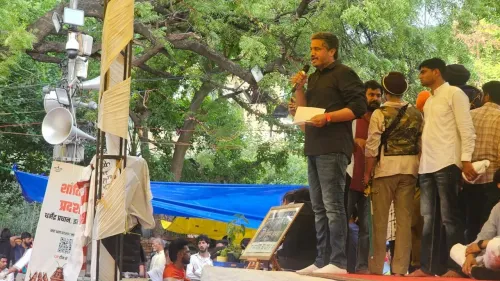
The announcement followed the party's two-day national core committee meeting, convened after the NEET paper leak protests at Jantar Mantar, Delhi .
Unemployment is identified as the second major focus, with Dipke noting large numbers of jobless youth joining the NEET demonstrations.
The CJP has chosen to operate as a pressure group rather than contest elections, focusing on administrative reform and citizens' rights.
The party's ideology is grounded in the principles of B.R.
Ambedkar , Mahatma Gandhi , and Jawaharlal Nehru .
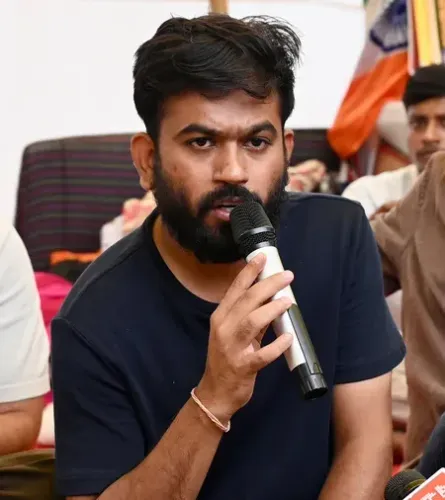
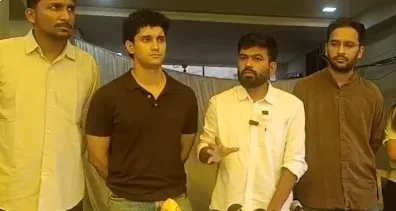
Cockroach Janata Party (CJP) founder Abhijit Dipke on Thursday, 6 August announced a nationwide outreach campaign titled 'Kya Bolti Public?', set to begin this September, aimed at channelling the daily grievances of students, youth, and ordinary citizens directly to the administration. The announcement came from Chhatrapati Sambhajinagar following the conclusion of the party's two-day national core committee meeting.
What Triggered the Campaign
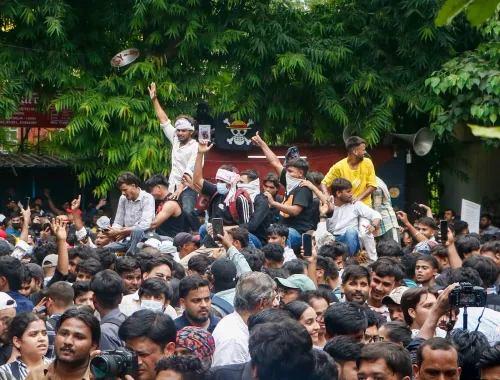
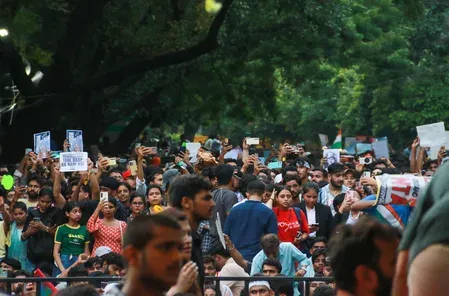
The campaign follows national attention drawn by protests at Jantar Mantar, Delhi over alleged irregularities in the National Eligibility-cum-Entrance Test (NEET) paper leak. Dipke noted that unemployed youth joined those demonstrations in large numbers, underscoring what he described as a deepening crisis of both educational integrity and joblessness in the country.
The CJP's two-day national core committee meeting served as the platform for finalising the party's political and social roadmap, with the campaign emerging as its centrepiece.
The Education Cost Crisis
At the heart of the 'Kya Bolti Public?' initiative is the issue of rising school and college fees. Dipke alleged that quality education has become unaffordable for middle-class and working-class families.
'Reforming the education sector will be the primary and most crucial focus of our campaign. Today, education in the country has turned into a highly lucrative business. Annual fees for first-grade admissions range from ₹1 to ₹2 lakh, with extortionate donation costs charged separately. How can families with limited monthly incomes afford such heavy expenses for their children's schooling?' Dipke said.
He further highlighted that parents are increasingly forced to take out expensive bank loans to fund higher education, pushing numerous families into severe debt. He also called for curbing what he described as financial exploitation by coaching institutes operating in the name of higher education.
Unemployment as a Core Issue
Alongside the education crisis, Dipke identified unemployment as a major political and social challenge. He said the NEET protests at Jantar Mantar were a visible expression of broader public anger, with unemployed youth swelling the demonstrations. The campaign intends to directly engage students, parents, and citizens across Maharashtra and the rest of India to build public pressure on the government.
CJP's Ideological Stance and Role
Dipke stated that the CJP's ideology is rooted in the principles of B.R. Ambedkar, Mahatma Gandhi, and India's first Prime Minister Jawaharlal Nehru. 'We are fighting for constitutional values to fulfil the vision they held for India. For us, the success of a movement is not merely securing someone's resignation; true success lies in completely eliminating the fear of the government from the minds of ordinary citizens,' he remarked.
Notably, the CJP has decided not to contest elections, choosing instead to function as an active pressure group focused on administrative reform and the protection of citizens' rights. Dipke also urged the press to play an independent role in holding power accountable, arguing that systemic change requires a media that firmly questions those in authority.
What Comes Next
Through the campaign, the CJP plans to tour the country, engaging in direct dialogue with citizens and generating broad public opinion. Dipke said the party will continue uniting all sections of society that supported its recent campaigns, with a focus on pressuring the government to act against commercialised education practices and administrative delays. The campaign's formal rollout is expected in September 2025.
Point of View
A model that works only if street-level mobilisation translates into genuine policy pressure. The education fee crisis Dipke describes is real and documented, but the party's leverage over government action remains untested. What is notable is the timing: launching a national campaign on the back of the NEET controversy is shrewd, but sustaining momentum beyond one issue cycle will be the harder challenge. The call for media independence, made by a political actor seeking coverage, also carries its own tension worth acknowledging.
NationPress
6 Aug 2026
Frequently Asked Questions
What is the CJP's 'Kya Bolti Public?' campaign?
'Kya Bolti Public?' is a nationwide outreach campaign announced by Cockroach Janata Party (CJP) founder Abhijit Dipke, set to begin in September 2025. The campaign aims to engage directly with students, parents, and citizens across Maharashtra and India to highlight grievances around unaffordable education and unemployment, and to pressure the government into action.
Why did the CJP launch this campaign now?
The campaign follows national protests over alleged NEET paper leaks at Jantar Mantar in Delhi, which drew large numbers of unemployed youth. The CJP's two-day national core committee meeting, held in Chhatrapati Sambhajinagar, concluded that public anger over education costs and joblessness warranted a structured nationwide initiative.
What are the main issues the campaign will address?
The campaign's primary focus is the commercialisation of education — including first-grade school fees reportedly ranging from ₹1 to ₹2 lakh annually, plus separate donation charges — and the burden of bank loans for higher education. Unemployment among youth is the second major issue the CJP intends to raise.
Will the CJP contest elections as part of this campaign?
No. The CJP has explicitly decided not to enter the electoral fray. Instead, it will function as a pressure group focused on administrative reform and protecting citizens' rights, using public mobilisation and direct dialogue rather than electoral participation.
What is the CJP's ideological foundation?
Abhijit Dipke has stated that the CJP's ideology is rooted in the principles of B.R. Ambedkar, Mahatma Gandhi, and India's first Prime Minister Jawaharlal Nehru. The party frames its movement as a fight for constitutional values and for eliminating what Dipke calls 'the fear of the government' from the minds of ordinary citizens.