CM Bhajanlal holds tripartite meet on Yamuna water project
Synopsis
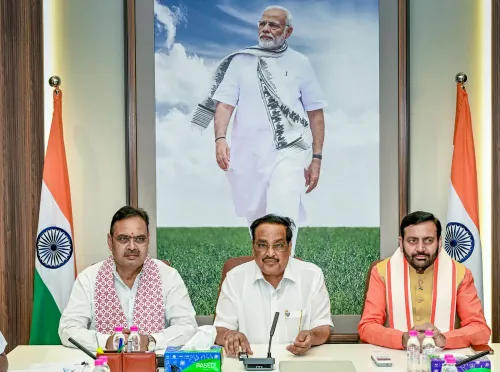
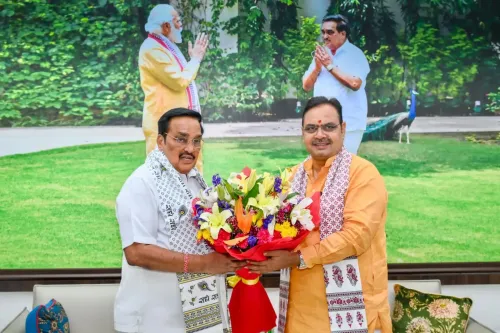
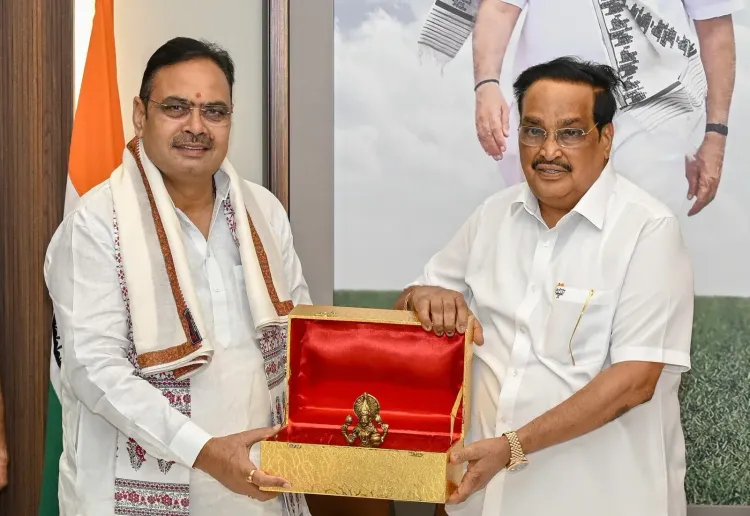
Rajasthan CM Bhajanlal Sharma held a tripartite meeting in New Delhi on 23 June 2026 with Union Jal Shakti Minister C.R. Patil and Haryana CM Nayab Singh Saini to advance the Yamuna Jal Pariyojna and discuss the Kishau Dam, aiming to bring drinking water and irrigation to the water-scarce Shekhawati region.
Key Takeaways
Rajasthan CM Bhajanlal Sharma met Union Jal Shakti Minister C.R.
Patil and Haryana CM Nayab Singh Saini in New Delhi on 23 June 2026 .
Multiple clauses of the Memorandum of Agreement (MoA) for the Yamuna Jal Pariyojna were discussed in a 'detailed and positive' session.
The Kishau Dam project on the Tons tributary of the Yamuna in Uttarakhand was also on the agenda.
The project aims to provide drinking water and irrigation to the semi-arid Shekhawati region, covering Sikar , Jhunjhunu and Churu districts.
The 1994 Yamuna MoU among basin states forms the legal foundation for Rajasthan's water entitlement claims in the negotiations.
Formal MoA signing and Detailed Project Report approval are the key milestones to watch next.
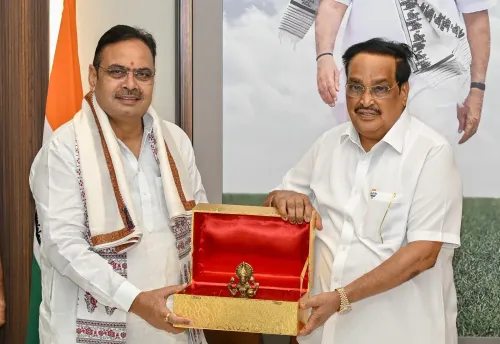
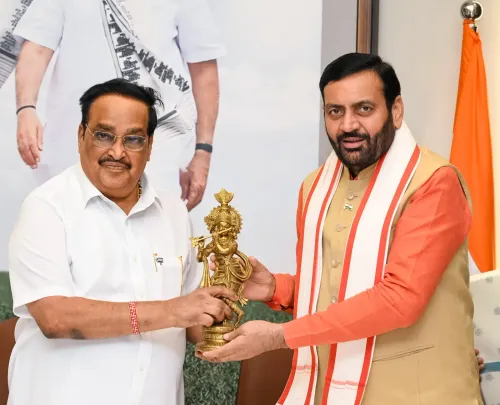
Rajasthan Chief Minister Bhajanlal Sharma met Union Jal Shakti Minister C.R. Patil and Haryana Chief Minister Nayab Singh Saini in New Delhi on Tuesday, 23 June 2026, for a high-level discussion on the Yamuna Jal Pariyojna — a proposed inter-state water project aimed at supplying drinking water and irrigation to Rajasthan's water-scarce Shekhawati region. The Chief Minister's Office of Rajasthan confirmed that various clauses of the Memorandum of Agreement (MoA) were taken up in detail, and that the Kishau Dam project was also discussed at the meeting.
Context
The Rajasthan CMO stated that the discussions on the MoA were 'detailed and positive' (विस्तृत एवं सकारात्मक). CM Bhajanlal Sharma affirmed that his government is 'committed to implementing this ambitious project on the ground at the earliest, with the cooperation of the central government and the Haryana government.' The meeting brings together the three key principals needed to advance any inter-state water allocation — the Union ministry and the two state governments most directly involved.
The Yamuna Jal Pariyojna draws its legal basis from the 1994 Memorandum of Understanding among Yamuna basin states — Rajasthan, Haryana, Uttar Pradesh and Delhi — which established volumetric water shares for each signatory. Rajasthan's entitlement under that framework underpins its current claims in the ongoing negotiations.
Policy Backdrop
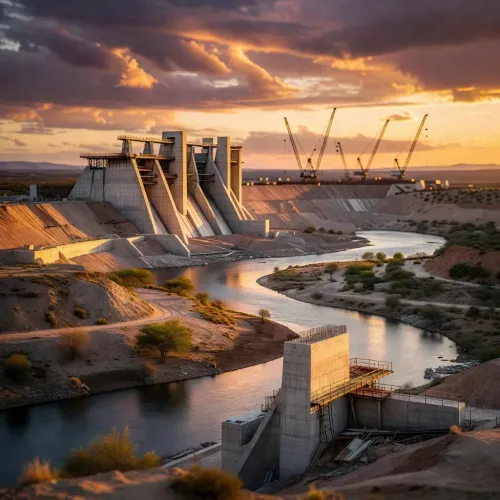
The Kishau Dam, a multipurpose storage project proposed on the Tons tributary of the Yamuna in Uttarakhand, has been under inter-state discussion since the early 2000s as part of broader Yamuna basin development plans. The dam is expected to generate hydropower and create a reservoir that could augment downstream water availability for states including Rajasthan and Haryana. Its inclusion in the 23 June agenda signals that the tripartite talks are addressing the full upstream-to-downstream water chain.
The Jal Shakti Ministry under C.R. Patil serves as the nodal central authority for inter-state river negotiations, a standard mechanism under India's national water governance framework. Similar tripartite formats have been used to resolve Himalayan river allocation disputes between Rajasthan and Haryana under successive national water policies.
Stakeholders and Impact
The Shekhawati region — covering the districts of Sikar, Jhunjhunu and Churu in northern Rajasthan — is classified as semi-arid and faces chronic deficits in both drinking water and agricultural water supply. Households in the region depend heavily on groundwater, which has been depleting steadily, making a surface-water link from the Yamuna basin a long-sought solution for local administrations and communities alike.
Farmers in Shekhawati stand to benefit from assured irrigation supply if the project is commissioned, potentially enabling a shift from rain-dependent cropping to more productive, irrigated agriculture. The CMO noted that the project would 'provide drinking water to the Shekhawati region, meet farmers' irrigation needs, and give new momentum to the development, prosperity and well-being of the area.'
What's Next
The immediate next step following the 23 June meeting would be the formal signing of an updated MoA between the states, which would give legal force to the agreed water-sharing terms. After that, approval of a Detailed Project Report and allocation of central funding — likely through upcoming Union Budget provisions or NITI Aayog reviews — will determine the pace at which the project moves to construction.
The convergence of BJP governments in Rajasthan, Haryana, and at the Centre creates a political alignment that could ease the administrative hurdles that have historically slowed inter-state water agreements in the Yamuna basin. Whether that alignment translates into a signed MoA and financial commitment in the near term will be closely watched by Shekhawati's farming communities.
Point of View
And the alignment of BJP governments in Rajasthan, Haryana, and at the Centre removes one traditional friction point in inter-state water diplomacy. However, the gap between a 'positive discussion' on MoA clauses and an enforceable, funded project remains wide — the Kishau Dam alone has been on the drawing board since the early 2000s without breaking ground. For Rajasthan, the Yamuna Jal Pariyojna is both a governance deliverable and a political signal to Shekhawati's large farming constituency ahead of future electoral cycles. The real test will be whether the momentum from this meeting converts into a signed MoA and a budgetary commitment within the current fiscal year.
NationPress
23 Jun 2026
Frequently Asked Questions
What is the Yamuna Jal Pariyojna for Rajasthan?
The Yamuna Jal Pariyojna is a proposed inter-state project to divert Yamuna river water to Rajasthan's Shekhawati region — covering Sikar, Jhunjhunu and Churu districts — to address chronic drinking water and irrigation deficits. It is grounded in Rajasthan's water entitlement under the 1994 Yamuna basin MoU.
What was decided at the 23 June 2026 Yamuna water meeting in New Delhi?
No formal decision has been publicly announced. The meeting between Rajasthan CM Bhajanlal Sharma, Union Jal Shakti Minister C.R. Patil and Haryana CM Nayab Singh Saini involved detailed discussions on MoA clauses and the Kishau Dam; the CMO described the talks as 'detailed and positive.'
What is the Kishau Dam and why does it matter for Rajasthan?
The Kishau Dam is a proposed multipurpose storage project on the Tons tributary of the Yamuna in Uttarakhand. It has been under inter-state discussion since the early 2000s and, if built, could augment the water available to downstream states including Rajasthan and Haryana.
Which districts in Rajasthan will benefit from the Yamuna Jal Pariyojna?
The project primarily targets the Shekhawati region, which comprises Sikar, Jhunjhunu and Churu districts in northern Rajasthan — a semi-arid zone with long-standing groundwater depletion and inadequate irrigation infrastructure.
What is the role of the Jal Shakti Ministry in inter-state water disputes?
The Union Ministry of Jal Shakti is the nodal central authority for mediating and coordinating inter-state river water negotiations in India. It facilitates tripartite or multilateral talks between basin states and oversees compliance with water-sharing agreements.