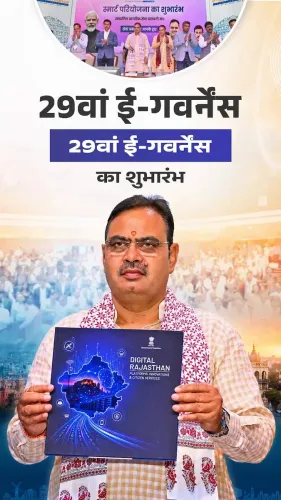
CM Bhajanlal Sharma Inaugurates 29th National e-Governance Conference in Jaipur
Synopsis
Chief Minister Bhajanlal Sharma on 2 July 2026 inaugurated the 29th National e-Governance Conference in Jaipur, centred on AI-enabled, data-driven and secure digital governance under the Viksit Bharat 2047 framework, bringing together central and state officials to chart India's next phase of public-service digitisation.
Key Takeaways
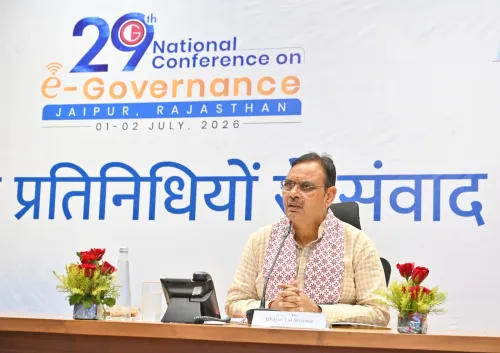
CM Bhajanlal Sharma inaugurated the 29th National e-Governance Conference (NCEG) 2026 at the Rajasthan International Centre, Jaipur on 2 July 2026 .
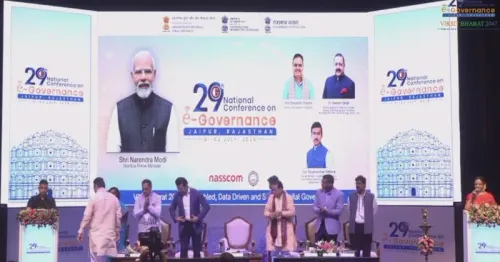
The conference theme is 'Viksit Bharat 2047: AI-Enabled, Data-Driven and Secure Digital Governance' .
NCEG is organised by the Department of Administrative Reforms and Public Grievances (DARPG) and has been held annually since 1997 .
The event aligns with the Viksit Bharat 2047 national vision for India to become a developed economy by its centenary of independence.
India's e-governance journey traces from the National e-Governance Plan (NeGP) of 2006 and Digital India (2015) to the current AI-led phase.
Conference outcomes are expected to influence AI governance pilots and digital-infrastructure policy for the 2026-27 period.
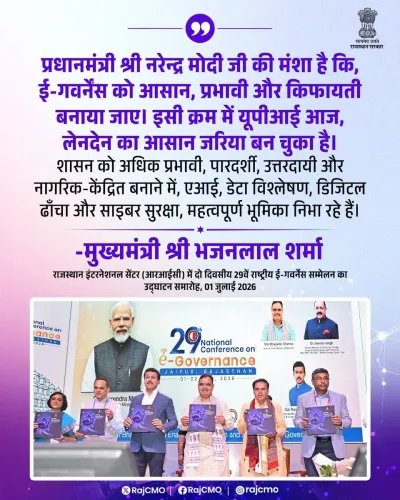
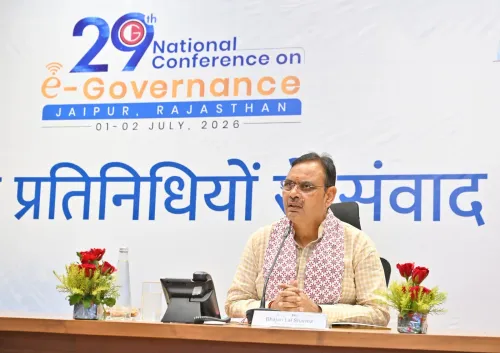
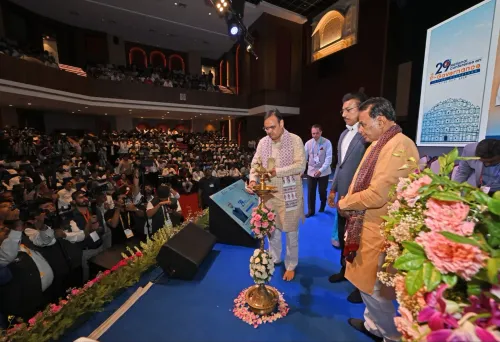
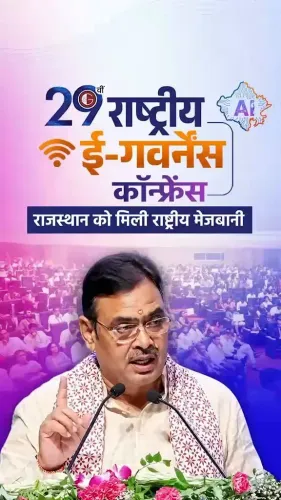
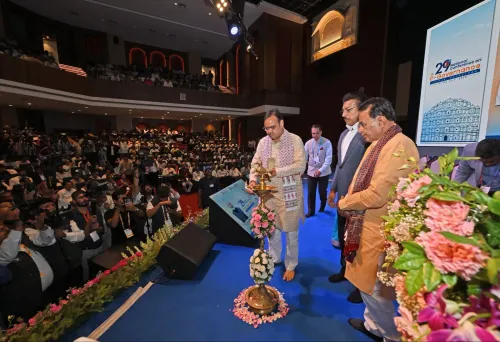
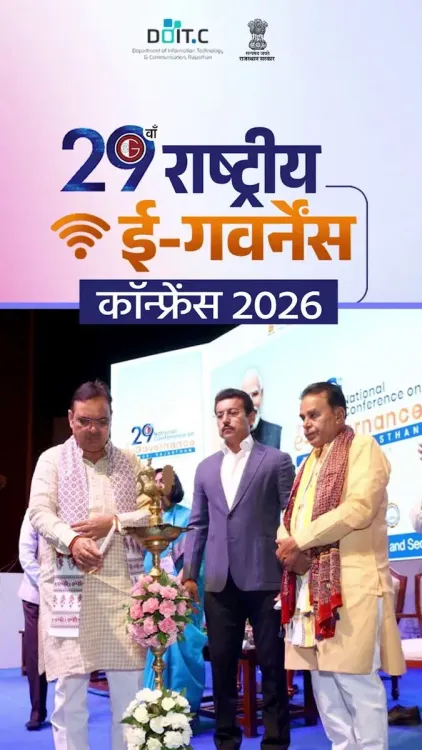
Chief Minister Bhajanlal Sharma on Thursday, 2 July 2026 inaugurated the 29th National e-Governance Conference (NCEG) 2026 at the Rajasthan International Centre, Jaipur, lighting the ceremonial lamp to mark the formal opening of the two-day national forum. The conference is themed 'Viksit Bharat 2047: AI-Saksham, Data-Sanchaalit evam Surakshit Digital Governance' — 'Viksit Bharat 2047: AI-Enabled, Data-Driven and Secure Digital Governance'.
Context
The Chief Minister's Office of Rajasthan announced the inauguration, noting that CM Sharma performed the traditional deep prajwalan (lamp-lighting) ceremony to open the conference. The event brings together senior officials from central ministries, state IT departments, and governance practitioners to deliberate on the next frontier of public-service delivery in India.
Rajasthan, which has increasingly positioned itself as a hub for national-level policy conclaves, is hosting the NCEG for the first time under the Bhajanlal Sharma government, which assumed office in December 2023.
Policy Backdrop
The National e-Governance Conference is an annual forum organised by the Department of Administrative Reforms and Public Grievances (DARPG), Government of India, and has been held since 1997, making it one of the longest-running platforms for inter-governmental dialogue on digital public administration.
This year's theme directly aligns with the Viksit Bharat 2047 vision articulated by Prime Minister Narendra Modi in 2023, which envisions India emerging as a fully developed economy by the centenary of its independence. The conference's focus on artificial intelligence, data governance, and cybersecurity reflects the evolution of India's e-governance agenda — from the foundational National e-Governance Plan (NeGP) approved in 2006, through the Digital India programme launched in 2015, to the current AI-led phase.
Successive administrations have progressively scaled e-governance infrastructure, and the NCEG serves as the principal annual checkpoint where states showcase local digital platforms and compete for visibility and central funding support for technology projects.
Stakeholders and Impact
The conference convenes stakeholders across the digital governance ecosystem — central government ministries, state IT secretariats, technology implementers, and civil society observers. For Rajasthan, hosting the 29th NCEG offers an opportunity to present the state's own digital-service initiatives to a national audience and attract support for ongoing and pipeline projects.
Citizens stand as the ultimate beneficiaries of the deliberations: outcomes from the NCEG typically inform policy guidelines on service delivery, grievance redressal, and data-protection standards that shape how government services reach the last mile. The AI and data-security focus of the 2026 edition is particularly significant as state governments accelerate the deployment of AI-assisted tools in areas such as agriculture, health, and public distribution.
What's Next
Observers will watch closely for any state-level AI governance pilots or digital-infrastructure commitments announced by participating delegations over the course of the conference. Outcomes and resolutions from the 29th NCEG are expected to feed into policy planning for the 2026-27 period, including potential allocations for digital infrastructure under central schemes. Rajasthan's own follow-through on conference outcomes will be a test of how effectively the state translates national deliberations into on-ground governance improvements.
Point of View
And states that align visibly with that agenda tend to benefit from stronger Centre-state coordination and funding flows. For Rajasthan, the conference is as much a showcase as a policy exercise: the state's ability to translate NCEG deliberations into concrete digital pilots will determine whether the hosting translates into lasting governance gains or remains a ceremonial milestone.
NationPress
2 Jul 2026
Frequently Asked Questions
What is the 29th National e-Governance Conference 2026?
The 29th National e-Governance Conference (NCEG) 2026 is an annual national forum organised by the Department of Administrative Reforms and Public Grievances (DARPG), held in Jaipur on 2 July 2026, themed around AI-enabled, data-driven and secure digital governance under the Viksit Bharat 2047 vision.
Who inaugurated the 29th NCEG 2026?
Chief Minister Bhajanlal Sharma of Rajasthan inaugurated the 29th NCEG 2026 by lighting the ceremonial lamp at the Rajasthan International Centre, Jaipur.
What is the theme of NCEG 2026?
The theme is 'Viksit Bharat 2047: AI-Enabled, Data-Driven and Secure Digital Governance', reflecting India's focus on artificial intelligence and cybersecurity in public administration.
What is Viksit Bharat 2047?
Viksit Bharat 2047 is a national vision articulated by Prime Minister Narendra Modi in 2023 that aims for India to become a fully developed economy by 2047, the centenary of its independence.
Where is the National e-Governance Conference 2026 being held?
The 29th National e-Governance Conference 2026 is being held at the Rajasthan International Centre in Jaipur, Rajasthan.