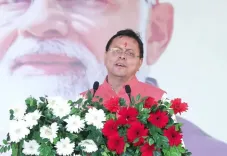
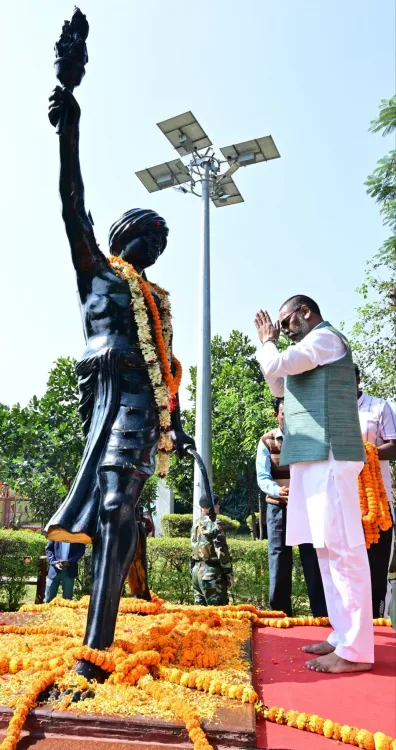
CM Hemant Soren pays tribute at Birsa Munda's Ranchi samadhi
Synopsis
Chief Minister Hemant Soren paid a formal floral tribute at Birsa Munda's samadhi in Ranchi on the tribal icon's 151st birth anniversary on 15 November 2026, coinciding with Jharkhand Foundation Day. Birsa Munda led the Ulgulan rebellion against British colonial rule in the Chota Nagpur region in the 19th century.
Key Takeaways
CM Hemant Soren offered a wreath at Birsa Munda's samadhi sthal in Ranchi on 15 November 2026 .
The occasion marks Birsa Munda's 151st birth anniversary , observed annually as Jharkhand Foundation Day .
Birsa Munda, born 15 November 1875 , led the Ulgulan rebellion against British colonial land alienation in the Chota Nagpur region.
He died in Ranchi Jail in 1900 at the age of 25 , becoming a defining Adivasi martyr.
Jharkhand was formed in 2000 with Birsa Munda as its central symbolic icon, embedded in the state's official identity.
The JMM government's annual tribute reinforces the party's political alignment with tribal-rights traditions.
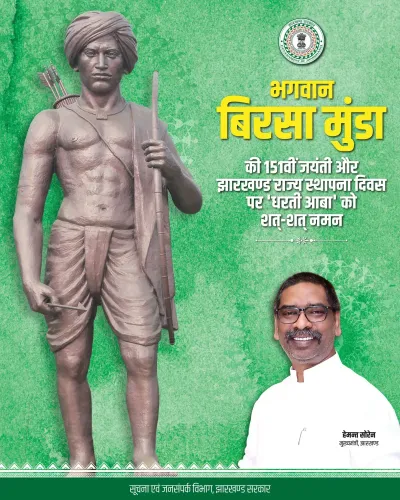
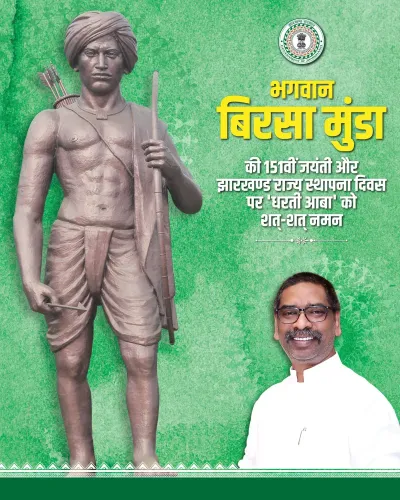
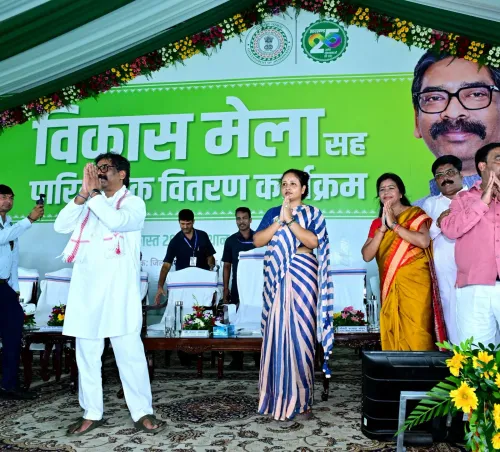
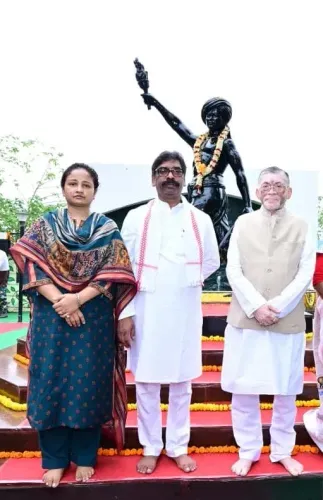
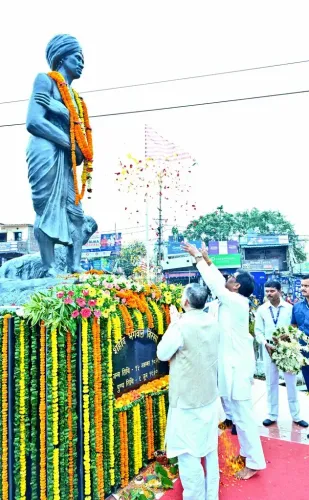
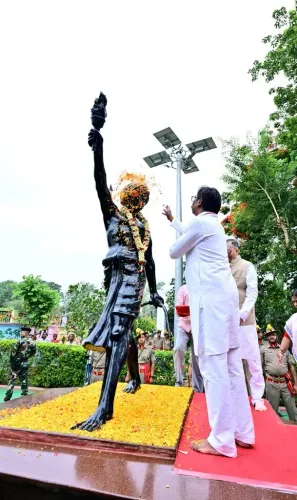
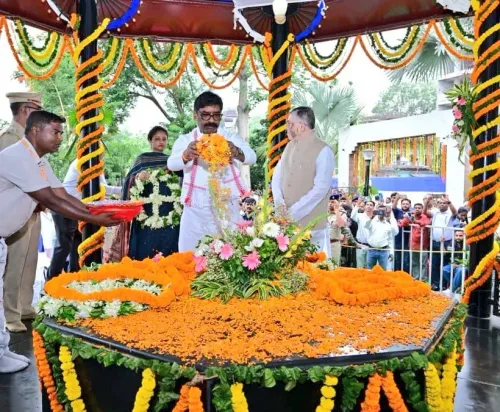
On the 151st birth anniversary of Birsa Munda — revered across Jharkhand as Dharti Aaba, 'Father of the Earth' — Chief Minister Hemant Soren offered a floral wreath at the tribal icon's samadhi sthal in Ranchi on Sunday, 15 November 2026, marking the occasion with a formal state tribute.
The Chief Minister's Office posted on X: 'Dharti Aaba Bhagwan Birsa Munda ki 151vi Jayanti ke avsar par Ranchi sthit unke samadhi sthal par Mukhyamantri Shri Hemant Soren ne pushpachakra arpit kar shraddhaasumon arpit kiye. Dharti Aaba ke tyaag evam balidaan ko naman…' — 'On the occasion of Dharti Aaba Bhagwan Birsa Munda's 151st birth anniversary, Chief Minister Shri Hemant Soren offered a floral wreath and paid homage at his samadhi sthal in Ranchi. We bow to the sacrifice and martyrdom of Dharti Aaba.'
Who was Birsa Munda — and why Jharkhand never forgets
Birsa Munda, born on 15 November 1875 in the Chota Nagpur region, was a 19th-century Munda tribal leader whose Ulgulan — 'the Great Tumult' — shook British colonial authority and challenged the systematic alienation of Adivasi land. Arrested by colonial forces, he died in Ranchi Jail in 1900 at just 25 years old, cementing his status as a martyr of unmatched symbolic weight. When Jharkhand was carved out of Bihar in 2000, Birsa Munda became the defining icon of the new state's identity — his birth anniversary effectively Jharkhand's founding moral reference point. His image graces the state's official iconography, and 15 November is observed as Jharkhand Foundation Day, making today's tribute doubly charged.Soren at the memorial: the politics of continuity
Hemant Soren and his party, the Jharkhand Mukti Morcha (JMM), have deep roots in the same tribal-rights tradition that Birsa Munda embodied. For successive Jharkhand administrations — and especially for the JMM — the annual pilgrimage to the Ranchi samadhi sthal is both a civic duty and a political statement: that the state's governing logic flows directly from the Adivasi resistance Birsa Munda led. The commemoration keeps alive a discourse around land rights, forest rights, and Scheduled Tribe welfare that has never fully left Jharkhand's political centre stage. Each anniversary renews the implicit compact between the ruling establishment and the state's large Adivasi electorate. One hundred and fifty-one years on, the flame of Ulgulan still lights the room — and Jharkhand's leaders know it.Point of View
It is a reaffirmation of the ideological contract that underpins tribal politics in Jharkhand. By placing CM Soren at the samadhi on the state's own Foundation Day, the administration fuses the martyr's legacy directly with its governing mandate. This consolidation of Adivasi symbolism also serves as a political anchor against rival parties that contest the same demographic ground. As land-rights and forest-rights debates continue to shape Jharkhand's policy agenda, the annual rite at Ranchi keeps that discourse tethered to its most emotionally resonant source.
NationPress
15 Nov 2026
Frequently Asked Questions
Who is Birsa Munda and why is he important?
Birsa Munda was a 19th-century tribal leader from the Munda community who led the Ulgulan rebellion against British colonial land alienation in the Chota Nagpur region. He died in Ranchi Jail in 1900 at 25 and is revered as Dharti Aaba — 'Father of the Earth' — a central icon of Adivasi identity and resistance.
When is Birsa Munda Jayanti celebrated?
Birsa Munda Jayanti falls on 15 November every year, marking his birth in 1875. The date also coincides with Jharkhand Foundation Day, as the state was formed on 15 November 2000.
What did CM Hemant Soren do on Birsa Munda Jayanti 2026?
Chief Minister Hemant Soren offered a floral wreath at Birsa Munda's samadhi sthal in Ranchi on 15 November 2026, the tribal icon's 151st birth anniversary, in a formal state tribute announced by the Chief Minister's Office.
Where is Birsa Munda's samadhi sthal located?
Birsa Munda's samadhi sthal is located in Ranchi, the capital city of Jharkhand, where he died in colonial custody in 1900.
What was the Ulgulan movement led by Birsa Munda?
The Ulgulan, meaning 'the Great Tumult', was an armed uprising led by Birsa Munda in the late 1890s against British colonial rule, Christian missionary influence, and the systematic alienation of Adivasi land in the Chota Nagpur plateau. It remains one of the most significant tribal revolts in Indian colonial history.